
Waste Bank Pick-Up System Eases Residents' Waste Sorting
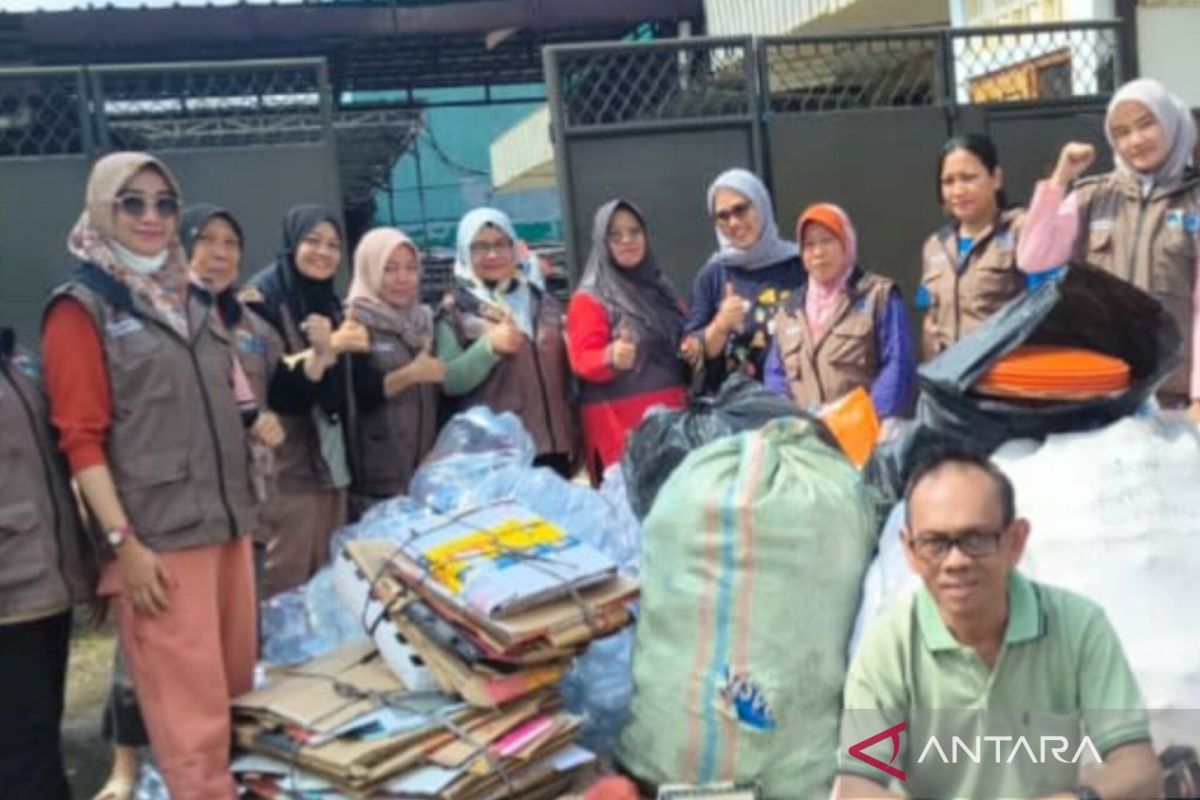
Jakarta (ANTARA) - The proactive pick-up system in community-based waste management in East Jakarta through Waste Bank Units (BSU) makes it easier for residents to sort and channel household waste.
One example is in Matraman sub-district, which has designed a pick-up system so that the community does not face difficulties in managing waste, especially in densely populated residential areas with limited space.
“We already have Waste Bank Units in every area, both in neighbourhood associations (RW), citizen groups (RT), as well as in mosques and prayer rooms. So residents do not need to go far; they can just deposit at the nearest point,” said Matraman sub-district head Muhammad Husnul Fauji in East Jakarta on Thursday.
In the operating mechanism, residents first sort waste from their homes into two main categories: organic and inorganic.
Inorganic waste such as plastic and metal is then collected through environmental cadres or collection points in each area.
Subsequently, officers from the Environmental Office will come periodically to pick up the waste.
The collection process is carried out directly to the BSU points without needing to be centralised in one large location.
“The Environmental Office (LH) vehicle goes around to pick up. So it is not collected at one large point, but directly taken from the BSU in each ward,” Husnul explained.
According to Husnul, this system has proven effective because it adapts to the residents’ environmental conditions.
Not all homes have space to store temporary waste, so the presence of collection points becomes a practical solution.
In addition, the government provides support in the form of special plastic bags to help residents in the sorting process from home.
“The plastic is provided by LH and distributed to residents through the wards. So residents just need to sort from home,” said Husnul.
In practice, waste bank activities are also carried out on a scheduled basis. Residents will bring sorted waste to certain locations, such as RW posts, to be weighed before being transported by officers.
“Usually once a week there is a schedule. Residents come bringing plastic or metal waste, then it is weighed and transported,” said Husnul.
Husnul assessed that the success of this system is inseparable from the active role of environmental cadres as well as RT and RW administrators who act as drivers in the field.
They help coordinate residents while ensuring that the collected waste is already sorted.
Nevertheless, the sub-district will continue to enhance socialisation to the community so that participation becomes wider and more even.
“Overall, it is already running, but we will continue to strengthen the socialisation so that all residents understand and get involved more,” said Husnul.
With this pick-up system, Husnul hopes that waste management at the community level will not only be easier but also able to reduce the burden on final disposal sites and increase the economic value of inorganic waste.
Previously, the East Jakarta City Government (Pemkot Jaktim) encouraged waste sorting from the source, namely households, to reduce the disposal burden at the Bantargebang Integrated Waste Processing Site (TPST) in Bekasi, West Java.
“The government is also encouraging the community to start reducing waste volume and carrying out sorting from the source, namely households, to manage disposal at TPST Bantargebang,” said East Jakarta Mayor Munjirin at the East Jakarta Mayor’s Office on Tuesday (7/4).
He stated that his side is collaborating with the Ciracas Plastic Recycling Centre (PDUP) to manage inorganic waste.
In addition, the Waste Bank Task Force (Satgas) in every ward that has been formed through the Mayor’s Circular Letter No. e-0005/SE/2026 is also being optimised in its role.
This task force is responsible for coordinating the delivery of inorganic waste from Waste Bank Units to PDUP Ciracas, as well as reporting activities through the provided online system.