
Warteg Tactics Amid Rising Plastic Prices and WFH Every Friday
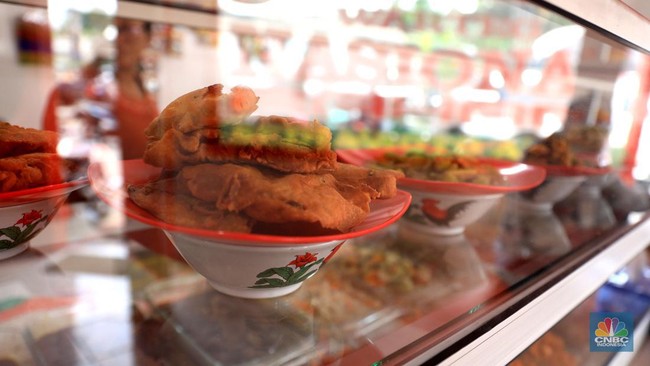
In the corners of the city, wartegs are more than just places to eat. They are living spaces for daily workers, students, and online motorcycle taxi drivers—places where prices must remain reasonable, portions satisfying, and warmth palpable.
However, lately, these simple kitchens have been facing pressures that are far from simple: rising plastic prices, while the work-from-home (WFH) policy every Friday leaves customer seats increasingly empty.
The rise in plastic prices may sound trivial to some people. But for warteg owners, this is a very concrete calculation: how much additional cost for one pack of rice, how much margin is eroded, and whether customers are still willing to pay more.
This is what CNBC Indonesia aptly discusses in three instalments of the Warteg Fancy serial in Jakarta. World Bank data (2023) shows that prices of petrochemical-based materials have experienced significant fluctuations due to global energy dynamics. At the micro level, these fluctuations turn into daily dilemmas: raise prices or absorb losses.
At the same time, the city’s rhythm is changing. Fridays, usually bustling with office workers, are now quieter. A report from the Central Statistics Agency (2024) confirms that out-of-home dining consumption is heavily influenced by workers’ mobility. When mobility decreases due to WFH, wartegs lose one of their main sources of demand. Not a few warteg owners complain that Friday turnover can drop drastically compared to other days.
This is where wartegs face what in strategic management is called double pressure: pressure from the cost side and the demand side simultaneously. An Asian Development Bank study (2022) reminds us that MSMEs are the most vulnerable group to such conditions due to limited capital, technology, and market access. Yet, it is from these limitations that creativity often emerges.
Some warteg owners have begun taking simple but meaningful steps: replacing plastic with rice paper or banana leaves. Besides being more economical, this choice also adds a traditional touch that some customers actually like. This push aligns with recommendations from the United Nations Environment Programme (2021), which encourages the transition to eco-friendly packaging. In strategic terms, this is a form of cost leadership combined with sustainability positioning.
Another equally important step is product adjustment. Without much announcement, portions may change slightly, or side dish combinations are adjusted. This practice, known as shrinkflation, becomes a subtle way to maintain balance between price and purchasing power. The International Monetary Fund (2023) notes that this strategy is widely used by small businesses to survive amid inflation.
However, not all wartegs choose the same path to survival. Some are stepping further by leveraging digital platforms. When customers do not come, adaptive wartegs ‘fetch’ customers through delivery services. This is an important shift from location-based strategy to network-based strategy. In management terms, this reflects market reconfiguration capability—adapting the market without having to move locations.
The most intriguing phenomenon is the emergence of ‘warteg fancy’. With more modern interiors, neater presentation, and higher prices, this type of warteg targets the middle-class segment seeking experience, not just satiety.
A McKinsey & Company study (2022) confirms that differentiation is key to adding value for MSMEs. Warteg fancy is a real example of how traditional businesses can upgrade without fully losing their identity.
From a strategic management perspective, these steps can be read through three main approaches. First, cost efficiency strategy, namely reducing costs through material substitution and operational efficiency. Second, market adaptation strategy, adjusting distribution channels and customer consumption patterns. Third, value differentiation strategy, creating new experiences that allow higher prices.
But behind these strategic terms, there is a more human story. There are warteg owners who have to wake up earlier to find cheaper ingredients. There are those experimenting with new packaging while worrying customers might not like it. There are also those daring to renovate their places, hoping new customers will come despite the high risk of failure.
This is where we see that wartegs are not just economic entities, but also spaces of social resilience. They survive not because they have vast resources, but because of flexibility, closeness to customers, and courage to change. In many ways, wartegs teach that strategy does not always come from boardrooms, but from small kitchens that keep steaming every day.
Looking ahead, challenges will certainly not diminish. Raw material prices could rise again, work patterns could continue to change, and competition will become tighter. Therefore, it is important for policymakers to step in, whether through price stabilization, financing support, or digitalization training. Without such support, not all wartegs can undertake transformation.
In the end, the story of wartegs today is a story of adaptation. Amid expensive plastic and quiet Fridays, wartegs continue to cook, serve, and innovate. They may change form—greener, more digital, or even more ‘fancy’—but their essence remains the same: providing affordable meals while keeping the pulse of city life beating.