
Wars Everywhere: Here's How Indonesia's Banking Sector Performed According to OJK Survey
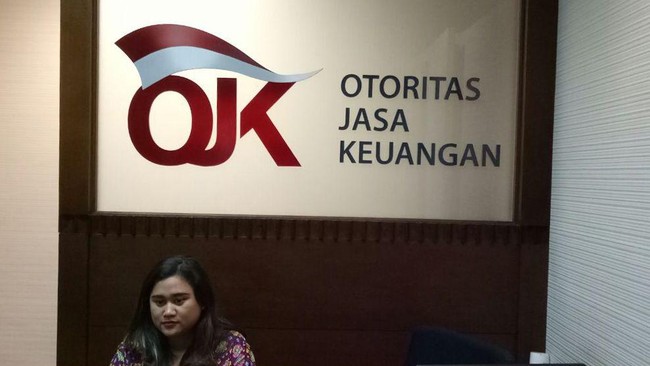
Jakarta — The Financial Services Authority (OJK) has affirmed that banking sector performance will remain solid with managed risks following the completion of the OJK Banking Business Orientation Survey (SBPO) for Q1 2026. The Head of OJK’s Banking Supervision Executive, Dian Ediana Rae, stated that the survey was conducted in January 2026 involving 93 bank respondents, whose combined total assets represent 94.17% of total banking assets as of December 2025.
The survey results demonstrate that respondents harbour significant concerns regarding prolonged global conditions that are continuing for extended periods and potentially deteriorating, along with the implications this presents for Indonesia’s economic performance.
“Although various banking indicators currently occupy resilient positions, the banking sector still greatly requires a vibrant business ecosystem to grow well,” said Dian in an official statement on Monday, 9 March 2026.
Confidence in solid banking performance is reflected in the Banking Business Orientation Index (IBP) for Q1 2026, which registered 56 (optimistic zone). This optimism is driven by projected growth in banking performance and confidence that banks remain sufficiently capable of managing risks amid expectations of rising inflation and weakening currency values.
Predictions of currency depreciation and rising inflation have pulled down the Index of Macroeconomic Conditions (IKM) for Q1 2026 to the pessimistic zone (IKM=45). Confidence in increasing inflation rates is driven by seasonal factors such as Ramadan, Eid al-Fitr celebrations and Lunar New Year festivities, which increase prices for goods and services.
There is also a low base effect from the previous year, as electricity tariff discounts that were previously in place are not being implemented again in Q1 2026. Furthermore, the currency is expected to weaken amid continued high global geopolitical tensions. Nevertheless, Indonesia’s economic growth is projected to accelerate driven by anticipated increases in consumer spending in Q1 2026.
The majority of survey respondents believe that banking risks in Q1 2026 remain manageable and controlled. This is evident from the Risk Perception Index (IPR) of 57, which falls in the optimistic zone, reflecting confidence that credit quality remains sound, Net Foreign Exchange Position (PDN) remains at low levels with foreign exchange assets and claims exceeding foreign exchange liabilities (long position).
Liquidity risk is also expected to remain manageable, driven by expectations that banking liquid assets and Third-Party Funds (DPK) will continue to grow. With projected DPK growth expected to exceed credit disbursement growth projections, net cashflow in Q1 2026 is anticipated to increase.
Additionally, cash inflow is projected to increase as regional government funds begin flowing in during Q1 2026.
Expectations for banking performance in Q1 2026 also remain optimistic, with the Banking Performance Expectations Index (IEK) at 67. Growth optimism for Q1 2026 is driven by expectations that credit will continue to expand as credit demand increases, supported by banks’ efforts to expand credit within available pipelines.
The processing industry, as the economic sector most dominating banking credit disbursement, grew by 6.60 per cent year-on-year in January 2026 and is projected to remain the driver of credit growth going forward. On the funding side, respondents anticipate that DPK in Q1 2026 will grow in line with banks’ efforts to secure funding sources to support credit growth and maintain liquidity.
In this SBPO period, the OJK also gathered information from respondents regarding the global and Indonesian economic outlook for 2026 as well as growth in Micro, Small and Medium Enterprise (UMKM) credit. The global economy is expected to grow moderately, driven by high levels of uncertainty and global geopolitical tensions.
Considering developments over the past week, geopolitical tensions have intensified as the conflict between the United States and Iran escalates following US and Israeli attacks on Tehran.
The tangible impact of this conflict has been felt in Asian equity markets, which have plummeted due to panic-selling amid concerns that the conflict will trigger inflation and damage the global economy. Broader impacts on global and domestic economies are possible if this conflict persists for an extended period.
“Learning from the various crises we have faced, difficult situations such as this should be used to strengthen reforms across all economic sectors. Various economic policies must be formulated in a cohesive and coordinated manner to drive increasingly better and sustainable performance, thus enabling Indonesia’s economy to become more dynamic and competitive,” stressed Dian.
Meanwhile, Indonesia’s economy in 2026 is projected to maintain solid growth driven by fiscal stimulus and accommodative monetary policy. Additionally, domestic economic growth remains supported by household consumption and manufacturing, which continue to be the main engines of Indonesia’s economic growth.
Furthermore, most respondent banks are optimistic that UMKM credit in Q1 2026 will grow with an increasing share of total credit.
The OJK conducts the SBPO quarterly to obtain an overview from the banking industry regarding economic trends, perceptions of banking risks, and the direction and tendencies of banking business in the upcoming quarter.
The SBPO produces a Banking Business Orientation Index (IBP), a composite index that shows perception with values ranging from 1 to 100.