
Warren Buffett: Investors Should Not Fear Volatility, Focus on the Long Term
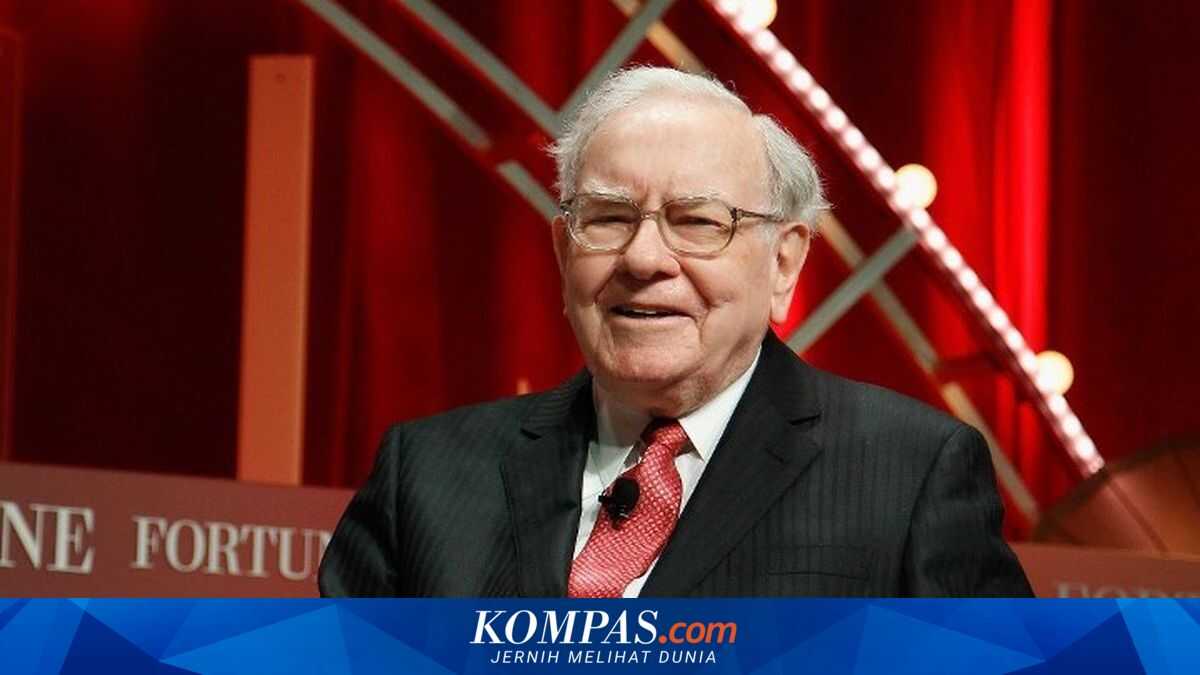
Jakarta, KOMPAS.com — Financial market volatility often triggers investor concerns, especially when share prices move sharply in a short period. But for legendary investor Warren Buffett, such turbulence is an integral part of the long-term investment process. Cited from Investopedia, Friday, 6 March 2026, the founder of Berkshire Hathaway repeatedly emphasised that stock price fluctuations should not cause investors to exit the market. In various appearances, Buffett has stated that the stock market tends to rise over the long term, even though it occasionally experiences sharp declines. Therefore, in his view, the greatest risk arises when investors choose not to participate in the market. ‘Periodic downturns will occur, but investors and managers are in a game that greatly benefits them,’ Buffett wrote in a letter to Berkshire Hathaway shareholders. The statement reflects Buffett’s view that equity investing essentially offers substantial profit opportunities for disciplined and patient investors. Buffett frequently uses historical stock market data to show how long-term investing can yield significant growth. For example, a $10,000 investment in the S&P 500 index about a decade ago could grow to around $30,000 by 2025. According to Buffett, this example shows that short-term fluctuations do not alter the long-term tendency of the stock market to rise as the economy grows and business innovation progresses. He also warns that a sense of safety usually only emerges after the market has recovered. Consequently, many investors re-enter the market when stock prices have already risen again. This phenomenon, according to Buffett, causes investors to miss part of the potential gains by selling shares when prices are down and buying back when prices are higher. He argues that the strategy of trying to ‘time the market’ or market timing often fails, even for professional investors. Retail investors, Buffett says, are more susceptible to these mistakes because they often make decisions based on emotions, such as fear when markets fall or euphoria when prices rise. Therefore, Buffett believes that investment success is more determined by how long one stays invested than by the precision of the timing of transactions. With such growth, time becomes a crucial factor because it allows compounding to work optimally.