
Warning: Oil Prices Breach US$100 per Barrel Again
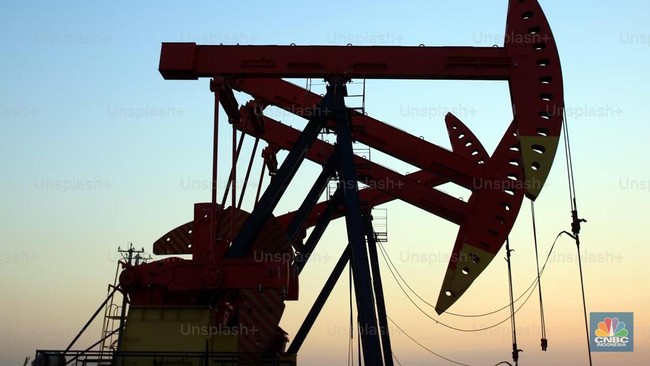
Jakarta — Global oil prices surged sharply on Thursday morning. According to Refinitiv data as of 09:45 WIB, Brent crude was recorded at US$100.72 per barrel, whilst West Texas Intermediate (WTI) stood at US$95.37 per barrel. This surge marks the return of oil to three-digit prices after moderating slightly in the preceding days.
Looking at price movements since late February, the oil rally has been extraordinarily rapid. On 27 February 2026, Brent stood at US$72.48 and WTI at US$67.02. In less than two weeks, prices surged more than 38%, driven by escalating Middle East conflict that directly disrupted global energy supply routes.
Prices jumped at the beginning of this week before falling temporarily. On 9 March, Brent reached US$98.96 and WTI US$94.77, then fell sharply over the following two days, with Brent declining to US$87.8 on 10 March. However, the situation intensified when military conflict in the Gulf region triggered fresh supply concerns.
According to Reuters, Iran has escalated attacks on ships and energy facilities in the Middle East. Two tankers were reported to have caught fire in Iraqi waters after being struck by vessels carrying explosives reportedly controlled by Iran. These attacks triggered major fires at sea near Basra and halted operations at several oil ports.
This tension has also spread to the Strait of Hormuz, a vital global energy corridor that carries approximately one-fifth of the world’s oil supply. According to Reuters, there remains no certainty that ships can transit safely through this waterway. The situation has become more complicated following reports that Iran has laid naval mines in the narrow waters connecting the Persian Gulf to global markets.
Amid the escalation, Iranian military officials have even warned the world to prepare for oil prices reaching US$200 per barrel. This statement followed increased attacks on commercial vessels and regional energy facilities, which Iran claims are in response to military operations conducted by the United States and Israel in Iran.
To mitigate market volatility, the International Energy Agency (IEA) has decided on an emergency measure unprecedented in its history. According to Reuters, the organisation has agreed to release 400 million barrels of oil from global strategic reserves, marking the largest intervention since the agency was established during the 1970s energy crisis.
The United States will be the largest contributor, releasing 172 million barrels from its Strategic Petroleum Reserve beginning next week. Japan has also announced it will imminently release approximately 80 million barrels from national and private reserves to help calm global energy markets.
However, markets appear unconvinced that this measure will sufficiently restrain price increases. According to Reuters, analysts assess that the 400 million barrel release can only cover approximately 20 days of supply disruption originating from the Strait of Hormuz. Additionally, oil from strategic reserves requires weeks to months before actually reaching the market.
Amid this uncertainty, global financial markets are beginning to feel the impact. Asian stock exchanges are weakening, whilst global bond yields are rising due to renewed concerns about energy inflation. The oil price surge has also forced investors to lower expectations for central bank interest rate cuts, particularly in the United States and Europe.
With the Strait of Hormuz remaining shadowed by conflict and tanker attacks continuing to occur, energy markets are now entering their most sensitive phase in recent decades. Should this critical corridor become fully blocked, history suggests that oil price increases can accelerate far more rapidly than the stabilisation efforts undertaken by energy-consuming nations.