
Warning: Indonesian Palm Oil Industry Faces Extinction by 2030, What's the Problem?
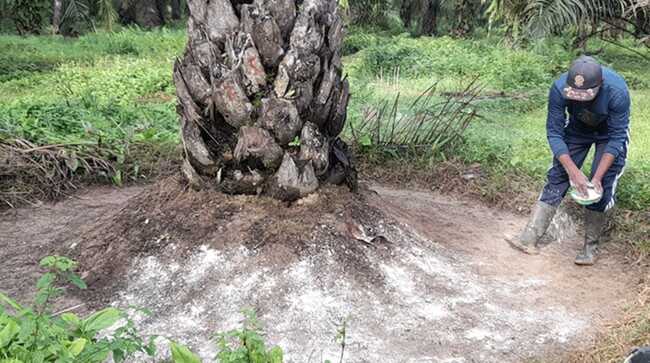
Warning: Indonesian Palm Oil Industry Faces Extinction by 2030, What’s the Problem?
Jakarta, CNBC Indonesia - The Executive Director of the Indonesian Vegetable Oil Industry Association (GIMNI) and Chairman of the Indonesian Palm Oil Council (DMSI), Sahat Sinaga, has expressed serious concerns about the future of the national palm oil industry.
He believes that the sustainability of Indonesian palm oil plantations could be at stake by 2030 if land management practices are not changed immediately.
Sahat said that the threat arises if palm oil plantations continue to rely on chemical fertilizers without implementing regenerative agriculture, which aims to restore soil health.
“I am worried that if we do not act, our palm oil may all die by 2030,” said Sahat at an iftar event in Jakarta on Wednesday (25/2/2026).
He explained that regenerative agriculture is a cultivation approach that prioritizes restoring soil quality. Without regeneration, plantation soil will experience a decline in fertility due to the continuous loss of minerals.
To illustrate this condition, Sahat likened the soil to a human body that is forced to work without recovery.
“It’s no different from the soil, so there must be regeneration,” he said.
According to Sahat, one concrete solution is the use of compost from organic waste or bio-organic fertilizer. In this way, palm oil plantations will not continuously rely on chemical fertilizers. He also cited the practice in Sabah, Malaysia, where the consumption of chemical fertilizers has been successfully reduced significantly.
“How? The soil is restored, remediated. How? With bio-organic fertilizer. From where? From biomass that is processed back into compost,” he said.
Sahat believes that the issue of palm oil sustainability does not lie in the area of land. He emphasized the importance of intensification or optimization of existing land, rather than opening new land.
Furthermore, he revealed that Indonesia has prepared cooperation with China to implement regenerative agriculture. In this scheme, about 42% of plantation biomass will be reprocessed into organic compost.
If this strategy is implemented consistently, Sahat projects a significant economic impact. With an area of approximately 16 million hectares, the implementation of regenerative agriculture is estimated to be able to double the economic benefits of the national palm oil industry by 2029.
“The prediction is that by 2029, if this is carried out with the same land, we can have regeneration, and we can generate approximately US$120 billion, whereas now it is US$60 billion? Without increasing the area,” he concluded.