
Warning: 1,000 Tonnes of Rice and 580,000 Chickens from US Set to Flood Local Market
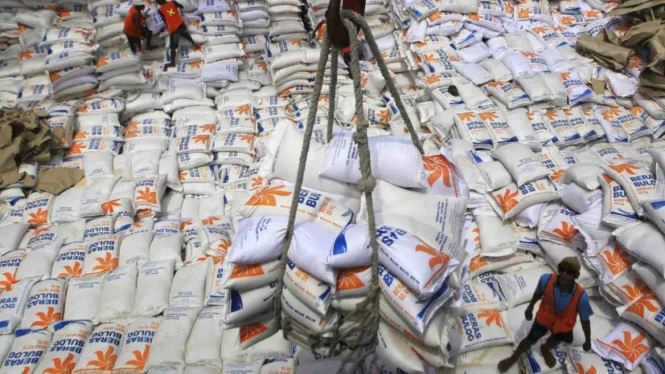
Jakarta, VIVA – Spokesperson for the Coordinating Ministry for Economic Affairs, Haryo Limanseto, announced that the government will import 1,000 tonnes of rice and 580,000 chickens from the United States as part of a reciprocal trade agreement signed by both heads of state.
He explained that the type of rice to be imported falls under a special classification, with actual import volumes to be adjusted according to domestic demand.
“The government has agreed to allocate imports for special-classification rice from the US, but the actual realisation will depend on domestic demand,” said Haryo in a statement quoted on Tuesday, 24 February 2026.
He noted that Indonesia has not imported rice from the US in the past five years. The government assured that the 1,000-tonne rice import commitment is insignificant compared to total national rice production.
“It represents only around 0.00003 per cent of total national rice production, which reached 34.69 million tonnes in 2025,” Haryo said.
In addition, the government also plans to import live poultry in the form of Grand Parent Stock (GPS) totalling 580,000 birds, with an estimated value of approximately US$17–20 million.
GPS constitutes the primary genetic source for domestic poultry farmers, and breeding facilities for this stock are not yet available in Indonesia.
“Furthermore, imports of chicken parts such as leg quarters, breasts, legs, or thighs have never been prohibited, provided they meet animal health requirements, food safety standards, specific needs, and applicable technical regulations,” Haryo said.
As for the food manufacturing industry, Haryo confirmed that Indonesia will also import mechanically deboned meat (MDM) as raw material for sausages, nuggets, meatballs, and other processed products. The volume of MDM imports is estimated to reach 120,000–150,000 tonnes per year.
The government stressed that the import policy will not sacrifice the domestic industry. Protection of local farmers remains a priority, whilst also maintaining the stability of chicken supply and prices domestically.
“The government continues to prioritise the protection of domestic farmers and maintaining the balance of national chicken supply and prices. No policy will sacrifice the domestic industry,” he said.