
War Through the Eyes of Animals
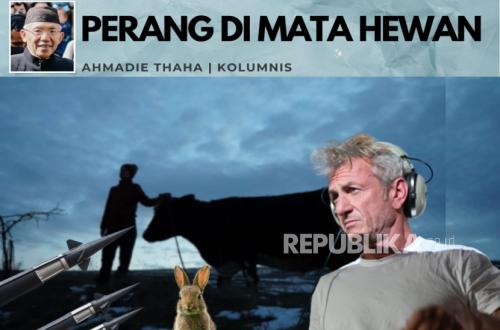
War is usually told through numbers. You see thousands of victims, thousands of cities destroyed, thousands of tanks burning. Those numbers march like parade ground cadets, neat, firm, but cold.
Then comes Sean Penn, the actor-filmmaker-activist whose career has never settled for merely strutting on the world’s red carpets. He likes to turn grim moments into creative work, as if every explosion must have a moral echo.
In Animals in War, his latest film, he chooses an unconventional storytelling path. This time the focus of tragedy is not humans, but animals.
He threads together seven short stories, seven creatures without passports, in an elegantly packaged film. No speeches, no social media accounts — but perhaps the most honest reflection of the face of the modern Ukraine–Russia war.
The film was produced by Ukrainian filmmakers in response to the Russian invasion, and had its world premiere at Tribeca. Narratively, it is not a shouting propaganda piece, but something like a broken prayer.
Each of the seven episodes stands alone. Yet they are united by an unwritten thread: humanity is tested not in peace, but when everything feels irrational.
The first story concerns a boy who leads a cow out of an occupied village. He could have run away alone, faster, safer. But he chooses to pull the rope of fate along with the cow.
That scene is simple, but its symbolism hits us like a soft slap. In extreme circumstances, who we save reveals who we truly are.
From Sean Penn’s activist perspective, this is not about livestock; it is about loyalty to the vulnerable. Activism, to him, is not a press conference but the courage to bear a burden that is politically unattractive.
The second tale presents a white rabbit in the rubble of a Ukrainian city. The rabbit moves from hand to hand, from a child, to volunteers, to young soldiers. The creature with large eyes becomes a kind of silent witness that cannot testify in any court.
Here the film plays between realism and metaphor. The rabbit whose bones are fragile yet beloved by children for its cute eyes and soft fur forms a brutal contrast with the noise of artillery.
Sean Penn, long known for going directly into conflict and disaster zones, seems to be saying: look, the most innocent are the first to become victims. In his activist logic, empathy must begin with the most powerless.
The third tale follows a Kyiv youth and his cat. Still in Ukraine. When the lights go out, sirens wail, and the city becomes a labyrinth of fear, the youth continues to carry his cat as they evacuate.
This is not a sentimental romance. It is a portrait of wartime psychology in the modern era across the globe. Pets often serve as anchors of sanity amid trauma.
Psychological research shows that human–animal interaction can reduce stress and maintain emotional stability. The film stitches that fact into a gentle narrative. Penn regards it as evidence that empathy is not a luxury but a necessity for survival.
There is also a story about a muscular wolf trapped in a forest contaminated by war remnants. The forest, usually neutral, becomes a minefield.
This episode is the most ecological in tone. War not only destroys cities, but also ecosystems. The soil, water, and wildlife bear consequences that rarely make the main headlines.
In Penn’s activist mindset, this broadens the definition of victims of war. Not only civilians, but the entire landscape of life.