
War Threat Looms: The Chilling Impact on Indonesia's Fuel Supply
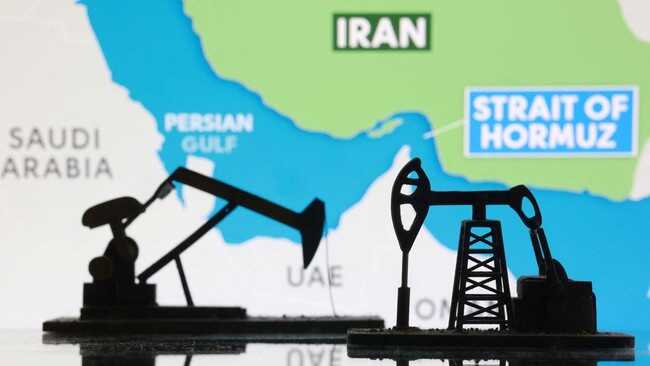
The Strait of Hormuz hereafter closed due to the Iran‑Israel conflict, which involved the United States, has raised concerns about domestic energy supplies in Indonesia. Indonesia does not yet have a strategic petroleum reserve (SPR) as some advanced nations do.
Executive Director of the Center of Economic and Law Studies (CELIOS) Bhima Yudhistira assessed that Indonesia’s energy resilience remains vulnerable due to heavy reliance on oil imports. This is one of the reasons behind potential shortages of fuel (BBM) when a global energy crisis occurs.
Bhima explained that Indonesia’s energy reserves are currently relatively limited, so when tensions escalate, the impact can be felt directly in the availability of BBM domestically. However, plans to increase reserves from around 20 days to three months are not the primary solution.
“Indonesia’s energy reserves are vulnerable. That’s why a crisis in oil could trigger a shortage of BBM stocks. But simply increasing reserves from 20 days to three months is not the solution,” Bhima told CNBC Indonesia on Thursday (5 March 2026).
He added that expanding storage capacity would increase reserves but would not solve the problem, because Indonesia would still rely heavily on imports.
“The option is rather to accelerate electrification in the transport system and energy transition. Public transport should use electric buses nationwide, while private BBM usage should be reduced. The important thing is for public transport to be affordable and comfortable, so people would shift to it,” he said.
Separately, Komaidi Notonegoro, Executive Director of the ReforMiner Institute, stated that globally most countries hold energy buffers averaging between three and six months to withstand potential global supply disruptions.
Advanced economies even maintain larger stockpiles. However, building large energy reserves is not only about crisis preparation but also concerns a country’s fiscal capacity and the readiness of its infrastructure.
“Ideally, this involves multiple aspects, not only avoiding a crisis but also considering fiscal ability. Whether the infrastructure is ready or not varies from country to country,” Komaidi explained.
Komaidi further detailed that the cost of storing BBM is very high. For example, to stock BBM for just one day requires an allocated budget of around Rp2.5 trillion to Rp3 trillion.
In other words, if Indonesia wants to hold energy reserves for 30 days, the required budget could reach around Rp60 trillion to Rp90 trillion solely for storage costs and the value of the goods.
“We currently have 20–25 days of stock, though it is not state-owned but rather an operational stock held by enterprises, and letting money sit idle in storage for an extended period is burdensome for these enterprises,” said Komaidi.