
War Nearly Breaks Out, Several Countries Urge Their Citizens to Leave Iran
Jakarta, CNBC Indonesia - Geopolitical tensions in the Middle East are increasing as relations between the United States and Iran continue to deteriorate. Several countries have begun to expand travel warnings and are evacuating citizens and families of their diplomatic staff from the region.
As reported by The Guardian, the Australian government on Wednesday (February 25, 2026) requested that family members of its diplomats in Israel and Lebanon leave the area immediately.
The Australian Ministry of Foreign Affairs also offered voluntary departures for the families of diplomats in the United Arab Emirates (UAE), Qatar, and Jordan, following what it described as a “deteriorating security situation in the region.”
In addition to Australia, several other countries have taken similar steps. Cyprus, Germany, India, Poland, Serbia, and Sweden have asked their citizens to leave Iran. Singapore has advised its citizens to postpone all travel to the country.
Last week, Brazil also recommended that its citizens leave Iran, after previously issuing a similar warning for Lebanon.
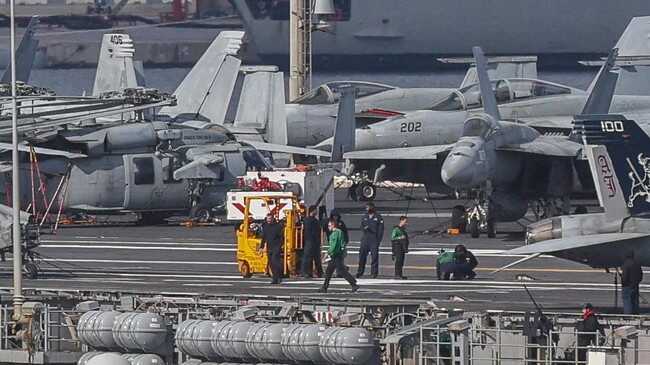
This move comes amid a massive US military deployment in the Middle East and ahead of the start of important talks regarding Iran’s nuclear program. The administration of President Donald Trump has warned of serious consequences if Tehran fails to provide significant concessions in the negotiations.
The US President and his officials have stated that Iran is rebuilding its nuclear weapons program. US Vice President JD Vance said, “The principle is very simple: Iran must not have nuclear weapons.”
Meanwhile, US Secretary of State Marco Rubio added, “I would say that Iran’s insistence on not discussing ballistic missiles is a very big problem.”
On the other hand, Tehran has repeatedly rejected Washington’s aggressive rhetoric. The Iranian government accuses Trump of spreading “big lies” and expresses hope that negotiations can pave the way for an agreement.
The increasing concern about a potential military conflict is also impacting the aviation sector. Several airlines have suspended routes to and through the Middle East. Dutch airline KLM announced the temporary suspension of Amsterdam-Tel Aviv flights starting March 1. Its parent company, Air France KLM, said that the route is no longer “commercially or operationally viable.”
This collective action underscores the growing global concern about the escalation of the US-Iran conflict, which could destabilize the Middle East region.