
War in Iran Spirals Out of Control, Trump Faces His Own Headache
The conflict between the United States, Israel, and Iran is triggering a surge in global oil prices and increasing the risk of substantial pressure on the US economy. The impact on the global economy now depends largely on how quickly oil shipment routes through the Strait of Hormuz return to normal.
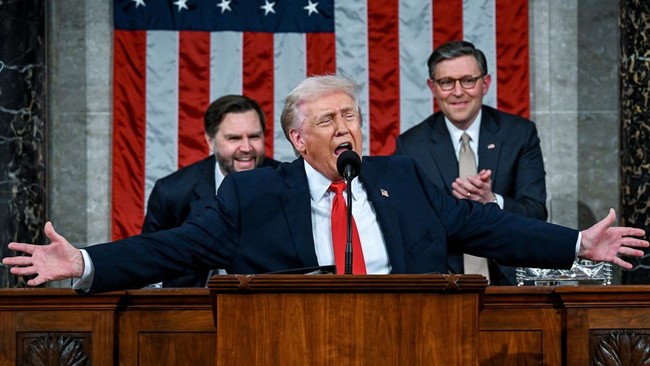
US President Donald Trump characterised the conflict as a swift victory for Washington. According to Trump, “We won, in the first hour everything ended,” yet energy markets are showing different concerns as disruptions to oil shipments from the Gulf region persist.
The escalation of tensions in the Middle East has driven global oil prices surging above US$100 (approximately Rp1.69 million) per barrel. The escalation of the conflict is increasing concerns regarding the stability of global energy supplies.
Analysts assess that pressure on the US economy will be heavily determined by how long the conflict lasts. If war continues and tanker traffic through the Strait of Hormuz remains disrupted, energy prices could rise further and trigger inflationary pressure.
Rachel Ziemba, senior researcher at the Centre for a New American Security, stated that a prolonged conflict could make energy prices increasingly expensive and volatile for consumers.
“If this war drags on and especially if its intensity remains as it is, prices will be higher and more volatile for consumers,” she said, as cited by Al Jazeera.
According to her, oil prices could stabilise more quickly if the conflict ends in the short term and the regional situation returns to being credible and stable.
The surge in energy prices also increases the risk of recession for the US economy. Sam Ori, head of the University of Chicago’s Energy Policy Institute, stated that in modern economic history, recessions often occur when oil prices reach approximately 4-5% of gross domestic product (GDP) and remain elevated for an extended period.
He estimated that recession could occur if oil prices remain at around US$140 (approximately Rp2.37 million) per barrel throughout this year. The risk could even emerge sooner if the Strait of Hormuz, the waterway through which more than one-fifth of global oil supply flows, remains closed for an extended period.
The impact of rising oil prices is already being felt directly by US consumers. GasBuddy analyst Patrick DeHaan stated that the national average petrol price has risen to approximately US$3.59 per gallon, an increase of about 65 cents since February.
According to DeHaan, petrol prices could decline again within weeks if the conflict ends promptly. However, each week the war continues could potentially drive additional price increases of approximately 25 to 40 cents per gallon.
Inflationary pressure from the energy surge also increases the risk of a return of “stagflation,” a condition in which high inflation occurs alongside stagnant economic growth and high unemployment.
Severin Borenstein, director of the Energy Institute faculty at the Haas School of Business at the University of California Berkeley, stated that such a situation would present a major challenge for the US central bank. “There is certainly concern about stagflation again,” he said.
If inflation increases, the Federal Reserve will face a policy dilemma. Lowering interest rates could boost economic growth but risks worsening inflation, whilst raising interest rates to curb inflation could slow job creation.