
War Heats Up, Bahlil: Indonesia's BBM and LPG Supplies Safe, Insha Allah
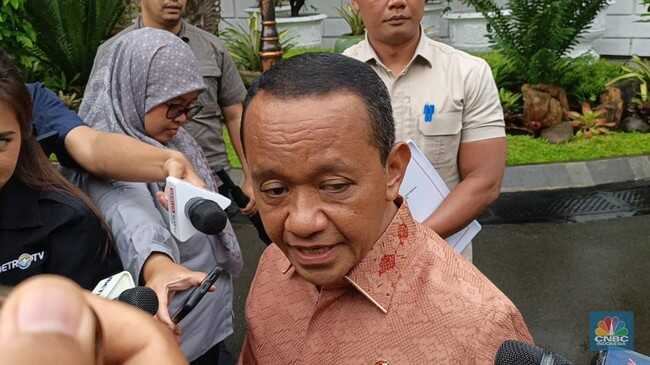
Jakarta, CNBC Indonesia - Energy and Mineral Resources Minister (ESDM) Bahlil Lahadalia has assured that the domestic supply of Bahan Bakar Minyak (BBM) and Liquified Petroleum Gas (LPG) remains secure, even as geopolitical tensions persist. The escalation of the Iran–Israel–United States conflict has not subsided, and this conflict has led to the closure of the world’s energy artery through the Strait of Hormuz in the Persian Gulf, a corridor where oil flows totaling around 20.1 million barrels per day. Indonesia, as an importer, is among the countries affected by the closure of Hormuz; 19% of national oil imports come via Hormuz. Against this backdrop, Minister Bahlil is confident that the BBM and LPG supply remains safe. ‘We know geopolitics are not in a good state, but for the government’s readiness in designing and preparing all alternatives for BBM and LPG supply, Insha Allah, it will be safe,’ he said at the Ministry of Energy and Mineral Resources, quoted on Thursday (5 March 2025).
On another note, Bahlil said President Prabowo Subianto has given direct instructions to accelerate the construction of oil storage facilities. ‘I have reported to the President and he instructed that we should build immediately. What for? This is about survival. If we talk about survival, we must be able to truly identify the core issues and resolve them quickly. If not, we remain dependent,’ Bahlil said.
According to him, accelerating the construction of oil storage tanks is a main strategy to strengthen domestic energy reserves. He also confirmed that the investment for this project is already available and investors are ready to back it. According to Bahlil, the tanks will be built to store crude oil. If crude stocks are available, the processing into BBM can be performed at existing refineries. ‘If it is indeed needed for BBM production, it will be at the refineries, basically. We just need to ask Pertamina’s refineries to add the storage tanks,’ he said.