
War Has Changed Completely: The World Races to Develop Advanced and Intelligent Weapons
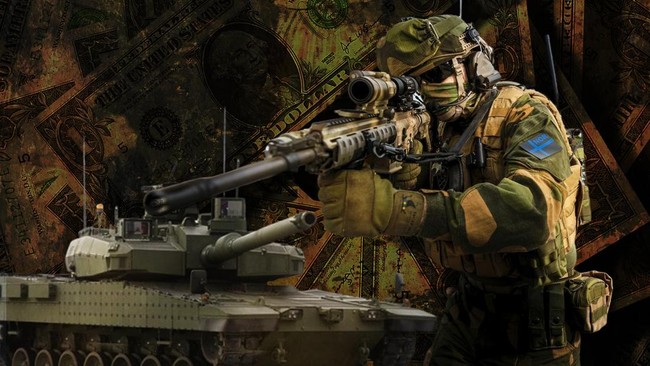
War Has Changed Completely: The World Races to Develop Advanced and Intelligent Weapons
Jakarta, CNBC Indonesia - The world is currently experiencing a rapid increase in military spending. Over the past decade, global defence expenditure has steadily risen in real terms, with the largest surge occurring in 2024 since the Cold War era.
NATO member countries in Europe, recognising the weaknesses in their armament following Russia’s invasion of Ukraine, are projected to increase spending by up to €300 billion per year by the end of this decade. Meanwhile, China continues to boost its military budget annually on a scale equivalent to Taiwan’s total defence budget.
However, military strength is not solely determined by budget size, but by the ability to produce weapons relevant to the character of future warfare.
Use of Weapons in Ukraine and the Middle East
Conflicts in Ukraine and tensions in the Middle East provide differing insights. Ukraine has demonstrated the effectiveness of cheap, rapidly updated drones to counter Russia’s larger military force.
In contrast, the United States and Israel rely on high technology such as stealth fighter jets and strategic bombers in their military operations against Iran.
Although they appear different, both approaches underscore the importance of combining advanced technology with flexible and adaptive weapon systems.
Weapon Production Capacity
One of the main lessons is the need for greater defence production capacity. Within 40 days of conflict, the United States reportedly depleted half of its stockpile of top-class air defence ammunition.
This highlights that modern militaries require a balance between expensive, limited-quantity weapon systems and cheap weapons that can be mass-produced and easily replaced.
Moreover, the key determining factor has now shifted to software; the most effective weapons are those supported by the best algorithms, high-quality data, and rapid updates.
Transformation of the US Defence Industry
The US defence industry is undergoing a major transformation. Companies like Palantir Technologies now have valuations surpassing those of established players like RTX Corporation in the defence sector. Together with SpaceX and Anduril Industries, they form a group of “neo-primes”—software-based companies redefining the weapons industry.
These companies adopt modern manufacturing approaches, including techniques from the automotive industry, and invest heavily in internal research and development.
This change is also supported by reforms in the US military procurement system. Under the leadership of Pete Hegseth, the Pentagon is working to accelerate the previously complex and bureaucratic purchasing process. Additionally, frontline commands are given a greater role in determining needs, and there is a push to utilise commercial technology over expensive bespoke solutions.
These steps open opportunities for new companies to compete with established players, creating a more diverse and innovative industrial ecosystem.
Europe Lags in Defence Technology
On the other hand, Europe still lags in developing its defence technology industry. The scarcity of large new companies in this sector is due to a fragmented market, limited access to venture capital, and low demand from governments.
Most defence budgets are still allocated to conventional equipment, as seen in Germany’s special €100 billion fund.
In the UK, targets for allocating 10% to new technology even included the F-35 Lightning II jet, a technology that is actually two decades old. This indicates slow adaptation to new innovations.
Nevertheless, Europe still has opportunities to catch up. Ukraine’s rapidly developing defence technology ecosystem since 2022 serves as a strategic asset that can be leveraged.
The UK has collaborated with Ukraine on developing interceptor drones or unmanned aerial vehicles, while Germany has struck new drone deals. Companies like Rheinmetall have also formed joint ventures with Destinus to produce long-range missiles at lower costs.
Ukraine even offers battlefield data to train artificial intelligence or AI, which is becoming a crucial component in next-generation weapon systems. If optimally utilised, this collaboration could strengthen Europe’s defence industry and reduce dependence on the United States.