
War, Energy, and the Future of the Earth
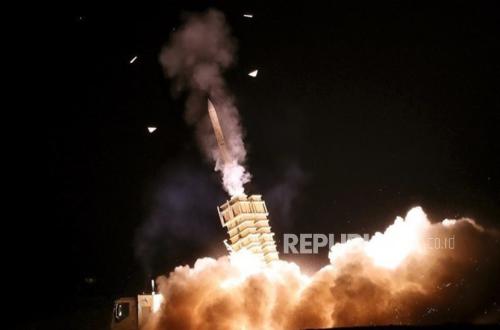
Who would have thought that the commemoration of Earth Day (22 April 2026) would arrive in an atmosphere that is not entirely optimistic? Amid rising global awareness of the climate crisis, the world is instead confronted with escalations in armed conflicts in various regions. Tensions between America-Israel and Iran, for example, not only leave geopolitical issues but also bring ecological implications that often escape attention.
Modern warfare can no longer be understood merely as a military event. It has become part of the global environmental problem. Every large-scale military operation involves extremely high consumption of fossil energy—from troop mobilisations, use of combat vehicles, to airstrikes. In this context, the carbon footprint from military activities increases sharply in a short time, especially during open conflicts.
When the world is still striving to keep global temperature rises from exceeding the 1.5°C threshold, military activities have the potential to erode achievements built through various decarbonisation policies. Herein lies the irony: on one side, civil society is encouraged to reduce carbon footprints through lifestyle changes; on the other, the carbon footprint from military activities often falls outside the framework of global climate accountability.
This condition shows that the climate crisis and armed conflicts have a deeper interconnection. Both are rooted in global dependence on fossil fuels. Oil and gas are not only energy sources but also objects of strategic interest disputes between countries. As long as fossil energy remains the main foundation of economic and defence systems, the potential for conflict will remain open.
Carbon Footprint of War
In several international media reports, the ecological impact of military operations is even evident on a striking scale. Emissions produced in a short time can match the annual carbon footprint of certain countries. This fact shows that war not only causes physical destruction but also accelerates the environmental crisis with intergenerational impacts.
Awareness of this is beginning to emerge among the global civil society. Climate activist Greta Thunberg, for example, calls this phenomenon “the normalisation of ecological genocide”. The term may sound harsh, but it carries a strong moral message: that environmental destruction in the context of war can no longer be considered a normal consequence.
If the public has so far been asked to reduce individual carbon footprints, the question that is rarely asked is: how large is the ongoing carbon footprint of war that continues outside the global awareness radar? At this point, what we face is no longer just an emissions issue, but the massive burning of fossil energy legitimised in the name of conflict and security.
From a policy perspective, this situation demands a more integrated approach between environmental agendas and global security. The transition to renewable energy can no longer be understood merely as a technical effort to lower emissions, but also as a strategy to reduce dependence on resources that often trigger conflicts.
Clean Energy and National Sovereignty
This is where the direction of solutions needs to be emphasised. First, the international community needs to promote transparency of carbon footprints from military activities as part of global climate commitments. Without including this sector in emissions calculations, climate change control targets will always be uneven from the start.
Second, countries, including Indonesia, need to accelerate the transition to renewable energy as part of national resilience strategies. Energy independence not only impacts economic stability but also reduces vulnerability to global conflicts triggered by fossil resource disputes.
Third, strengthening domestic capacity in clean energy technology becomes an urgent agenda. Dependence on imports of renewable energy components risks creating new forms of dependence. Therefore, investments in research, innovation, and national industry must be positioned as part of long-term strategies.
Fourth, civil society needs to continue pushing for global accountability, including in the use of military budgets with ecological impacts. Strong public awareness will become both moral and political pressure for countries to no longer ignore the environmental dimension in every conflict.
For Indonesia, this momentum is important to read strategically. Dependence on imported fossil energy not only affects the economy but also vulnerability to global dynamics. Therefore, investments in renewable energy need to be viewed as part of efforts to strengthen national sovereignty.
Earth Day should be a moment of reflection as well as course correction. The future of the environment cannot be separated from global political and economic choices. As long as war remains an instrument for resolving conflicts, and as long as fossil energy remains the main foundation of national power, efforts to save the Earth will always face serious obstacles.
Amid such a situation, the transition to sustainable clean energy is not only an ecological need but also a rational path to escape the cycle of recurring conflicts. As long as energy is positioned as an object of contention, war will always find reasons to exist.
Therefore, saving the Earth is not enough by reducing emissions at the individual level, but demands the courage to correct the direction of civilisation. We are determining: whether the future will be built on the energy of life, or continue to be held hostage by the carbon footprint of war.