
War Becomes Netanyahu's "Lifeline", Power Seat Still Under Threat
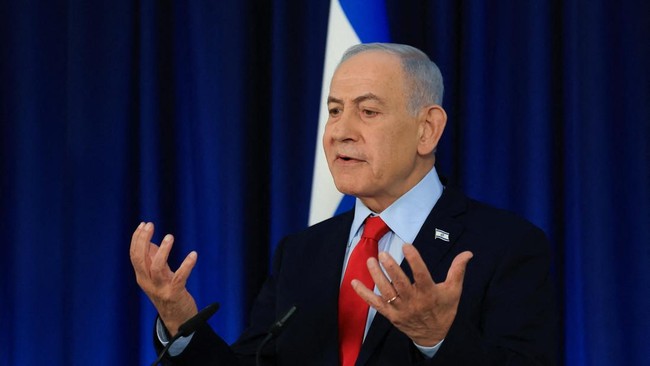
Israeli Prime Minister Benjamin Netanyahu finds himself in an awkward position. On one hand, he still enjoys public support to continue the war. However, on the domestic political front, his coalition is not yet strong enough to guarantee victory in the upcoming election.
Public Support Remains Strong, But Starting to Erode
One of Netanyahu’s main assets is public support for the ongoing conflict. A survey by the Israel Democracy Institute shows that around 68% of Israelis still support continuing the war, although this figure has fallen from 81% at the start of the conflict.
This decline reflects the emergence of public fatigue, though the majority still view the war as a strategic necessity.
Netanyahu has notched several important political successes by passing the national budget at the end of March, a rare achievement for an Israeli government ahead of general elections.
He has also secured his coalition’s votes by providing various incentives to religious communities and settlers in the West Bank. With this approval, he and his coalition are poised to complete a full four-year parliamentary term, another rare occurrence.
This move provides a political boost for Netanyahu following the 7 October 2023 attack, which Israelis regard as one of the worst security failures in the country’s history.
On the other hand, polling results show that the government coalition is still below the parliamentary majority threshold.
Although Netanyahu leads the largest party, his chances of forming a government again remain limited. This is because his coalition has not reached a majority of seats in parliament and there is weak support for his allied parties.
Moreover, differences in views during discussions on several bills further reflect the fragility of the coalition’s solidarity.
Fragmented Opposition Becomes an Opportunity for Netanyahu
Netanyahu still has hope in the opposition camp, which is more fragmented than his own coalition. This has become even more advantageous for his position after one opposition party joined the government coalition in 2024.
Meanwhile, the six opposition parties still in the Knesset are struggling to cooperate. This fragmentation is expected to deepen, with at least three new parties preparing to participate in the upcoming election.
Additionally, there is no strong figure consistently emerging as a prime ministerial candidate. Several leaders such as Yair Lapid, Benny Gantz, and Naftali Bennett have experienced fluctuating support in surveys.
This fragmentation makes it difficult for the opposition to form a solid coalition, even if they manage to win a majority of seats.
In Israel’s proportional political system, the ability to build coalitions is often more decisive than simply winning votes. In this regard, Netanyahu has a strong track record of embracing his political allies.
Netanyahu deliberately allies with far-right and ultra-religious parties that are generally aligned on policy, unlike the more varied opposition parties.
Netanyahu’s opposition ranges from nationalists to conservative Islamists and Arab communists. With significant differences between these parties, it is unlikely they can lead a government together.
Political Fate Determined by War Outcome
Even if Likud does not achieve a majority in parliament, Netanyahu still has a chance to retain power through coalition manoeuvres, especially amid the opposition’s fragmentation.
However, the war’s outcome remains the determining factor for the sustainability of that power.
If Israel achieves a clear victory, Netanyahu’s political position could strengthen significantly. Conversely, if the conflict ends without results or even strengthens adversaries like Iran, the electoral impact could be severely damaging.
Unlike leaders such as Donald Trump, who have political flexibility to declare victory or end a war according to political interests, Netanyahu is heavily dependent on the realities on the ground.