
War Becomes a Money Machine: Indonesian Palm Oil and Coal Businessmen Reap Big Profits
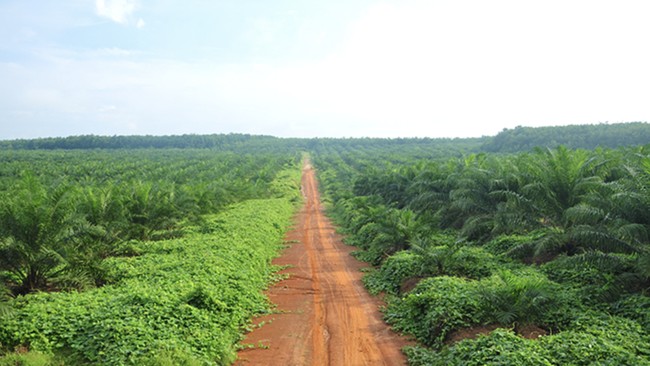
Jakarta, CNBC Indonesia - Crude palm oil (CPO) and coal prices have surged since the Iran war erupted at the end of February 2026. This spike is undoubtedly a major boon for Indonesian businessmen in these sectors, as Indonesia is the world’s largest exporter of CPO and thermal coal. According to Refinitiv, CPO prices closed at MYR 4,631 per tonne on Friday’s trading (27/3/2026), exactly one month after the Iran war broke out. Prices rose 1.04% on Friday’s session. Since the war erupted on 28 February 2026, CPO prices have soared 14.6%. They even touched MYR 4,631 per tonne on 16 March 2026, the highest since February 2025 or over a year. The Iran war against Israel and the United States (US) has propelled global crude oil prices, prompting producers to seek cheaper alternative energy sources. The rise in crude oil prices supports palm oil through biodiesel demand, while the strength of soybean oil prices simultaneously reduces substitution pressure in the vegetable oil market. This creates a double boost, from both cost and substitution perspectives. From a technical standpoint, some traders believe prices could find support above MYR 4,580 per tonne, with resistance around MYR 4,700 per tonne. Currently, prices are in the middle of this range, and the next movement will depend on the sustainability of crude oil price trends and buying momentum from major importing countries. The sharp rise in CPO prices now may continue or not, heavily depending on oil price movements, at least in the short term. Despite the war-driven increase, current prices are still far below 2022 levels during the Russia-Ukraine war, when they exceeded MYR 7,100 per tonne, the all-time high. Thus, current prices are generally seen as sustainable and likely to move in line with oil prices, where Brent crude last traded at US$97.89 per barrel. Brent oil is currently below the psychological US$100 per barrel level, amid US diplomatic efforts raising hopes of de-escalating the Middle East conflict and reducing concerns over prolonged supply disruptions. “High crude oil prices enhance biodiesel economics, thus driving demand for palm oil as an alternative fuel feedstock,” said Tradeview Capital portfolio manager Neoh Jia Man. He added that this also strengthens expectations of increased biodiesel blending mandates, especially in Indonesia, which tightens export availability and provides additional support for CPO prices. The Malaysian Palm Oil Council (MPOC) forecasts that CPO prices will remain above MYR 4,450 (US$1,130) per metric tonne in the short term, driven by rising energy prices and Middle East uncertainty. According to the body, palm oil prices will be supported by high energy prices and favourable spreads between palm oil and gasoil. “However, slowing economic growth and rising price volatility due to Middle East uncertainty could temporarily delay imports from major markets, potentially capping price gains,” quoted from The Star. This CPO price surge is certainly beneficial for Indonesia, especially palm oil businessmen, given that Indonesia is not only the world’s largest producer but also the largest exporter. Coal prices have also been stung by the oil price rise. According to Refinitiv, coal prices closed at US$143.85 per tonne on Friday’s trading (27/3/2026), or one month after the war, up 1.3%. Since the war erupted, coal prices have skyrocketed 23.04%. They even broke through US$146.5 per tonne on 20 March 2026, the highest since October 2024 or 1.5 years. Coal prices surged after many countries turned back to the black rock as an oil substitute. India has delayed plans to operate coal-fired power plants (PLTU) at lower output levels when solar power production peaks. This delay is due to uncertainty over compensation schemes for PLTUs that must operate at minimum levels. India, which still relies on coal for about 60% of its electricity generation, has seen rapid growth in solar capacity in recent years and plans to quadruple it by 2035. As efforts to increase solar’s share in the electricity mix, the government is considering reducing PLTU output through a coal flexibility scheme. However, PLTUs need compensation if their utilisation drops from 55% to 40%. To date, the government has not found the right mechanism. Meanwhile, the industry is also concerned about operational safety at low levels, as well as additional investments needed to convert PLTUs into flexible generation facilities. As a result, India has postponed the “flexible coal” plan for one year, as there are no regulations yet on retrofit compensation and maintenance costs if PLTUs are forced to operate at 40% utilisation. Meanwhile, Japan is considering ramping up coal-fired power generation amid a liquefied natural gas (LNG) supply crisis causing price spikes. According to a proposal from the economy ministry, the 50% utilisation cap for PLTUs may be lifted in the new fiscal year starting April. This step could reduce LNG consumption by up to 500,000 tonnes per year. In comparison, Japan imports about 4 million tonnes of LNG per year from the Middle East. That amount is also equivalent to Japan’s current LNG reserves.