
War and Hormuz Strait Closure Bring Iran Major Profits from Oil, The Economist Analysis
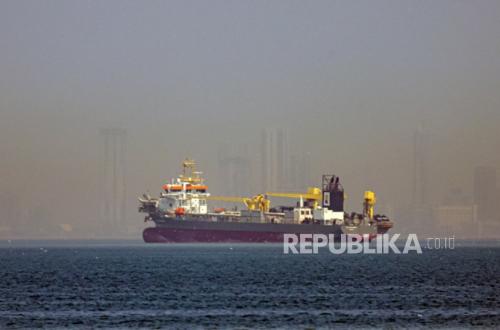
Since the United States (US) and Israel launched aggression against Iran on 28 February 2026, Iran immediately retaliated with counterattacks while closing the Strait of Hormuz and selectively allowing ships to pass. The closure of the Strait of Hormuz has caused turmoil in the energy sector for many countries on one hand, but on the other, it benefits Tehran.
According to data analysis from The Economist on Sunday (29/3/2026), Iran has multiplied its daily revenue from oil sales since the end of February, or since the war with the US-Israel broke out. Entering the fifth week of the war, the report states that the geopolitical landscape in the energy sector has shifted dramatically.
The blockade of the Strait of Hormuz has resulted in the collapse of revenues from oil sales for countries in the Persian Gulf, but it has swelled Iran’s state coffers. Data cited by The Economist indicates that Iran’s current exports are at 2.5 to 2.8 million barrels per day (bpd), a jump from the previous range of 1.5 to 1.8 million bpd.
As the global oil supply tightens due to instability, oil prices have surged, but Iran has successfully capitalised on this situation. Analysts cited by The Economist say that Tehran’s oil machine has demonstrated significant resilience, continuing to operate by adapting to hostilities and ongoing sanctions.
China remains the primary destination for Iran’s oil exports, where Beijing absorbs up to 90 percent of Iran’s total exports. Meanwhile, small independent refineries are also reported to be purchasing Iranian crude oil at prices close to the global crude oil price cap.
In a significant shift from previous years when Iranian oil was traded at a discount due to sanctions, Iranian oil is now sold at premium price levels. According to The Economist report, the current dynamics provide Tehran with unprecedented financial strength amid economic and military pressures from the US and Israel.
“This development is a case of resilience and strategic adaptation, which enables the Islamic Republic to mitigate the impact of imperialist threats aimed at isolating Iran’s energy sector,” said one analyst cited by The Economist.