
Waqf Certification Must Level Up, from Legality and Competence to Real Impact
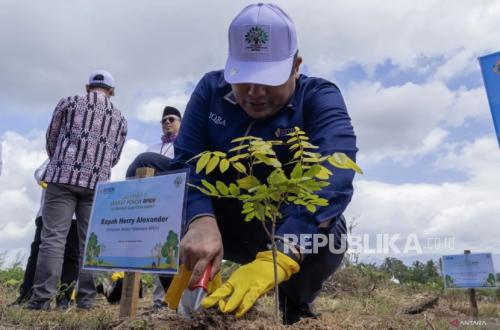
Amid the vibrancy of national Islamic economic development, waqf is regaining its relevance as a strategic instrument for the ummah. The state is demonstrating seriousness through the acceleration of waqf asset certification, strengthening regulations, and developing professional nazhir certification. These various achievements deserve appreciation as non-trivial steps forward.
However, behind this progress lies a fundamental question that we must not ignore. Has the increasingly widespread waqf certification truly transformed into a real force for societal welfare?
This question is important because waqf, in essence, is not merely about legality or administration. Waqf is an instrument of sustainable benefit. It not only preserves wealth but brings it to life.
When certification stops at documents and numbers, while benefits have not grown significantly, there is a shift in purpose, from utility to formality. This is where critical reflection becomes essential so that the direction of waqf development does not lose its spirit.
Existing data shows encouraging developments. KNEKS statistics record that national cash waqf accumulation increased from Rp 0.81 trillion in 2020 to Rp 3.54 trillion as of November 2025.
Innovative instruments such as Cash Waqf Linked Sukuk (CWLS) are also developing, with a total of 15 series worth Rp 1.47 trillion, and benefits generated reaching Rp 27.69 billion in 2023. At the same time, the institutional ecosystem is strengthening, with 484 active Indonesian Waqf Bodies, 61 LKS-PWU, and 6,945 certified nazhir based on SKKNI.
On the human resource strengthening side, progress is also evident. The Indonesian Waqf Body’s Professional Certification Institution has developed 10 competency schemes, supported by 115 Competency Testing Centres (TUK), and around 7,200 candidates.
Furthermore, through Ministry of Manpower Decision Number 47 of 2021, waqf management now has 37 competency units covering the entire waqf management cycle, from collection, safeguarding, management and development, to benefit distribution and financial reporting.
This shows that Indonesian waqf has moved from a traditional model to a professional system based on national standards. However, it is precisely at this point that major challenges emerge. When the institutional and competency foundations are already in place, the measure of success must no longer stop at building those foundations themselves.
Certification, whether of assets or professions, must not be positioned as the end goal, but as a means to achieve productivity and impact. If not, we risk getting trapped in what can be called an administrative trap, namely a condition where success is measured by the number of certificates and not by the benefits produced.
Today, Indonesia essentially has two types of waqf certification running in parallel. First, waqf asset certification, which guarantees legal certainty and protects waqf assets from disputes. Second, waqf professional certification, which aims to ensure that nazhir have the competence to manage waqf professionally.
Both are very important and inseparable. Asset certification protects waqf from loss, while professional certification protects waqf from mismanagement.
However, the issue is not the existence of these two certifications, but the lack of strong linkage between them and waqf’s ultimate goals. We still tend to stop at administrative recognition, not institutional transformation.
In fact, waqf will not produce major impacts just because it is legal and managed by certified individuals. It will only have an impact when legality, competence, and development operate within a complete system.
This is where it is important to understand that the challenge for Indonesian waqf today is no longer a lack of concepts, but a lack of orchestration. We have very comprehensive competency standards.
The 37 competency units show that waqf management has been understood as a complete system, from collection strategies, asset management, partnerships, to services for beneficiaries.
However, these standards have not yet been fully converted into living and impactful institutional practices. Therefore, a bolder shift in thinking is needed. Waqf certification must be repositioned as part of an impact-based transformation system.
It must not stop at “certified” status, but must be connected to real performance. In this framework, certification becomes the starting point of a long process that includes asset potential mapping, development planning, nazhir mentoring, and integration with financing and strategic partnerships.
Moreover, Indonesia needs to start adopting a new approach that can be called impact-based waqf certification. In this approach, every certified waqf asset is not only declared legally secure, but also entered into a productivity evaluation system.
Every certified nazhir is not only recognised for their competence, but also measured for their contribution to increasing the value and benefits of the waqf they manage. Thus, certification changes from mere recognition to an instrument of social accountability.
This approach will bring major changes in how we measure waqf success. Indicators no longer stop at the number of certificates or certified nazhir, but shift to increases in asset value, management results, and the number of benefit recipients.
Waqf is no longer seen as a static asset, but as a resource that must continuously develop and create impact.
Of course, this change requires strong ecosystem support. Certification must be followed by ongoing technical mentoring, innovative financing access, and accurate national waqf data integration.
Waqf assets that have been