
Want the KRL Green Line Free from 'Chaos' and 'Horror'? Here Are the Conditions
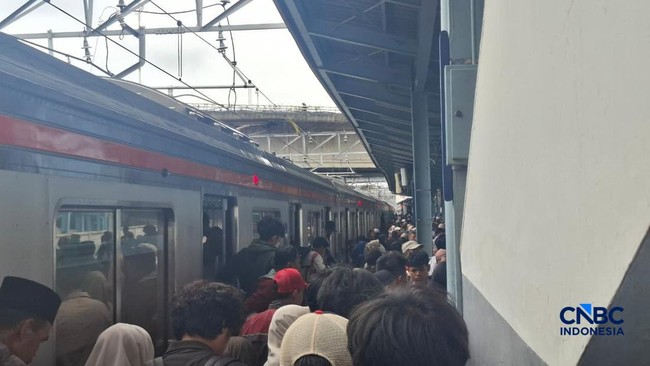
Problems with the KRL Commuter Line on the Tanah Abang-Rangkasbitung route continue to be a hot topic on social media. Loyal passengers, or ‘train kids’ (anker), complain about having to squeeze in and wait for long periods every day. PT KAI Commuter (KCI) recorded more than 43 million passengers on that route in 2022. The number rose 43% to over 62 million in 2023. In 2024, it increased another 13% to over 69 million people. For 2025, it is projected to rise 11% to over 77 million people. PT Kereta Api Indonesia (Persero) (KAI) and KCI have been working to reduce congestion on the KRL route during peak weekday hours, from adding more trips to other measures. Another effort is the ongoing trial of 12-car KRLs (SF 12). However, due to many limitations in facilities and infrastructure, the decongestation has not been effective. KAI Commuter Corporate Secretary Vice President Karina Amanda revealed that there are still many challenges facing the route, starting from limited electrical substation capacity for Overhead Catenary System (OCS) power, limited signalling systems, to the number of available train sets. The still limited electricity supply and some stations whose platforms do not yet accommodate SF 12 KRLs mean that such trains cannot yet operate on the route. ‘The Rangkasbitung route is still using SF 10 to match the infrastructure conditions on that line, one of which is the OCS power capacity and platform lengths that not all can serve SF12 KRLs,’ said Karina to CNBC Indonesia on Friday (27/3/2026). This also means that the new KRLs made in China and by PT INKA (Persero) cannot yet be operated on the Tanah Abang-Rangkasbitung route. Moreover, both new KRLs require substantial electrical power. ‘For the INKA and CRRC (China) KRL sets, they are 12-car sets, so they cannot yet be used on the green line because infrastructure capacity needs to be increased, namely adding OCS power capacity and extending station platforms,’ she continued. In addition to the low electrical capacity and some stations whose platforms do not accommodate the KRL, the signalling that still uses a closed block system is another obstacle. This also makes it difficult to shorten the KRL headway. ‘Currently, the signalling system on the Rangkasbitung line is still using a closed block system, so inter-KRL trips can only serve travel from one station to the next station,’ she explained. It is hoped that this route will receive signalling improvements, where it should already be using an open block system so that the KRL headway can be shortened to 5-8 minutes. Nevertheless, KAI Commuter, as the operator of the KRL Commuter Line on the Tanah Abang-Rangkasbitung route, is always striving to coordinate with relevant parties to obtain increased electricity supply and other infrastructure. ‘As the operator of the Commuter Line, KAI Commuter is endeavouring to provide the best service for all users, not just on the green line, but improvements are needed not only in facilities but also in infrastructure, including electricity supply and further development at Tenjo Station. KAI Commuter and KAI continue to coordinate with the government and PT KAI for railway development on that route,’ she clarified.