
Wamentan: Rice stocks abundant, Indonesia ready to expand export markets
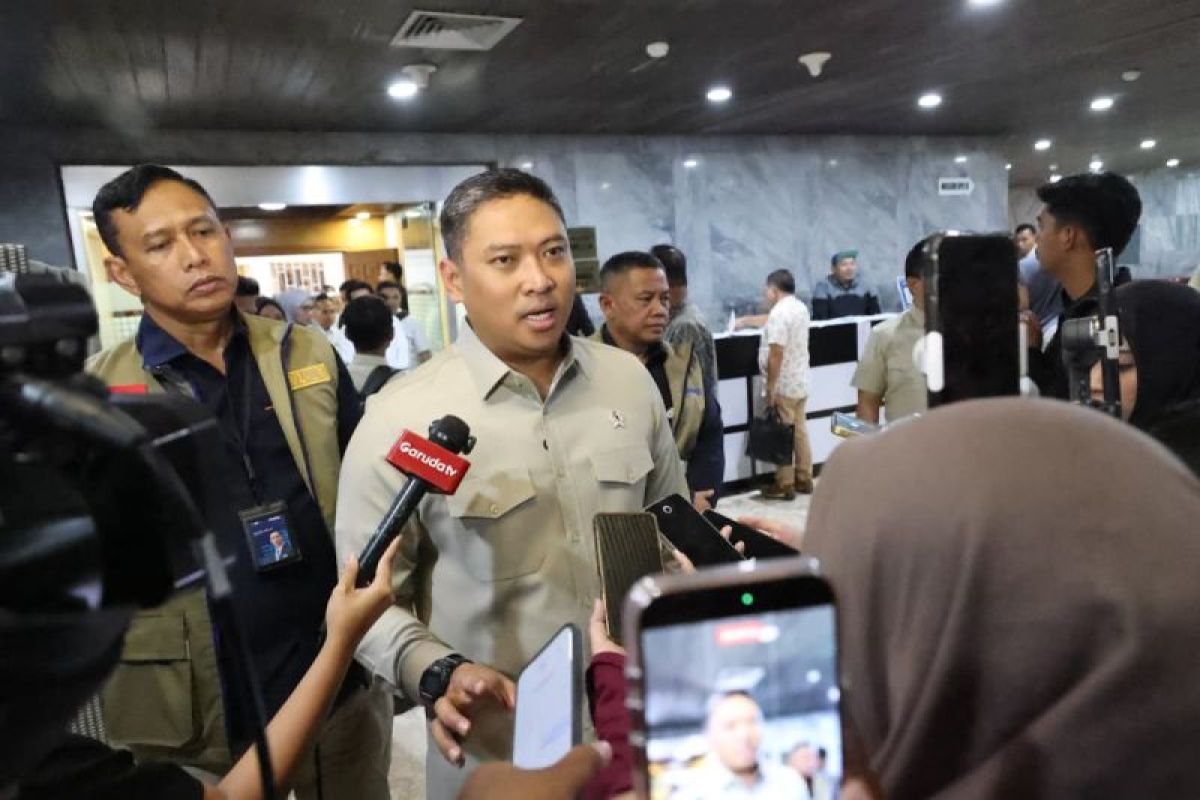
All exports are calculated meticulously. We must ensure domestic needs are not disrupted.
Jakarta (ANTARA) - Deputy Minister of Agriculture (Wamentan) Sudaryono said that Indonesia has entered a new phase of national food security with abundant rice stocks, ready to expand exports and assist partner countries in need of food.
‘Indonesia is entering a new phase of national food security marked by strong rice stocks, rising production, and Indonesia’s ability to export rice while carrying out international humanitarian missions,’ said Wamentan in Jakarta on Tuesday.
He emphasised this after taking part in a working meeting and a hearing with Commission IV of the DPR RI regarding paddy absorption at the Parliament Complex, Senayan, Jakarta.
Sudaryono said that Indonesia is now not only focused on meeting domestic needs, but also beginning to widen its role as a food supplier to partner countries, while continuing to prioritise national stock sufficiency.
‘We have already sent 10,000 tonnes of rice to Palestine. Then about 2,000 tonnes to Saudi Arabia. Looking ahead, we hope that not only Indonesian pilgrims performing Hajj and Umrah will consume Indonesian rice, but pilgrims from other countries as well,’ he said.
Nevertheless, he stressed that all export policies are implemented in measured and careful manner to avoid disrupting domestic needs.
‘All exports are calculated meticulously. We must not let domestic needs be disrupted,’ said Sudaryono, who is also the General Chairman of the Indonesian Farmers Unity Association (HKTI).
Previously, Indonesia recorded its first export of premium rice of 2,280 tonnes worth Rp38 billion to Saudi Arabia to meet the needs of around 215,000 Indonesian Hajj pilgrims.
Going forward, the Saudi market is deemed to have great potential, especially to meet the needs of Umrah pilgrims and Indonesians living there, estimated at around 2 million people per year.
In addition to exports, the government has also delivered humanitarian assistance of 10,000 tonnes of rice to Palestine in solidarity and in follow-up to the directive of the President of the Republic of Indonesia, Prabowo Subianto.
Sudaryono said that the government’s optimism in expanding exports is supported by national rice stock levels currently at their highest in history.
As of 18 May 2026, the government rice stock (CBP) managed by Perum Bulog stood at about 5.37 million tonnes.
The figure not only serves as a buffer for national food security but also provides room for Indonesia to conduct exports and humanitarian aid.
‘Our stock is abundant, already 5.3 million tonnes. The production potential and absorption going forward are also very large,’ he said.
The government estimates that even though stocks are used for the Stabilisation of Supply and Food Prices (SPHP) programme, humanitarian aid, provision of premium rice, and exports, the national rice stock position at the end of 2026 will remain at a safe level.
‘We predict stock at the end of December 2026 to stay in the range of 5 million tonnes, possibly a bit lower or higher. Because production continues and needs persist,’ he explained.
On the production side, the performance of the national agriculture sector also shows a positive trend. Indonesia’s rice production in 2025 reached 34.69 million tonnes, up by 4.07 million tonnes from the previous year or about 13.29%.
With domestic needs around 2.5–2.6 million tonnes per month, Indonesia is seen as having enough room to expand export markets without disturbing domestic supply stability.
Sudaryono also revealed that the government is exploring cooperation with several countries that could become new export markets.
‘We have started talks with several countries. Exports must be calculated commercially, from price to quantity. For now it’s a business-to-business process and finalisation of agreements,’ he said.
He added that the move aligns with the President’s directive that Indonesia should help partner countries experiencing food crises due to war, disruptions to international trade, or other global crises.
‘If we are able, then we must be ready to help partner countries in need,’ he stated.
Sudaryono cited that the policy is similar to Indonesia’s earlier fertiliser urea exports to assist several countries.
‘If we have stock surplus and there are countries in need, of course we will help,’ he concluded.
He added that this achievement further reinforces Indonesia’s agricultural sector transformation, which now not only fulfils domestic needs but also strengthens Indonesia’s position in the global food market and in international humanitarian missions.