
Wamensos Outlines Government Strategy to Tackle Poverty and Education Access
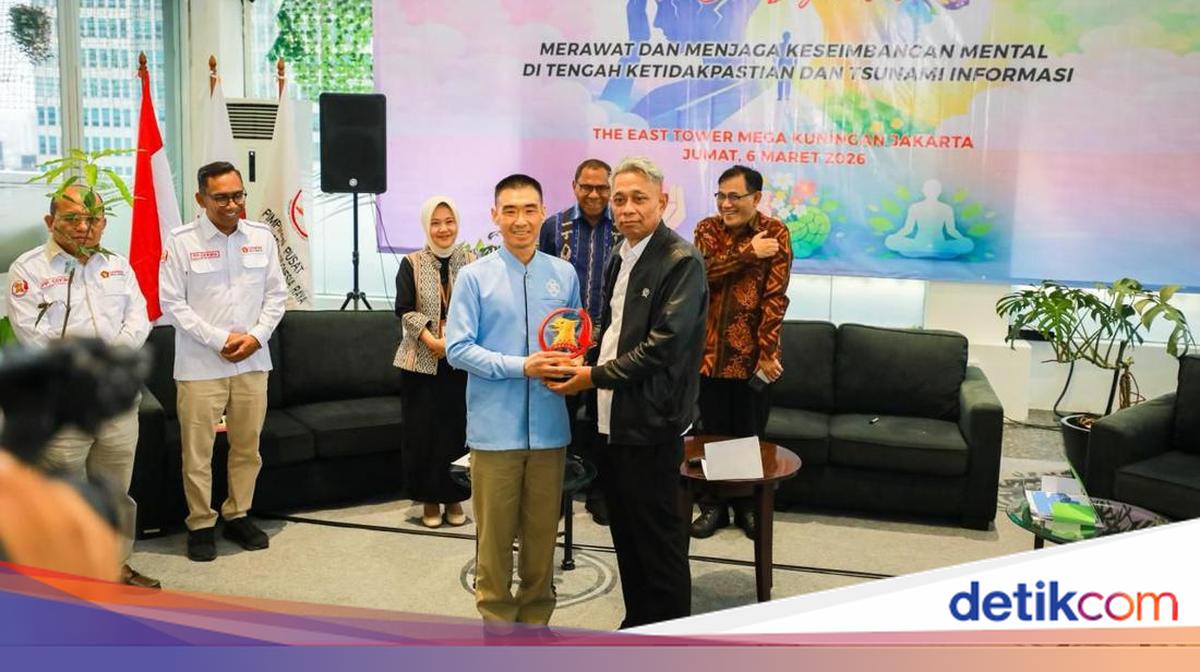
Deputy Minister of Social Affairs of the Republic of Indonesia (Wamensos), Agus Jabo, outlined a number of government programs related to tackling social issues, including poverty and access to education.
He referred to President Prabowo Subianto’s directive about the importance of strengthening national sovereignty through economic self-reliance and reinforced social policy.
‘The President stated that Indonesia must be sovereign politically, self-reliant economically, and have a strong national character culturally,’ Agus Jabo said in a briefing on Saturday (7 March 2026).
He made the remarks while delivering a talk at a public discussion and iftar event organised by the Indonesian Christian Movement for Greatness (GEKIRA) at the East Tower, Mega Kuningan, South Jakarta, on Friday (6 March).
The event carried the theme ‘Building Health Resilience in the Digital Era: Caring for and Maintaining Mental Balance Amid Uncertainty and the Tsunami of Information.’ He also explained government policy on the use of the National Socio-Economic Single Data (DTSEN) as the basis for implementing various programs. The policy is regulated by Presidential Instruction Number 4 of 2025.
‘Up until now, each ministry had its own data. Now the government has a National Socio-Economic Single Data set that forms the basis for a range of programs,’ he said.
He noted that the data is compiled by the Central Statistics Agency (BPS), while the Ministry of Social Affairs is tasked with data updates due to the constantly changing socio-economic conditions of the people.
He stated that there are currently about 2.38 million people classified as ultra-poor. The government targets addressing ultra-poverty through the use of this integrated data.
During the event, Agus Jabo also shared research results on the link between parental economic conditions and children’s conditions. ‘Around 64.46 percent, if a child’s parents are poor, the child is also at risk of experiencing the same condition,’ he said.
He added that one of the programs related to breaking the poverty chain is Sekolah Rakyat, an on-reserve boarding school designed for children from poor or ultra-poor families. ‘Sekolah Rakyat is prepared for children from poor families so they can access education,’ Agus Jabo said.
For information, the discussion was also attended by several other speakers, including the Head of the Agency for the Acceleration of Poverty Alleviation (RI), Budiman Sudjatmiko; the Vice Governor of East Nusa Tenggara (NTT) Johni Asadoma; Assistant Deputy for Policy Coordination on the Fulfilment of Children’s Rights in Region III, Ministry of Women’s Empowerment and Child Protection, Endah Sri Rejeki; and GEKIRA Secretary-General Yeremias Ndoen. The event was opened by GEKIRA Chairman Nikson Silalahi. (prf/ega)