
Wall Street Strengthens on Optimism Over Easing Iran-US Conflict
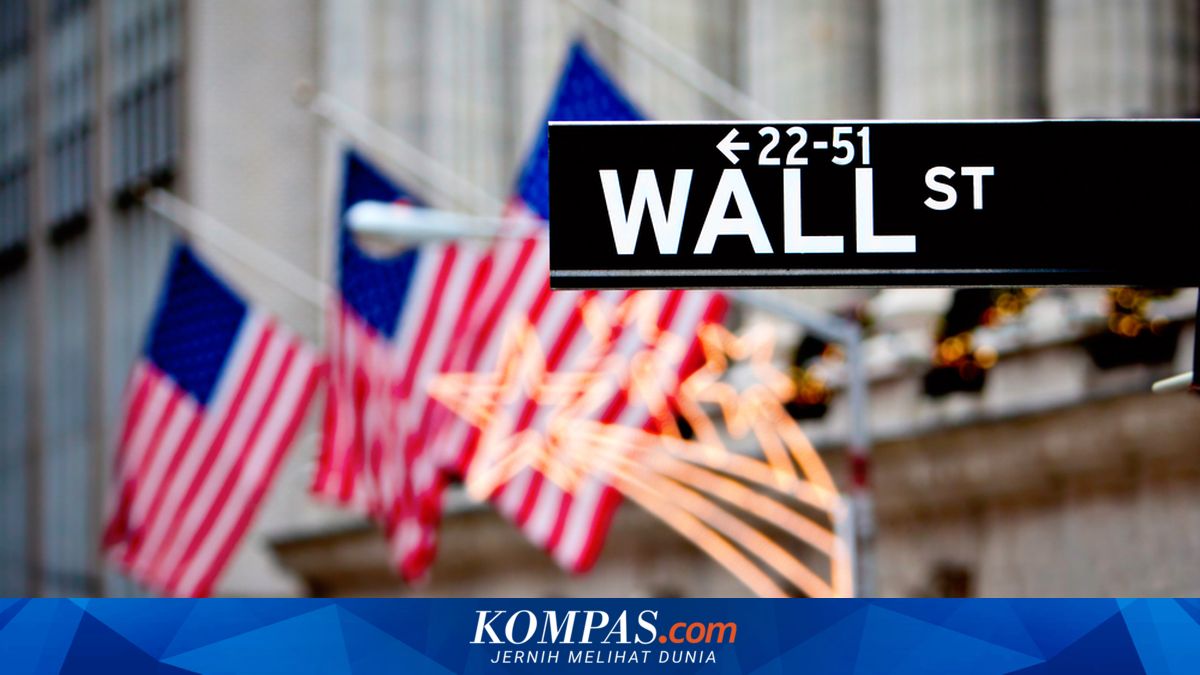
The main Wall Street indices, representing the US stock market, closed higher at the end of trading on Tuesday (31/3/2026), driven by speculation that tensions in the Middle East conflict are easing, which had previously triggered a surge in oil prices and global inflation concerns.
Citing Reuters, the S&P 500 jumped 2.91% to 6,528.52. The Nasdaq rose 3.83% to 21,590.63, while the Dow Jones Industrial Average increased 2.49% to 46,341.51.
These three major US stock indices recorded their largest daily gains since May 2025, when the market responded to the easing of trade war tensions between Washington and Beijing.
The Wall Street rally was broad-based across sectors. Nine of the 11 sectors in the S&P 500 closed higher, led by the communication services sector, which rose 4.42%, followed by the information technology sector, up 4.24%.
Cumulatively since the start of the year, US stock index performance remains under pressure. The S&P 500 is down 4.6% year-to-date, Nasdaq has weakened 7.1%, and Dow Jones has corrected 3.6%.
Trading activity on the US exchange was also high, with volume reaching 22.4 billion shares, above the 20-day average of around 20.3 billion shares.
The positive market sentiment was triggered by a report in The Wall Street Journal stating that US President Donald Trump is opening the possibility of ending the military campaign against Iran, although parts of the Strait of Hormuz remain closed.
The conflict, which has lasted about a month, previously pressured US stock markets. The S&P 500 and Dow Jones recorded their deepest quarterly declines since 2022, amid concerns that the surge in energy prices would suppress demand and drive inflation.
“The current market rise is more driven by speculation regarding the potential easing of the conflict,” said Bill Northey, Senior Investment Director at U.S. Bank Wealth Management.
He added that market participants are seeking signals of stability in global energy flows, particularly through the Strait of Hormuz.
“Details are still scarce, but the capital markets are looking for any indication that there is a chance for more normal energy flows through the Strait of Hormuz,” he explained.
Nevertheless, pressure still looms over the US labour market. Government data shows job vacancies fell more deeply than expected in February, while hiring hit its lowest level in nearly six years.
The surge in oil prices due to the Iran conflict has also reignited inflation concerns. Market participants now assess that the Federal Reserve (The Fed) is more likely to raise interest rates by the end of the year than to cut them, as reflected in the CME Group’s FedWatch Tool.