
Wall-less workspace
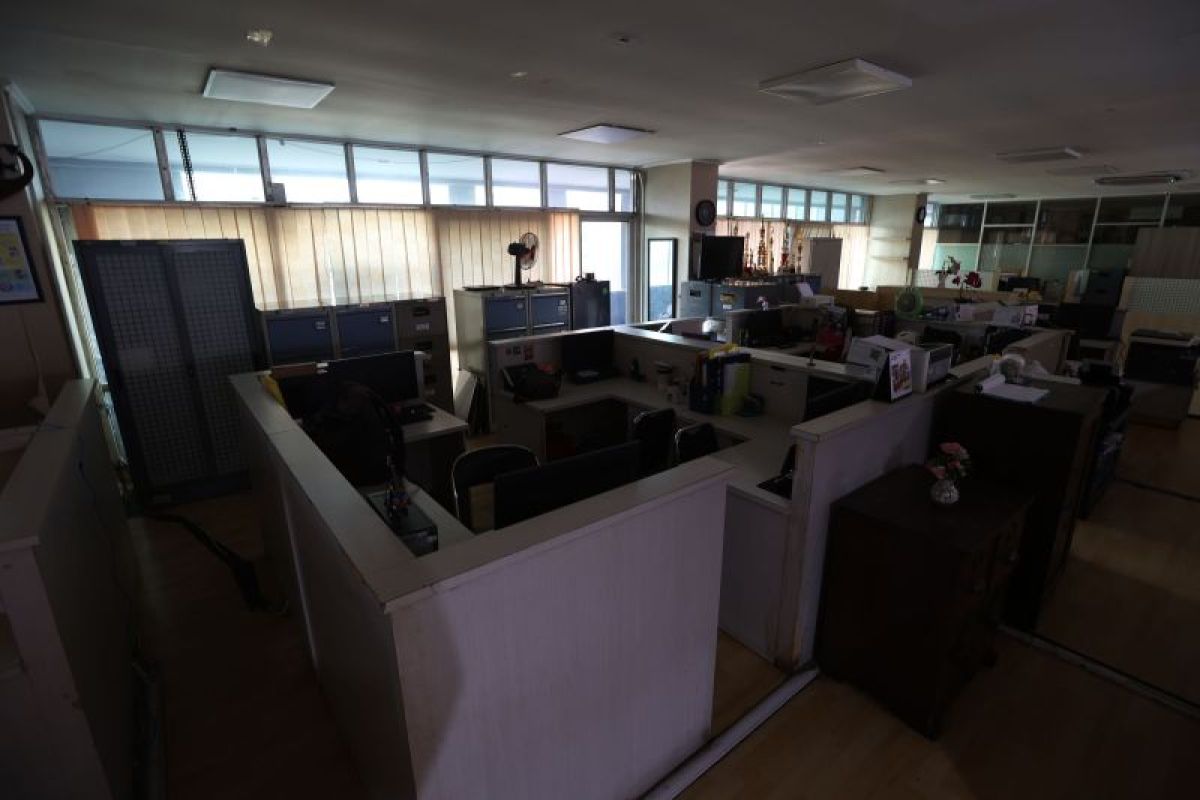
Surabaya (ANTARA) - That morning, the office atmosphere in Surabaya City felt different. Some desks were empty, room lights were not fully on, and traffic to the government centre was slightly less congested.
That tranquillity was not a sign of a holiday. Behind mobile phone screens, the activities of civil servants (ASN) were proceeding with a new rhythm, quieter but monitored.
The first day of implementing work from home (WFH) by the Surabaya City Government became a marker of change in bureaucratic work methods. No longer fully dependent on physical presence, but on digital system-based discipline.
The “Kantorku” application became the main tool, monitoring ASN attendance three times a day, while also tracking their locations in real time.
This step was not merely a technical adjustment, but part of a cultural transformation in the public sector. The question is, does this change truly improve performance, or does it merely add layers of control that may not be effective?
Digital Discipline
Surabaya’s WFH policy does not stand alone. It exists within a fairly strict framework. ASN are required to clock in before 07.30 WIB, at 12.00 WIB, and at 16.30 WIB.
Failure to attend at any of those times is considered a violation. Even, the system can detect employee locations, ensuring they are truly in the appropriate place.
On one hand, this approach shows the government’s seriousness in maintaining work discipline. Experience during the pandemic showed that flexibility without supervision could potentially reduce productivity. With a digital system, every activity has a trace, every performance has evidence.
On the other hand, this approach also raises fundamental questions: is digital presence identical to productivity? Three daily clock-ins do ensure presence, but do not necessarily reflect work quality.
In global practice, the flexible work trend has shifted from time-based measurement to output-based. Countries with advanced bureaucratic systems have begun assessing performance based on achievements, not just presence. Surabaya appears to be in a transitional phase, trying to balance control and trust.
Interestingly, this policy is also accompanied by a daily reporting obligation. ASN must record what is being worked on, what is completed, and concrete evidence of those activities. Here, an effort is visible to shift focus from mere presence to producing results.
The next challenge is to ensure those reports are not just administrative formalities. Without a strong evaluation system, daily reports could potentially become a new bureaucratic routine that burdens rather than improves performance.
Efficiency Paradox
WFH in Surabaya also brings an efficiency dimension. Reduction in office electricity use, restrictions on fossil fuel vehicles, and encouragement to use public transport or electric vehicles become part of this policy. In the context of a large city with high environmental pressure, this step is commendable.
However, institutional-level efficiency does not always align with individual-level efficiency. For ASN, working from home means transferring some operational burdens to personal space. Electricity costs, internet, and workspace become individual responsibilities.
Moreover, not all bureaucratic work can be easily shifted to an online system. Cross-unit coordination, certain administrative services, and work requiring direct interaction still need physical presence. That is why several strategic agencies continue to implement work from office (WFO).
This combination of WFH and WFO shows that flexibility does not mean uniformity. Some work can be digitalised, others still require direct touch. The challenge is to ensure this division does not create workload disparities among employees.
On the other hand, the ongoing weekly community work obligation adds a unique colour to this policy. Amid digitalisation, ASN are still drawn into public spaces, cleaning the environment and interacting directly with the community. This serves as a reminder that bureaucracy must not become entirely trapped behind screens.
However, a work rhythm combining morning community work, WFH throughout the day, and detailed reporting could potentially cause its own fatigue. Without good time management, flexibility could turn into new pressure.
Bureaucratic Transformation
Surabaya’s step in implementing WFH with digital monitoring actually reflects a new direction in Indonesian bureaucracy. Local governments are starting to dare to experiment with more adaptive work patterns, utilising technology to increase accountability.
However, this transformation cannot stop at technical aspects. Digitalisation must be followed by a paradigm shift. Application-based monitoring needs to be balanced with trust and real performance assessment.
Looking ahead, several things need to be strengthened. First, performance indicators must more emphasise results, not just presence. The daily reporting system needs to be integrated with clear and measurable performance targets.
Second, enhancing ASN digital capacity is key. Not all employees have the same ability to utilise technology. Without adequate training, digitalisation could create new disparities.
Third, employee welfare aspects need attention. WFH should provide work-life balance, not the opposite. Support for home work facilities, including adequate internet access, becomes an important part of this policy.
Fourth, transparency to the public must be maintained. The community needs to be assured that even if ASN are not always present in the office, services continue optimally. Public trust is the main stake in this policy.
WFH is not just about working from home. It is a test for bureaucracy to transform into something more adaptive and efficient.