
Walhi Jakarta Criticises RDF: Waste Management at Source Level More Effective
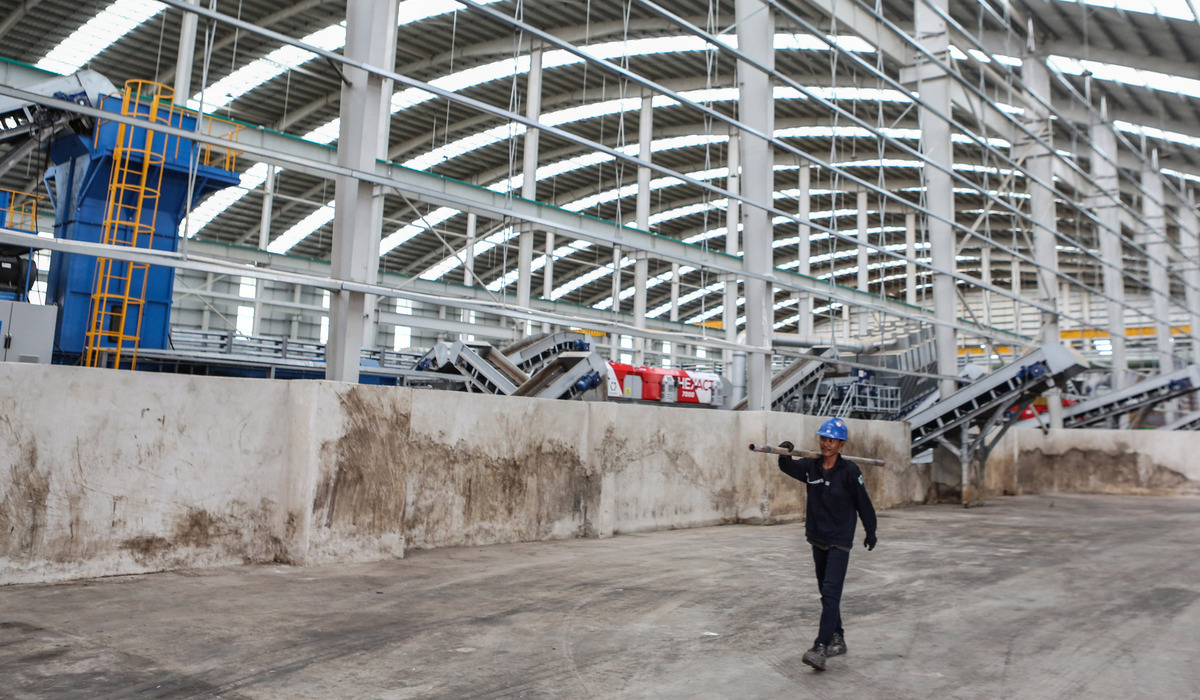
The Bantargebang waste tragedy stands as evidence of systemic failure.
The Indonesian Environmental Forum (Walhi) Jakarta is pressing the government to undertake a paradigm revolution in waste management. Rather than relying on expensive large-scale thermal technology, the government is urged to prioritise waste management directly at the upstream level, particularly for organic waste categories.
Walhi Jakarta’s campaigner Muhammad Aminullah has highlighted the government’s current preference for investing in technologies such as Refuse-Derived Fuel (RDF) and incinerators. Yet these technologies are considered misaligned with Indonesia’s waste characteristics, which are dominated by wet and organic waste.
Aminullah explained that the government’s frequent claims about budgetary constraints and technological limitations are not relevant. According to him, upstream solutions are far cheaper, more applicable, and more sustainable compared to large-scale investments in thermal devices.
“Looking at our waste characteristics, the majority is organic. The technology should adapt accordingly. This is actually not expensive compared to investing in devices like RDF, incineration, and PSEL (waste-to-electricity processing),” said Aminullah in an interview on Tuesday, 10 March 2026.
He outlined that organic waste could actually be managed completely at the neighbourhood or village level with simple infrastructure, such as composting or black soldier fly larvae farming. However, the government has become trapped in technologies requiring high operational costs and risking new environmental pollution.
Specifically regarding RDF technology, Walhi Jakarta regards this method as poorly suited to Jakarta. The condition of mixed and wet waste makes the processing extremely expensive, as it requires stages of sorting, shredding, and intensive drying.
Furthermore, Aminullah warned of systematic risks from the presence of RDF installations. Economically, RDF machines require a stable waste supply to remain profitable operationally.
“RDF will actually stimulate society to be more consumptive. RDF becomes profitable when there is waste. If the public stops generating waste, the machine does not operate. Ultimately, a dilemma emerges to maintain waste production to keep the machine running,” he emphasised.
Regarding low community participation in waste sorting, Walhi stressed that blame cannot be entirely placed on the public. Although regulations mandating sorting already exist, implementation and infrastructure support in the field remain minimal.
The government is expected to take a persuasive door-to-door approach to shape community behaviour whilst providing adequate supporting facilities.
“From our observations in the field, there are still many people willing to manage waste but lacking facilities and infrastructure. There must be intensive government support,” he added.
Beyond government and citizen roles, Walhi reminded of corporate (producer) obligations that have largely been overlooked. Under the Waste Management Law, companies are required to take back the packaging of products after consumer use.
Currently, the burden of managing packaging waste is largely borne by the state through regional and national budgets. Walhi considers current point-exchange programmes or collection containers inadequate and not reaching producers on a massive scale.
“What the public buys is the contents, not the packaging. The packaging is the company’s responsibility. It is already very clear in the law that companies must take back and manage their packaging again,” Aminullah concluded.
The government is accelerating the development of micro-scale waste processing technology based on campus research for implementation down to the village and neighbourhood levels. This represents a direct directive from President Prabowo Subianto as a strategic step in addressing the waste problem.
More than 340 waste disposal sites (TPA) in Indonesia still use open dumping methods despite being prohibited by law.
Waste that is not useful can become something with high economic value, including being processed into animal feed, pellets, bioethanol, and briquettes, among others. The Environment Minister Hanif Faisol Nurofiq and the Environment Ministry continued a series of commemorations for National Waste Care Day (HPSN) 2026.
Indocement is accelerating energy transition by replacing coal with Refuse-Derived Fuel (RDF), a more environmentally friendly alternative fuel. Processing capacity is considered low, managing only 50 tonnes per day and producing 15 tonnes of RDF. RDF technology, beyond processing new waste, can also be operated to manage old waste currently forming mountains of refuse at the Bantargebang transfer station.