
Walhi: Energy Transition Policy Still Favours Fossil Energy
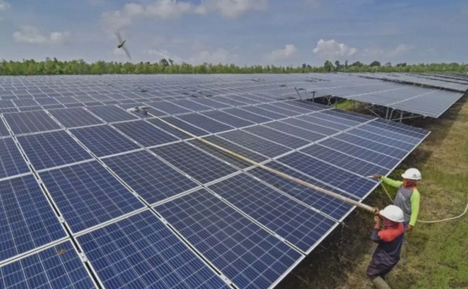
Executive Director of the Indonesian Forum for the Environment (Walhi) in East Java, Pradipta Indra Ariono, has revealed critical findings across several regions on Java Island. Investigations show a wide gap between the government’s energy transition narrative and the realities on the ground. The findings come from a series of probes conducted in East Java, Yogyakarta, Central Java, and Jakarta. Pradipta states that current energy transition policies still allow for the continuation of fossil energy, particularly coal. ‘The facts on the ground speak differently. Various schemes merely extend the use of dirty energy or fossil fuels rather than replacing them gradually,’ he said at a press conference in Jakarta on Friday (22 May).
Critique of Centralised Policy
Walhi argues that the government’s policy approach remains centralised and more oriented towards industry interests and the stability of national electricity supply. This is seen as ignoring the principles of an energy transition that is truly just and sustainable for local communities.
In its report, Walhi highlights regulatory inconsistencies related to the cessation of coal-fired Power Plants (PLTU). Pradipta cites regulations such as the National Electricity Master Plan (RUKN), Presidential Regulation No. 112 of 2022, and the Ministerial Regulation of Energy and Mineral Resources (Permen ESDM) as not mandating early decommissioning of PLTUs based on plant age.
‘The energy transition presented by the state today does not show a serious commitment to reducing coal usage. Early retirement of PLTUs is even less evident,’ he asserted.
Pseudo Solutions and Environmental Impacts
The government is viewed as offering alternative schemes that still maintain dependence on dirty energy, such as:
Biomass co-firing
Carbon Capture Storage (CCS) and CCUS technologies
Use of natural gas and nuclear power
With regard to biomass co-firing, Walhi warns of new problems such as deforestation and land conflicts due to the large land area required to supply biomass feedstock. Moreover, renewable energy projects such as Geothermal Power Plants (PLTP) in several regions are reported to cause water pollution and exposure to hydrogen sulphide (H2S) gas.
Limited Public Participation
Walhi’s investigations also found minimal involvement of communities and local governments. The energy transition policy is still dominated by the central government and PLN, so opportunities for public participation are largely formal administrative processes.
‘Participation is focused on who supports it. It never truly reflects the needs of communities or how to mitigate its impacts,’ added Pradipta.
Walhi’s Strategic Recommendations
Based on the findings, Walhi East Java urges the government to promptly take the following steps:
Walhi stresses that the energy transition must be part of a regional development strategy that prioritises fulfilling basic rights for communities, ecological protection, and the reduction of structural inequalities in Indonesia. (Fik/I-1)