
Walhi East Java says floods in Probolinggo are evidence of an ecological crisis
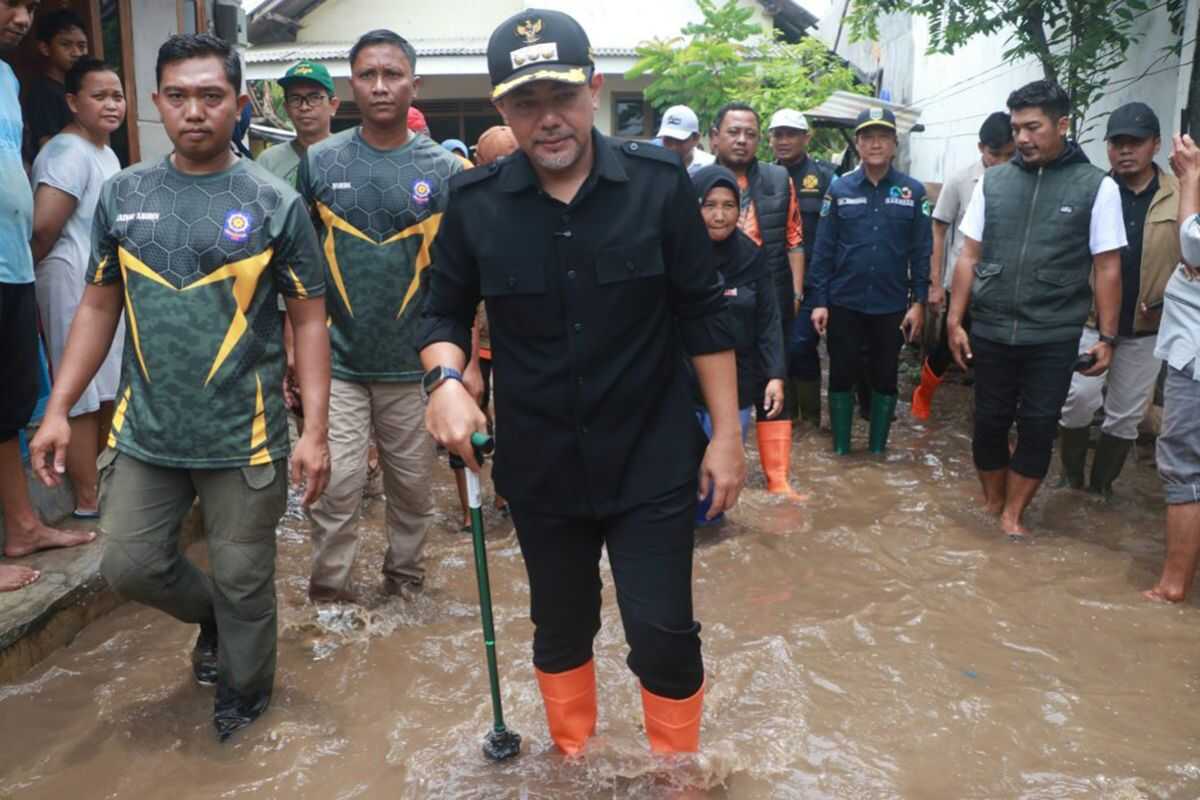
Probolinggo, East Java (ANTARA) - The Executive Director of the East Java branch of the Indonesian Environmental Forum (Walhi), Pradipta Indra, stated that the flash floods that hit Probolinggo Regency on 21-22 February 2026 are evidence of an ecological crisis and a clear indication of the region’s vulnerability to extreme weather.
“Heavy rainfall for more than six hours was the main trigger for the overflowing of several river basins, but the escalation of the flood with water levels varying between 50 cm and 1.5 meters at the worst point cannot be seen as a purely natural phenomenon,” he said in a written statement received in Probolinggo, Thursday.
According to him, there is strong evidence that the inability of rivers to accommodate water runoff from the highlands is exacerbated by malfunctioning drainage systems due to blockages and sedimentation.
“The increase in rainfall volume can also be caused by climate change, which is characterized by extreme rainfall and the reduction of forest areas as water catchment areas,” he said.
The disaster had a multidimensional impact in seven sub-districts, namely Kraksaan, Krejengan, Gading, Besuk, Kotaanyar, Pakuniran, and Paiton.
In addition to disrupting mobility on the main Pantura route, the flood occurred at a very crucial moment, when residents were carrying out worship during the month of Ramadan 1447 H.
“In the National Disaster Risk Assessment document for East Java, it shows that Probolinggo Regency is one of the areas with high potential for floods and flash floods,” he said.
The increasing intensity of floods in Probolinggo Regency cannot be separated from the massive land-use changes in the upstream, buffer, and downstream areas.
Hydrologically, the highland area, which should function as a water catchment area, is now experiencing a degradation of function due to land conversion into monoculture agricultural areas, settlements, or other extractive activities.
Data collected by Global Forest Watch shows that from 2001 to 2024, Probolinggo Regency lost 210 hectares of natural forest, while from 2002 to 2024 it lost 130 hectares of wet primary forest.
The flood event that occurred in Probolinggo cannot be seen as having a single factor, but must be seen as a whole. There is an increasing environmental burden, exacerbated by the carrying capacity of an area, which makes the accumulation of ecological disaster impacts even greater.
Another reality that cannot be ignored is the climate crisis, which manifests in extreme weather, where this phenomenon is triggered by various exploitative activities that take place systematically.
This disaster event should be a lesson for the Probolinggo Regency Government to be able to evaluate spatial planning policies by paying attention to the carrying capacity of the area, so that it can minimize ecological disasters.
Previously, the Governor of East Java, Khofifah Indar Parawansa, together with the Regent of Probolinggo, M. Haris, ensured the effectiveness of rapid handling for residents affected by the flood in Probolinggo Regency while reviewing the flood-affected locations in Kraksaan District.
“The East Java Provincial Government is moving quickly together with all levels of the Probolinggo Regency Government to ensure the safety of residents and accelerate post-flood handling,” said Khofifah.
The number of residents affected by the disaster in Probolinggo is spread across several sub-districts, namely Kraksaan as many as 810 families, Krejengan as many as 264 families, Gading as many as 11 families, Besuk as many as 23 families, Kotaanyar as many as 14 families, and Pakuniran District as many as 100 families.