
Waiting for the Green Line KRL Feels Long: This Is What's Actually Happening
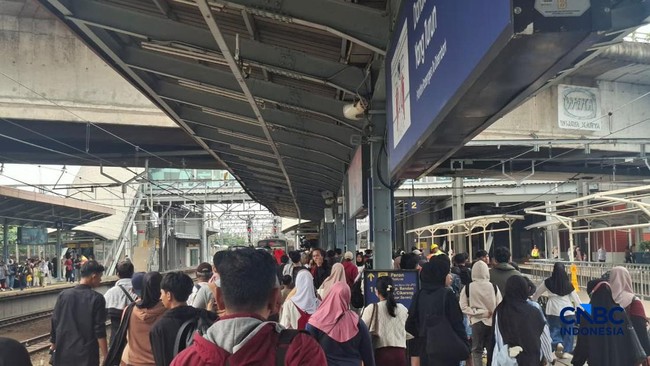
PT KAI Commuter has spoken out regarding the reasons behind the growing density of the KRL Commuter Line on the Tanah Abang-Rangkasbitung route during busy hours, namely in the morning and evening. Corporate Secretary Vice President of KAI Commuter, Karina Amanda, stated that besides the annual increase in passenger numbers which leads to greater crowding, the still relatively wide distance between KRL trains or headway makes it difficult to alleviate passenger density. During peak hours, namely from 07:00 to 08:00 WIB and 17:00 to 18:00 WIB, the headway can reach around 10 to 15 minutes. “For the Tanah Abang-Rangkasbitung route headway, it is generally 10-15 minutes, where the Tanah Abang-Serpong section has a headway of 10 minutes, while Serpong-Rangkasbitung can be 15 minutes during peak hours,” said Karina to CNBC Indonesia on Friday (27/3/2026). Karina explained that the reason the Tanah Abang-Rangkasbitung KRL headway remains around 10-15 minutes during peak hours is because the infrastructure is not yet adequate to shorten the headway. “The headway cannot yet be shortened by us because the signalling infrastructure on that route still uses a closed automatic block system, so train journeys between KRLs can only serve journeys from one station to another,” she clarified. In addition, the KRL currently operating on that route is still using a 10-car formation or SF 10, so with the still wide headway, density is also difficult to alleviate during busy hours. KAI Commuter has actually trialled KRL SF 12 several times, one of which also used a new KRL made in China. However, because the overhead line electrical capacity (LAA) is not yet adequate, to date the KRL SF 12 cannot be operated immediately. “Infrastructure capacity constraints, namely overhead line electrical power (LAA) and platforms that cannot yet accommodate KRL SF 12, also contribute to the suboptimal operation of KRL,” she said. Nevertheless, they continue to maintain the headway during peak hours at around 10-15 minutes. Other efforts include ongoing coordination with PT Kereta Api Indonesia (Persero) or KAI, the Ministry of Transportation (Kemenhub), and related parties so that the infrastructure on that route can be updated, allowing the headway and KRL capacity to increase. “Not long ago, KAI Commuter conducted a trial of KRL journeys with SF12 on the Rangkasbitung route as a form of our commitment to increase train capacity. In addition, by maintaining headways during peak hours, we continue to coordinate with the government and KAI for its development,” she concluded.