
Waiting for Other Suspects in the Bekasi Timur Train Accident Case
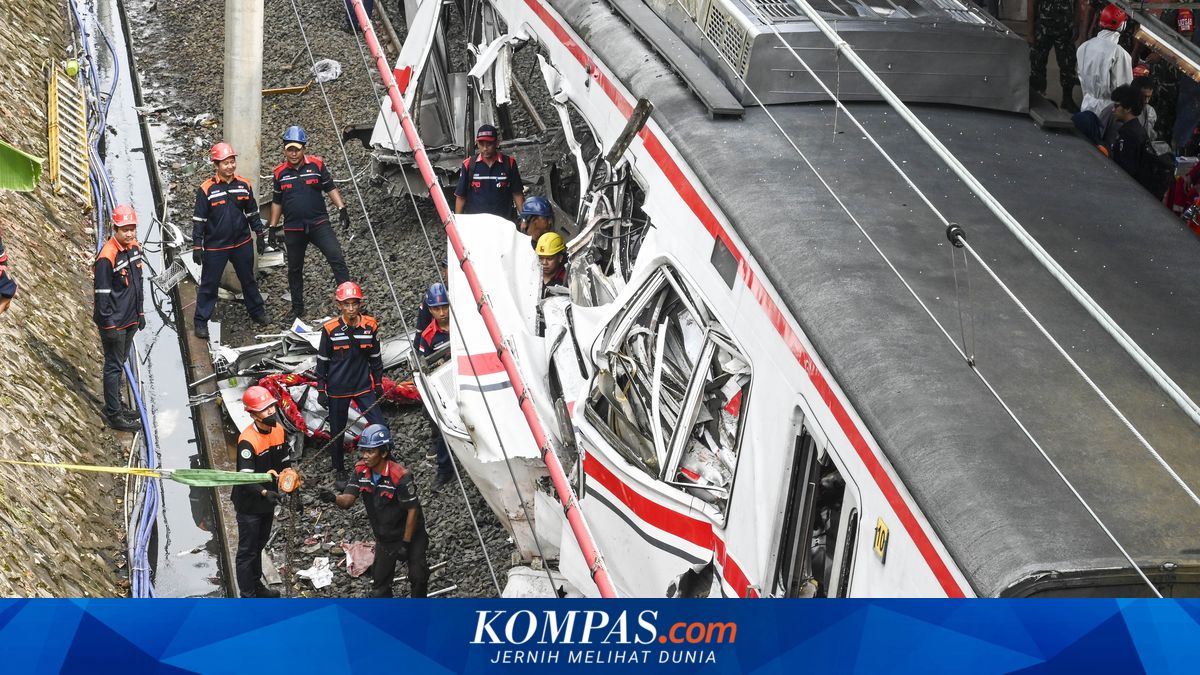
This article is the second piece following my previous opinion written on the eleventh day after the Bekasi Timur train accident tragedy. I have emphasised this second piece because today, Friday (29 May), it has been over a month and two days, or precisely 32 days since the collision between the Argo Bromo Anggrek train and KRL 5568A, yet there is still no clarity on who should bear criminal responsibility for the accident that killed 16 passengers. So far, the only suspect identified in connection with the KRL 5181 and Green SM taxi collision at Ampera crossing is the taxi driver. The suspect designation cannot stop at the taxi driver alone, as the taxi-KRL 5181 incident merely caused delays to other trains, not a train collision. Given that the Jabodetabek rail system already has adequate safety measures through signalling and communication between controllers and drivers. According to a hearing between DPR Commission V, KNKT, and the Ministry of Transportation, there was a gap of approximately three minutes and 43 seconds between the KRL 5181-taxi accident and the Argo Bromo Anggrek-KRL 5568A collision. During the hearing, it was revealed that the Argo Bromo Anggrek train passed Bekasi Timur station three minutes ahead of schedule. It was also disclosed that 1,300 metres before the accident, the Argo Bromo Anggrek driver received instructions from PK Timur officers to ‘slow down gradually’, a distance which, according to KNKT Chairman Soerjanto during questioning by Commission V members, was sufficient to stop the train within 800 metres to one kilometre. Another fact presented during the hearing was that the Argo Bromo Anggrek driver received a green signal at the exit signal of Bekasi station (Signal J12). However, at the next signal (Bekasi Timur station entrance signal), the driver received a red signal, whereas a yellow signal should have preceded the red. In other words, if the Bekasi Timur station entrance signal is red, the exit signal at Bekasi station should have been yellow, not green. KNKT also noted in the hearing that there is a difference in communication channels between long-distance trains and commuter trains (KRL). This communication channel discrepancy is suspected to have hindered information flow between PK officers and drivers. This finding regarding differing communication channels must be seriously addressed by KNKT and police investigators.