
Waiting for Maghrib Amid Jakarta’s Kuningan Concrete Jungle
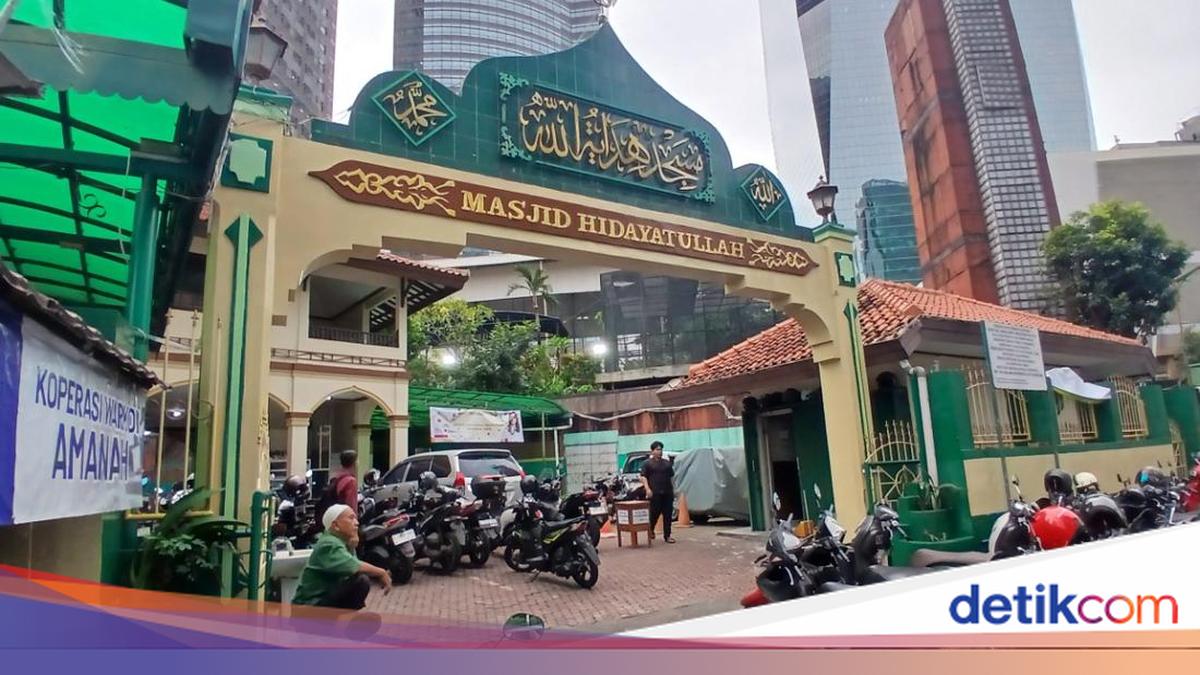
As evening approaches, the Kuningan area in South Jakarta typically moves fast. Cars flow without pause along the main roads, office workers hurry to catch the clock, and the occasional honk slices through the rows of tall skyscrapers. This area is the heart of office activity—fast-paced, crowded, and almost never truly quiet.
Yet in a corner of Setiabudi, that atmosphere feels different as soon as one steps into the yard of Masjid Jami’ Hidayatullah. I arrived at this mosque around four o’clock in the afternoon. The sun was still high, but its light was softening, leaving long shadows across the mosque’s courtyard. After removing my shoes and performing wudu, I went inside to perform the Asr prayer.
The mosque has three sections that immediately catch the eye: the prayer hall, the main hall used for congregational prayers, and a graveyard area adjacent to the building. The three parts form a single space that feels simple, yet alive. The prayer hall is the busiest section. Some people sit leaning against the wall waiting for breaking the fast. Some talk softly, others stare at phone screens, and some take the opportunity to rest lying on the floor.
In the middle of a busy office area, this atmosphere feels contrasting. Outside the mosque’s gate, tall glass-fronted buildings reflect sunlight. But inside, the air feels calmer and the rhythm much slower. The mosque’s architecture also gives a different impression from many modern mosques in business districts. The building looks old and classical, with large wooden pillars supporting a joglo roof. This wooden structure provides a traditional nuance rarely seen in the midst of modern office blocks like in Kuningan.
The voices reciting the Qur’an rise softly among the worshippers. Some worshippers begin to engage in Qur’an recitation (tadarus), while others read Surah Yasin. In the midst of the waiting activity, I met Muhammad Fazly Maulodhunawan (20). He seemed to pace several times in the hall, helping to prepare supplies for the iftar gathering. Fazly is a private-sector worker who is also actively involved as part of the mosque’s youth group.
“Besides work, I also spend quite a lot of time at this mosque, especially during Ramadan,” he said when we spoke in a corner of the hall. His association with the mosque runs quite deep. “Actually I’ve been coming here for a long time. Since I was small I’ve become accustomed to breaking the fast here with the congregation. And that’s why I joined the mosque’s youth group long ago.”
During Ramadan, Fazly’s time at the mosque is not short. He has been there since early afternoon. According to him, during Ramadan he usually arrives around 12 noon and stays at the mosque until just before iftar. Throughout that period, he, along with the mosque’s youths, helps prepare the various provisions for the communal iftar that is routinely held there.
Fazly explains that his role is not simply occasional help. He is part of the mosque’s management committee involved directly in daily operations. The mosque’s youth, he says, play a part in many aspects related to the mosque’s operations. They maintain cleanliness, help organise activities, assist worshippers who come, and ensure that the mosque’s various activities run smoothly.
This involvement becomes more intense during Ramadan. Nearly every day Fazly comes to the mosque to help, especially in preparing and distributing the iftar meals to worshippers arriving as Maghrib approaches.
In the mosque’s hall, several food boxes were already being arranged neatly. They would later be distributed to worshippers arriving to break their fast together. The menu is typically simple: rice with fried chicken, tempeh, and tofu, accompanied by two dates. A simple meal, but enough to end the fast after a day of hunger and thirst.
When I mentioned that many Google Maps reviews say the mosque is open for people who want to rest, Fazly nodded. “That’s right, the mosque is always open to worshippers. Anyone who wants to stop by to pray or simply rest is usually welcome, including people working around the offices.”
Being located in the midst of office blocks makes it a natural stopover for many workers. For Fazly, that atmosphere is what makes the mosque feel alive. “I think it’s because the atmosphere here feels calm and comfortable. In addition, its location near the office district means many people use the mosque to rest for a moment amidst their work.”
In addition to speaking with Fazly, there was Ari (30), a private-sector worker who appeared relaxed in the mosque’s hall. Ari works for a company whose office is not far from the mosque. During Ramadan, the mosque often becomes his place to wait for the time to break the fast.
“Actually, for ngabuburit during Ramadan I usually stay here at the mosque. So after work or during any spare time at the office, I usually come down to this place to wait for breaking the fast or just rest for a moment,” he said. The close distance to his office makes it easy to come to the mosque.
For Ari, the mosque offers a different atmosphere from the office. Usually he stays at the mosque until around five in the afternoon before returning to work. “In the office, the rooms are quite cold because the air conditioning is always on. Sometimes staying too long in a closed room can be a bit stifling.”