
Viral Financial Report Shows Amil Allocation Higher than for the Poor, Baznas Says
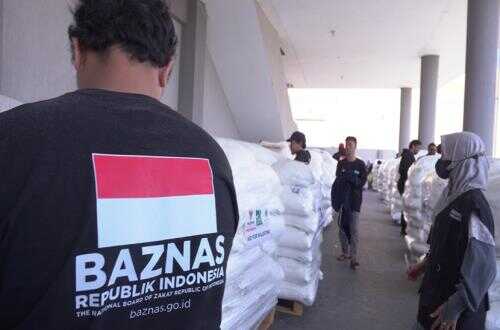
Jakarta — The National Amil Zakat Agency (Baznas) of Indonesia has explained why the allocation of zakat, infaq, and sadaqah (ZIS) funds to amil, the zakat administrators, is larger than allocations for fakir and garim (those in debt) who are eligible to receive zakat. The response follows a viral post of Baznas RI’s 2023/2024 financial report on X.
The report shows that the allocation to amil was Rp83,165,311,532, while fakir and garim were Rp55,554,330,122 and Rp350,909,004 (2023) respectively; and the allocation to amil was Rp107,658,965,760, while fakir and garim were Rp63,814,338,121 and Rp1,544,478,794 (2024).
There are eight asnaf or groups entitled to zakat: fakir, miskin, amil, mualaf, hamba sahaya (slavery, now extinct), garim, fisabilillah, and ibnusabil.
Baznas RI’s Rizaludin Kurniawan, head of the Collection Division, stressed that the amil funds in the report are not only salaries and allowances for amil, but also the institute’s operational costs.
“The zakat funds allocated for the asnaf amil are not entirely used for basic salaries, allowances, and amil assistance,” he said in an official statement in Jakarta, Thursday (5 March 2026).
Rizaludin noted programs such as institutional costs in serving muzaki and mustahik, training and certification costs, zakat socialisation costs to the public, external audit needs of the institute, and national coordination costs are also included in the amil funds.
He also confirmed that the zakat funds allocated for amil comply with Q.S. At-Taubah verse 60, Law No. 23 of 2011 on Zakat Management; Minister of Religious Affairs RI Decree No. 606 of 2020 on Sharia Audit Guidelines for the Implementation of Zakat, Infaq, Sadaqah and Other Religious Funds at Baznas and Lembaga Amil Zakat; MUI Fatwa No. 8 of 2011 on Amil Zakat; and PerBAZNAS No. 1 of 2016, which is 12.5 percent or one-eighth.
“Disbursement to all mustahik is done in seven-eighths of the total with the amounts adjusted to Baznas’ needs and programmes,” he said.
Rizaludin explained that the amounts for each asnaf depend on conditions. In practice, the management of fakir distributions is supported by miskin, so these two mustahik receive more than 50 percent of the distribution.
As for the asnaf fisabilillah, it is allocated to support strengthening dawah movements, both individually and institutionally, such as scholarships, incentives for teachers and ustaz, and, in line with MUI fatwa, can be used for disaster relief.
“The large fisabilillah allocations include Baznas scholarships to mustahik and dawah assistance,” Rizaludin Kurniawan said.