
Vietnam Aspires to Dominate the "World's Kitchen", Indonesia Left Biting Its Nails
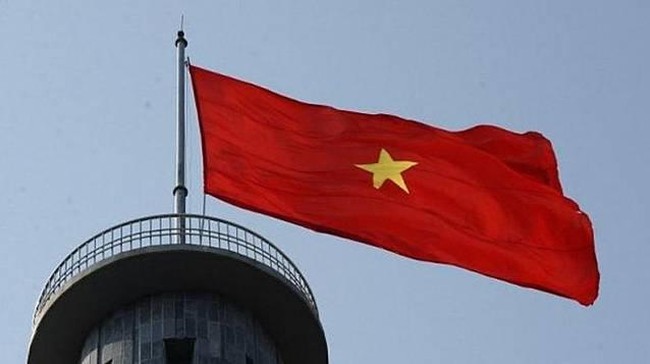
Vietnam is pushing its food sector to a new level. In 2025, the country’s agricultural, forestry, and fisheries exports reached US$70.09 billion, or approximately Rp1,198.54 trillion (US$1 = Rp17,100). The export value rose 12% from 2024 and exceeded the government’s target of US$65 billion. While many Asian countries still rely on manufacturing industries, Hanoi is beginning to position food as the main foreign exchange engine.
The composition is broad. Agricultural products contributed US$37.25 billion. Forestry products US$18.5 billion. Fisheries US$11.32 billion. The remainder came from livestock US$628 million, production inputs US$2.38 billion, and salt US$12.1 million. This structure means Vietnam does not depend on a single commodity or harvest season.
There are 10 export commodity groups valued at more than US$1 billion. The top three are already in the premium class. Wood and its derivatives reached US$11.6 billion. Coffee US$8.6 billion. Fruits and vegetables also US$8.6 billion. This is important because they come from different supply chains, different markets, and different buyers. When one sector weakens, the others can still support it.
This surge did not come by chance. In recent years, the Vietnamese government has actively opened up trade access, addressed technical barriers, and accelerated certification for planting areas and packaging facilities. Thousands of production codes have been issued to allow goods to enter major markets. In modern food trade, documentation matters as much as the harvest itself.
Vietnam has also changed its selling approach. The old focus was on volume. Now the focus has shifted to added value. Coffee is the clearest example. Previously, exports were dominated by raw beans. Now the chain has been extended to roasted coffee, instant coffee, specialty coffee, and ready-to-consume products. Margins rise as the process lengthens.
A similar story is seen in pepper. Throughout 2025, Vietnam’s pepper exports set a record of US$1.66 billion. Export volume dipped slightly by 1.2% to 247,482 tonnes, but value increased by 26%. The average selling price was strongly driven up. Black pepper stood at US$6,607 per tonne, up 36.2%. White pepper US$8,629 per tonne, up 33.6%.
Its market map is also wide. The United States remains the largest buyer with 55,082 tonnes or 22.3% of total exports. Followed by the United Arab Emirates 22,232 tonnes, China 19,923 tonnes, India 12,499 tonnes, and Germany 11,820 tonnes. Dependence on a single country is reduced as buyers are spread out.
On the other hand, Vietnam remains realistic. To maintain industrial supply, they also imported 42,688 tonnes of pepper worth US$266.2 million in 2025. The majority came from Brazil, Cambodia, and Indonesia. This means Vietnam is playing as a processing and re-export hub, not just a raw material producer.
The “world’s kitchen” ambition is also polished through culinary routes. Hanoi has earned a strong reputation as a food city. Ho Chi Minh City is on the global gastronomic tourism radar. The Michelin Guide continues to expand its coverage in Vietnam. The impact is broad: restaurants elevate the country’s name, tourism brings new consumers, and then food products enter foreign retail shelves.
However, there is still much homework to do. Many business players complain about the inconsistent quality of raw materials. Size, ripeness level, pesticide residues, and logistics standards still need to be addressed. Premium markets buy consistency. Without it, high prices are hard to sustain.
Vietnam’s direction is now quite clear. The country wants to move from commodity exporter to high-value food supplier. If standardisation, downstream processing, and promotion strategies run consistently, the “world’s kitchen” label will not be an empty slogan. It could become Southeast Asia’s new foreign exchange engine.
What about Indonesia? According to the Central Statistics Agency (BPS), the value of agricultural, forestry, and fisheries exports in 2025 was US$6.88 billion, or one-tenth of Vietnam’s. The largest export commodity is coffee at US$2.5 billion.