
Video: Indonesia's Strategies to Counter Fertiliser Raw Material Supply Disruptions Due to War
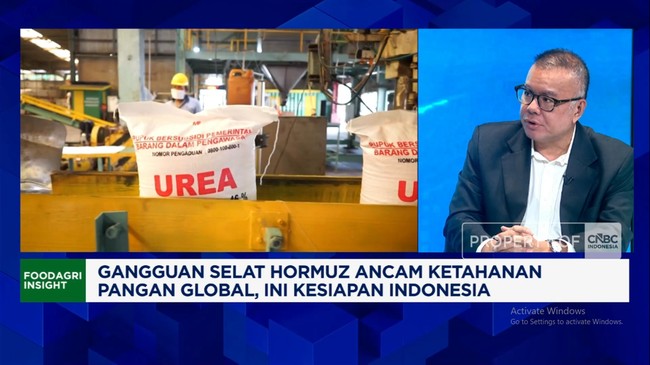
The closure of the Strait of Hormuz due to the Iran-US and Israel war has driven global crude oil prices above USD 110 per barrel as of 30 March 2026. Meanwhile, these Middle East tensions are disrupting food supply chains, including fertiliser distribution.
Bara Krishna Hasibuan, Staff Expert to the Minister for Digital Transformation and Inter-Institutional Relations at the Coordinating Ministry for Food, stated that the current impact of the war and the Strait of Hormuz closure on national food supplies is not yet significant. This is because Indonesia’s dependence on food imports has decreased, with needs for rice to corn now relying on domestic production.
Imports of wheat to soybeans, meanwhile, come from Australia, Russia, Canada to Ukraine, which do not pass through the Strait of Hormuz. However, imported fertiliser raw materials, mainly sulphur from Kuwait and Qatar, are sufficiently disrupted, leading to the replacement of sulphur alternatives with domestically produced sulphuric acid.
What are Indonesia’s strategies to face the impact of the Middle East war? For more details, watch the discussion by Andi Shalini with Staff Expert to the Minister for Digital Transformation and Inter-Institutional Relations at the Coordinating Ministry for Food, Bara Krishna Hasibuan, in Squawk Box, CNBC Indonesia (Monday, 30/03/2026).