
Video: Assessment of Profits and Losses from Trump Trade Agreement – What Does Indonesia Gain?
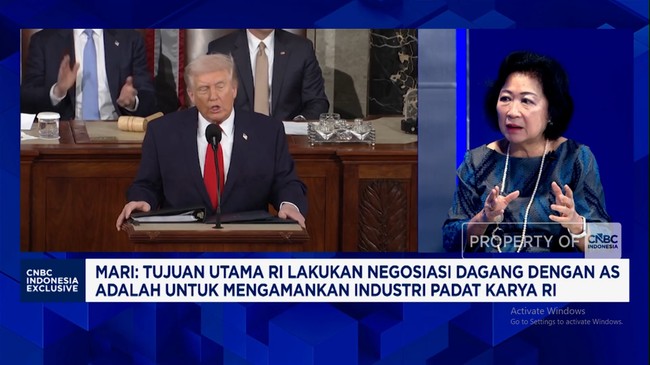
The Indonesian and United States governments have formally signed a reciprocal trade agreement contained in the Agreement on Reciprocal Trade (ART), titled “Toward a New Golden Age for the US-Indonesia Alliance”.
Deputy Head of the National Economic Council (DEN), Mari Elka Pangestu, stated that the signing of the Indonesia-US trade agreement on 19 February 2026 represented part of the government’s efforts to protect labour-intensive industries, as failure to negotiate could result in Indonesian goods facing 32 per cent tariffs.
This is significant given that labour-intensive industries—including textiles, apparel, furniture, and seafood—demonstrate high dependence on the US market. If unaddressed through negotiation, the impact on these industries, including employment, would be substantial.
Regarding the 104 per cent tariff imposed on Indonesian solar panel products entering the US market, Mari assessed that this situation arose from a surge in demand for Indonesian solar panels resulting from diversion away from China and Vietnam, requiring the Indonesian government to respond prudently.
Mari Elka Pangestu elaborated on the urgency and impact of the Indonesia-US trade agreement during an interview on Squawk Box CNBC Indonesia (Friday, 27 February 2026).