
Vice Minister for Migrant Worker Protection Explores Vocational Education Opportunities for Indonesian Workers in Germany
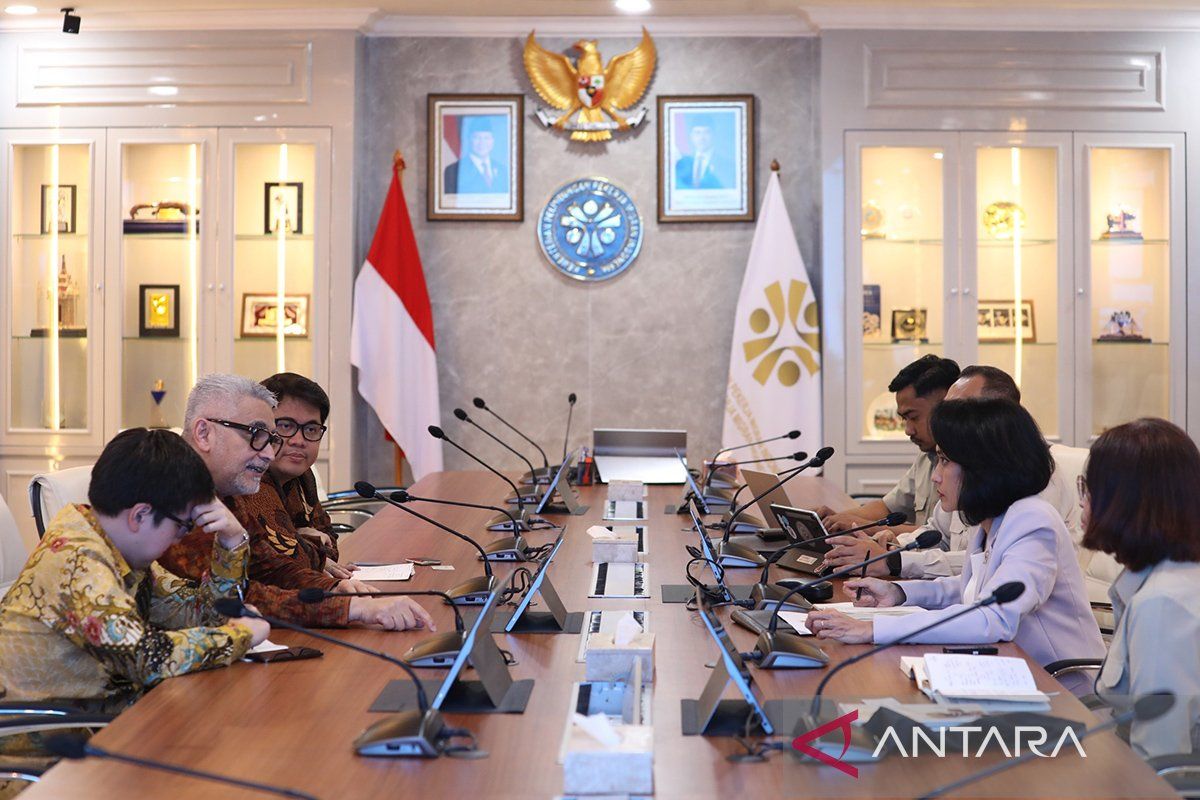
Jakarta — Indonesia’s Vice Minister for Migrant Worker Protection, Christina Aryani, has met with the Indonesian Ambassador to Germany, Abdul Kadir Jailani, to discuss the placement of Indonesian migrant workers through the Ausbildung vocational education programme.
Vice Minister Christina assessed the Ausbildung programme as presenting significant potential as an entry point for Indonesian workers to gain employment whilst developing skills in Germany.
“The Ambassador informed us about the Ausbildung programme, which we also view as a promising opportunity and a potential entry point for Indonesian migrant workers to work in Germany,” she stated.
The Ausbildung programme combines theoretical learning and direct practical work experience, with a composition of approximately 30 per cent theory and 70 per cent practical training in industry.
According to Christina, this vocational education model enables participants to gain work experience whilst developing the competencies required by Germany’s industrial sector.
Ambassador Jailani, she continued, also encouraged the Ministry of Migrant Worker Protection to serve as the custodian or lead sector in developing and managing the Ausbildung programme for prospective Indonesian migrant workers.
“We certainly welcome this proposal. For the Ministry of Migrant Worker Protection, the most important matter is ensuring that every Indonesian migrant worker who goes abroad receives optimal protection,” Christina stated.
The Vice Minister further noted that her ministry remains open to further dialogue with the German government and various other stakeholders to design a cooperation mechanism in accordance with applicable regulations.
“We are prepared to develop a cooperation framework that will enable this programme to function and provide broader access for Indonesian migrant workers to work professionally in Germany,” she said.
Beyond the Ausbildung programme, discussions between Vice Minister Christina and Ambassador Jailani also touched upon potential workforce needs in Germany’s semiconductor industry, although the scale of these requirements remains under further assessment.
Vice Minister Christina noted that Indonesia possesses significant potential in supplying skilled workers from the various vocational education institutions managed by multiple ministries and agencies.
“Approximately 12 ministries and agencies operate vocational schools. This represents enormous potential for skilled worker supply. The question is how we design the programme and ensure that our migrant workers’ competencies align with industrial requirements abroad,” she stated.
Ausbildung is Germany’s official vocational training programme, which combines theoretical learning at vocational schools (Berufsschule) and direct practical work at companies (dual system, typically three days of work and two days of school) over 2-3.5 years. Participants (Azubi) receive monthly salaries, free training, and professional qualifications (Fachkraft) to work in Germany.