
Vice Governor Rano Si Doel: The Andilan Kebo Tradition Strengthens Community Mutual Cooperation Among Betawi Residents
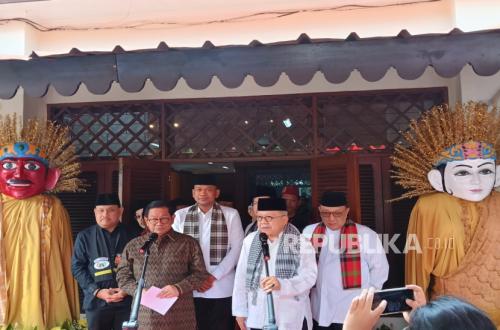
Jakarta’s Vice Governor Rano Karno has stressed the importance of preserving the “Andilan Kebo” tradition as a tangible manifestation of the Betawi community’s spirit of mutual cooperation amid the dynamics of metropolitan life.
Rano made these remarks while attending the Andilan Kebo event held by the Forum Betawi Rempug (FBR) at Taman Kerempugan Korwil FBR in East Jakarta on Thursday.
“With the spirit of togetherness through this Andilan Kebo, I must admit I’m somewhat surprised. It turns out that in Jakarta, activities like this still exist. It reminds me of my childhood in Kemayoran, when people shared according to their abilities,” he said.
Rano explained that Andilan Kebo is a tradition where residents pool resources to buy livestock, usually a buffalo, which is then slaughtered and the meat distributed to the community. The amount of contribution is not fixed but adjusted to each resident’s ability.
According to him, this pattern reflects values of social justice as well as togetherness. Residents who contribute more receive a larger share, while those who give less still get a portion according to their means.
“Those who contribute more get more, those who contribute less get less. However, the essence is togetherness as neighbours. Everyone participates according to their ability,” he said.
Rano believes this tradition remains relevant in modern Jakarta life. In addition to strengthening social ties, Andilan Kebo also serves as a means of sharing for communities in need, particularly during major religious occasions such as Eid al-Fitr.
He also highlighted that there are still residents facing difficulties in meeting food needs, including meat consumption. Therefore, this tradition is seen as having an important role in strengthening social solidarity within society.
“This is our commitment to ensure this tradition continues every year,” he stated.
Historically, Andilan Kebo is rooted in the lives of the Betawi people in the past, who highly valued togetherness and mutual cooperation. At that time, village residents often faced economic limitations, so major needs, such as providing sacrificial animals or communal consumption, were done collectively.
The word “andilan” in the Betawi language means contributions or pooling. This tradition emerged as a practical and cultural solution to meet collective needs without burdening one party. In this way, all residents can still enjoy the benefits, despite differing economic abilities.
In its development, the buffalo was chosen as the main animal because it is considered to have high economic value and can meet the needs of many people at once. Additionally, the buffalo has a historical connection to the agrarian life of the Betawi people in the past.