
Usman Hamid: Violence in Tual Reflects Systemic Problems within the National Police
Headline
All proceeds of crime that harm the state must be confiscated.
All proceeds of crime that harm the state must be confiscated.
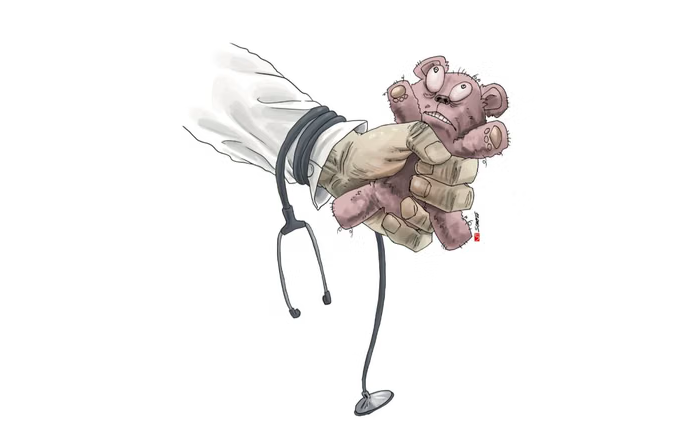
EXECUTIVE Director of Amnesty International Indonesia, Usman Hamid, stated that the act of violence by the police, especially the recent incident involving Brimob MS against a student in Tual, Maluku, is not merely an individual incident. He believes that this violence reflects systemic problems within the National Police.
Usman believes that there is a failure in the accountability mechanism, which makes officers feel that they will not face severe punishment when committing violence. He highlighted how the collective memory of police officers is shaped by the lack of punishment for perpetrators of violence in the past. He cited the cases of Gamma’s death in Semarang and Afif Maulana in Padang, which he believes did not receive serious legal resolution.
“The problem is no longer individual, but rather institutional. There has been no adequate punishment and strict supervision so far. Every time someone dies as a result of police behavior, no one is held accountable,” said Usman, during a discussion entitled ‘The Tual Tragedy, an Alarm for Police Reform’ in Jakarta, Wednesday (25/2).
Usman also strongly criticized the tendency of the police institution to often build a narrative of justification shortly after an incident occurs. He cited the cases of Ferdy Sambo and Gamma in Semarang, where the initial police statements often contradicted CCTV footage or evidence at the scene.
“In the Gamma case, the institution provided a narrative of justification that it was a crackdown on armed brawls, and it turned out that the story was a lie. This narrative is then adopted by other members in the field, believing that they will be protected by the structure if they commit violence,” he emphasized.
Usman stressed that a humanistic police force can only be born from a strong accountability mechanism. However, in Indonesia, he sees that this supervisory function is still very weak. He mentioned that internal supervisory instruments such as Propam, Irwasum, and executive supervision through Kompolnas often fail to carry out their functions independently.
“Internal supervision is weak, and executive supervision such as Kompolnas is also the same. Of all the supervision needed in a democratic government, Indonesia may only have public supervision that is still functioning,” he said.
Usman also urged Commission III of the Indonesian House of Representatives (DPR RI) to carry out strict supervision. He asked Commission III of the DPR not to only praise the performance of the National Police.
“Then the external supervisory function, for example, Commission III, should supervise strictly. If there are incidents like the August demonstrations, the Chief of Police should be summoned,” he said. (Faj/P-3)
A member of Commission III of the DPR, I Wayan Sudirta, said that the case of the death of a student in Tual is a momentum for reforming the culture of the National Police. See the full review here.
UI expert Rissalwan Habdy Lubis revealed the causes of police violence continuing to recur. From the concept of Habitus to misguided motivations during recruitment. See the review.
Digital transparency through social media makes these cases now easier to reveal.
The Propam of the Jakarta Metropolitan Police intervened to investigate allegations of mistreatment of three gas station officers in Cipinang. The perpetrator is suspected of being an officer who impersonated a general while forcing the filling of subsidized fuel.
The case of mistreatment of gas station officers in Cipinang adds to the long list of arrogance of police officers. The perpetrator had threatened to kill and impersonated the Chief of Police.
CHAIRMAN of the Indonesian Legal Aid Foundation (YLBHI), Muhammad Isnur, stated that the ratification of the new Criminal Procedure Code (KUHAP) actually closes the opportunity for police reform, which has been a public demand.
The Police Reform Commission must work independently and be free from political interference, both from the government and from certain interest groups.
A member of the Kompolnas, Mohamad Choirul Anam, said that Dofiri is a respected figure within the police force.
In order for every officer on duty in the field to be equipped with body cameras to prevent excessive repressive actions.
The improvement of the National Police must also include changes in the structure and composition of the National Police Commission (Kompolnas) to be more independent.
Copyright @ 2026 Media Group - mediaindonesia. All Rights Reserved