
Usman Hamid on Pigai Debate Challenge: Good for Public
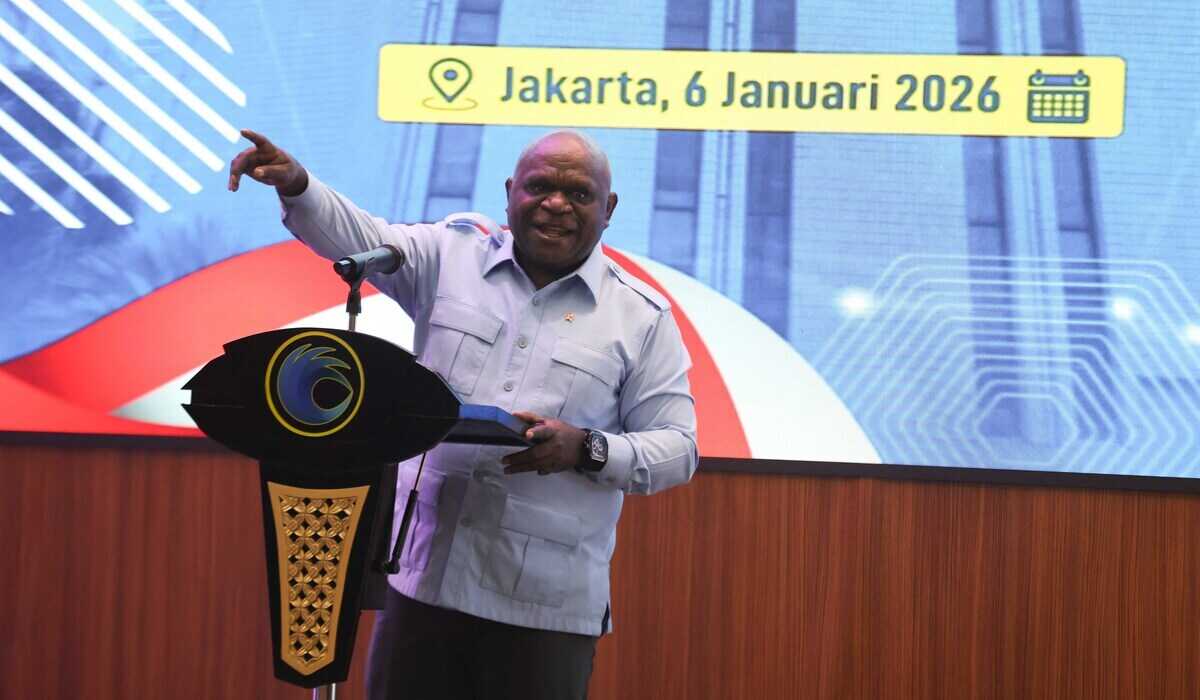
DIRECTOR of Amnesty International Indonesia, Usman Hamid, has also commented on the public debate challenge issued by Minister of Human Rights Natalius Pigai to constitutional law expert Zainal Arifin Mochtar from Gadjah Mada University (UGM), commonly known as Uceng.
Usman regards the debate as a part of normal public discourse dynamics in conveying thoughts, opinions, and political beliefs related to human rights. He believes the meeting could serve as an educational platform if oriented towards enlightening public understanding.
“If it is indeed believed that it will produce enlightenment of public understanding, then it is not wrong for them to meet, debate, and exchange views,” Usman told Media Indonesia on Saturday (28 February 2026).
Nevertheless, Usman offered critical observations about the Pigai-Uceng debate. He reminded that Natalius Pigai is only a small part or branch of the larger complexity of human rights issues in Indonesia.
He emphasised that what is far more important to address now is concrete action targeting the root causes of the various human rights violations occurring in the country.
“As entertainment, the debate is interesting. Though in my view, the most important thing is to attack the root of the crime. Pigai is only one branch of much larger problems,” said Usman.
Earlier, Minister of Human Rights Natalius Pigai challenged Gadjah Mada University professor Dr Zainal Arifin Mochtar, commonly known as Uceng, to a public debate on human rights issues in Indonesia live on national television.
This challenge emerged from an exchange on social media platform X (Twitter) between the two, promising a scientific discussion of controversial human rights cases one by one.
The exchange began when Uceng expressed his readiness to learn about human rights from Pigai.
“I agree with you, professors are often exaggerated. I would like to learn to understand human rights from you. I want to discuss and debate one by one the human rights cases in Indonesia that you say you understand very well. Just tell me when and where I can learn,” wrote Uceng in his post @zainalamochtar on Thursday (26 February).
Pigai immediately responded to the post and agreed to the format of a debate on national television live.
“I agree on national TV and live. You are to invite me, so I ask you to prepare it. We speak at a scientific level. I really want to teach you about human rights so you understand,” said Pigai.
He also suggested Uceng watch his YouTube appearance with Fadli Zon beforehand as additional knowledge, whilst hoping Indonesian people would watch the debate to judge the depth of a professor’s human rights knowledge.
“But watch this first for some additional human rights knowledge before debating with me. Honestly, I really want Indonesian people to watch how great a professor’s human rights knowledge is,” he said.
Uceng then asked Pigai to contact the television station. He claimed he had no authority to arrange television stations.
“I have no power, sir. Hopefully there is a national TV that can facilitate. If you contact them, it might be more meaningful,” Uceng replied.
He also mentioned his experience as a human rights researcher at the Centre for Human Rights Studies at Islamic University of Indonesia (UII) in Yogyakarta for three years as well as his master’s degree in human rights law from the United States, and affirmed his readiness to learn further.
“Thank you for the YouTube. I only have three years’ experience as a researcher at the HAM Study Centre UII Jogja and took a master’s degree in human rights law in America. I would certainly be happy to learn,” he added.
Through his X account on Saturday (28 February 2026), Pigai affirmed that he only desires a debate that is scientific and substantive regarding human rights knowledge, not merely discussing the implementation of his ministry’s principal duties and functions (Tupoksi).
Pigai believes that assessment of Tupoksi is the purview of the President and the Indonesian Parliament, not individuals. He also questioned Uceng’s reluctance to engage in academic argument.
“Hopefully it is not because you are afraid or hesitant to debate knowledge about human rights and then want to flee to the issue of Tupoksi. By now I understand how far your capacity is, Pak Uceng. I have decided! Case closed,” wrote Pigai in his post.
In response, Uceng through his personal account questioned the integrity of the minister. Uceng raised allegations of intervention by Pigai against senior journalist Rosianna Silalahi (Mbak Rosi), who was planning to host the debate on a national television station.
“Answer Mbak Rosi, she was once told not to ask questions. So how can the host be intervened by you, Pak Pigai? That was around 4 pm? Intervention? But don’t worry, sir, I won’t say that attempting to intervene Mbak Rosi is your quality. Hopefully you were just joking. So, will we still meet then?” replied Uceng.
Furthermore, Uceng challenged Pigai to prove his claims about human rights understanding that Pigai often says he has studied since childhood. According to Uceng, the debate is necessary to see whether the reality and application of policies Pigai is currently taking align with the legal knowledge he is proud of.
“Of course the debate is to see reality with the application and conception you have understood since age five. Well, that needs to be tested. Is what you are doing really in line with your knowledge?” said Uceng.