
Using Robots to Modernise Post Offices: Pos Indonesia's Efficiency Strategy
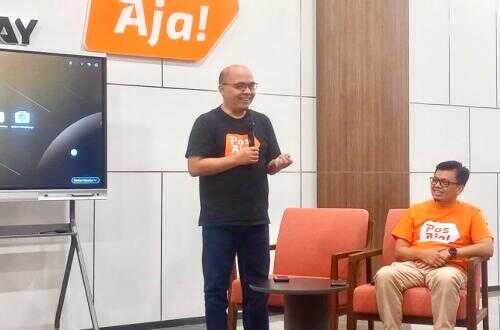
PT Pos Indonesia (Persero) or Pos IND has achieved business efficiency thanks to the adoption of robotic and artificial intelligence (AI) systems in the sorting and auto-labelling of goods at Pos Indonesia. Pos Indonesia’s Director of Business Development and Portfolio Management, Prasabri Pesti, said that since 2023 the company has implemented robotic sorting for sorting parcels according to destination groups, followed by the deployment of auto-labelling robots.
‘The impact of this usage is that efficiency has improved by around 30 percent. More importantly, there is speed in the sorting process. Previously it required 200 people; now it is around 40,’ he said during a media briefing at the Pos Indonesia Head Office Building in Jakarta on Wednesday, 4 March 2026.
Prasabri said the innovation aligns with the company’s transformation. He explained that the technology functions to automatically sort items into bags grouped by destination up to the courier.
‘Items are placed on the system, and then the robot searches for the bag that matches the recipient’s address,’ he said.
Prasabri stated that robotic sorting technology has been deployed at Surabaya Post Office with 150 robots, East Jakarta with 400 robots, and Yogyakarta will follow soon. He explained that the system operates 24 hours a day. Sorting is generally conducted at night to the early morning, leaving a slot between 10:00 and 15:00 that can be utilised by other courier operators.
‘Thus, we are preparing it. The concept is not only for Pos IND but for the Indonesian courier industry. Pos IND’s positioning will become the backbone of the Indonesian courier industry,’ he added.
In addition to robotic sorting, he continued, Pos IND has also implemented Auto Labeling Robots that attach the tracking label to envelopes or parcels automatically. Previously, this process was carried out manually by many workers, including PKL students or interns.
‘The robotic implementation has been shown to reduce manpower requirements by around 36 percent in the sorting function,’ he revealed.
He said tasks that were clerical and repetitive, such as picking up parcels and placing them into destination belts, are now performed by robots with operational accuracy above 99 percent. If an error occurs or a package enters a sandbox area, manual handling is still performed.
‘But overall, the system is much faster and more accurate,’ he added.
Prasabri emphasised that technology deployment must be accompanied by wisdom in human resources management. He said AI and automation should not simply replace people without planning. In his view, balancing technology efficiency with the workforce is a company priority. Prasabri noted that redeploying HR can be directed to other, more strategic roles.
‘We are applying technology while maintaining a balance in HR so that staff can be redeployed to other tasks. So employees affected are not laid off, but redirected to more productive functions,’ Prasabri concluded.