
Using National ID Numbers: An Easy Way to Check Social Assistance and DTSEN Decile Status
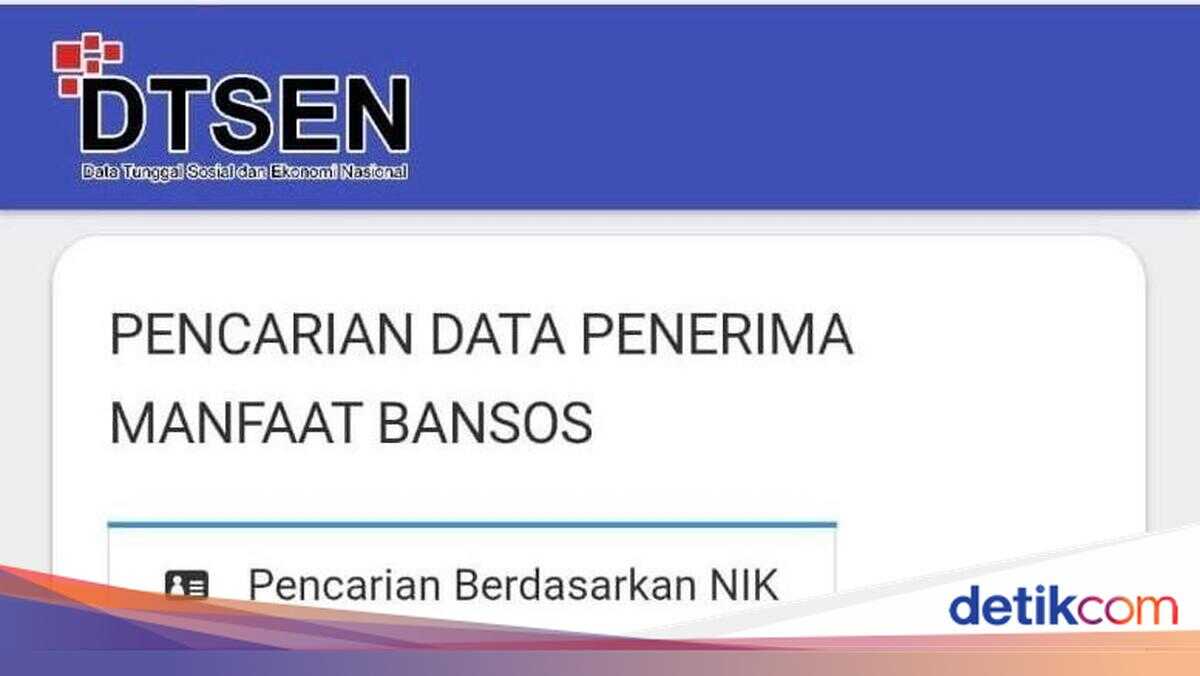
The Ministry of Social Affairs (Kemensos) has once again made it easier for the public to independently check their family welfare ranking (decile) and social assistance (bansos) status for 2026. This can now be done simply using the National Identity Number (NIK) printed on their Identity Card (KTP).
With just their NIK, citizens can find out their decile ranking and whether they fall within Deciles 1-4, which qualifies them to receive benefits under the Family Hope Programme (PKH) and Non-Cash Food Assistance (BPNT).
Kemensos has clarified that deciles are not categorised based on expenditure. Tables circulating online that divide deciles according to income or expenditure status are incorrect, the ministry has stressed.
Deciles represent family welfare groupings measured according to socio-economic variables including individual information (employment, education), housing conditions (house condition, electrical capacity), and asset ownership.
There are 10 deciles, each containing 10 per cent of families in Indonesia. Decile 1 represents families in the bottom 10 per cent of welfare, progressing through to Decile 10, which represents families in the top 10 per cent.
Public decile rankings within the DTSEN are dynamic and are periodically updated by the Central Statistics Agency (BPS) through various sources, including ground checks by Kemensos, updates by regional governments, and other sources. Kemensos uses the latest decile data to determine eligible recipients of social assistance based on proposals from regional governments and the public.
“Deciles are dynamic. If they are inaccurate, they can be updated through the village or sub-district office and social services agency, or through the Check Bansos application,” said Joko Widiarto, Head of the Centre for Social Welfare Data and Information (Pusdatin Kesos) at the Ministry of Social Affairs, in a written statement on Monday (16 February 2026).
Decile calculations will subsequently be recalculated periodically by BPS. The decile system itself is used to determine the target recipients of social assistance.
Deciles represent family welfare ranking groups in Indonesia contained within the National Social and Economic Single Data (DTSEN). DTSEN is the single socio-economic dataset for the Indonesian population used for targeting social assistance recipients.
DTSEN is the result of merging three poverty alleviation data sources: the Integrated Social Welfare Data (DTKS), the Socio-Economic Registry (Regsosek), and the Targeting for Accelerated Elimination of Extreme Poverty (P3KE), which are then matched with population data by the Central Statistics Agency (BPS).
To check their decile status, citizens can access information through the official Kemensos website at cekbansos.kemensos.go.id. The steps are as follows:
- Visit the website cekbansos.kemensos.go.id.
- Enter the National Identity Number (NIK) as shown on the Identity Card (KTP).
- Input the verification code displayed on the website. If the code is unclear, click the refresh icon. Then click the SEARCH DATA button.
After clicking SEARCH DATA, the requested information will appear showing the individual’s name, decile group, and Kemensos social assistance recipient status.