
Use of AI in Journalism Must Not Eliminate Accountability
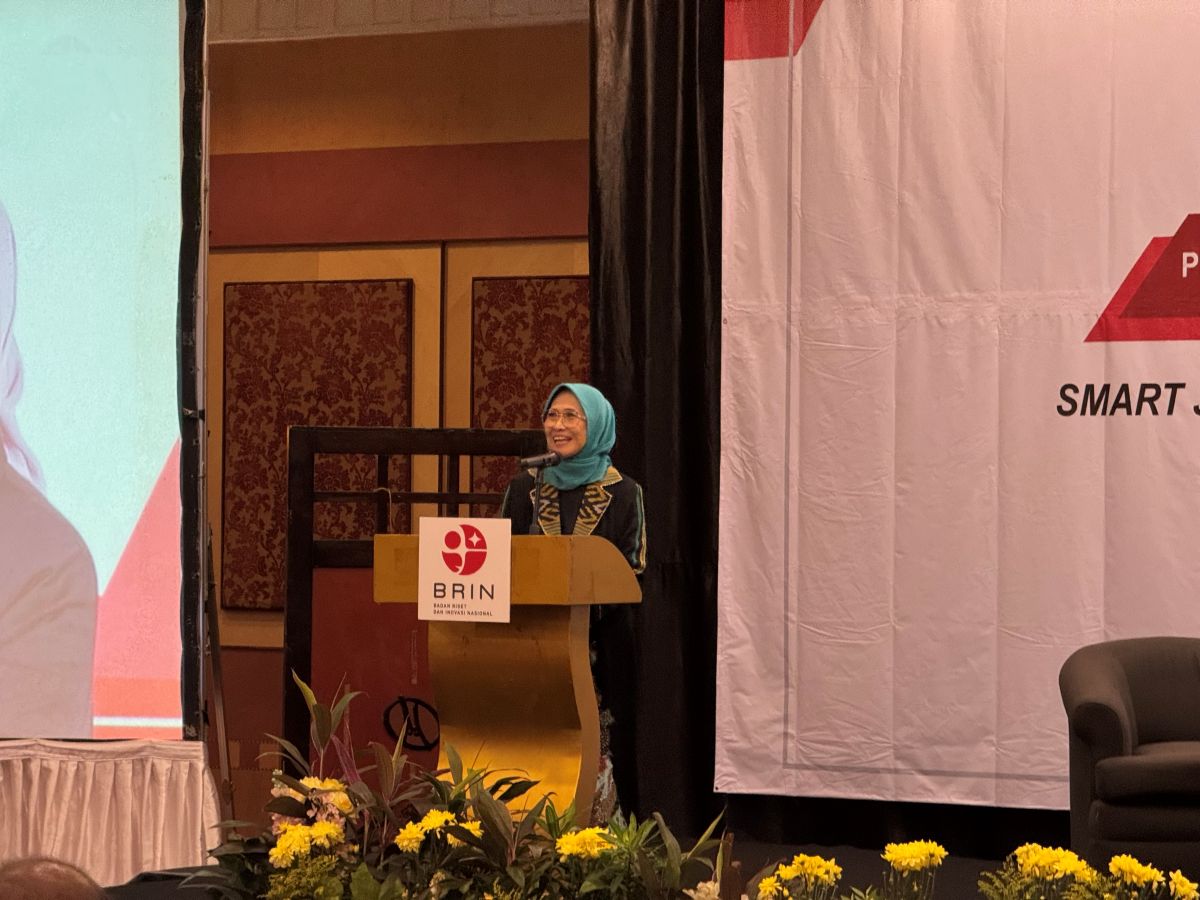
The head of Commission X of the Indonesian House of Representatives, Hetifah Sjaifudian, emphasised that the use of artificial intelligence (AI) in journalism must not replace journalists.
“It must be clarified that the presence of AI in the newsroom is not intended to replace journalists. AI should serve as a co-pilot or tool to accelerate our journalistic processes and assist the newsroom in various ways,” she said at a BRIN event titled “Smart Journalism: Integration of Data, Research, and Artificial Intelligence for Quality Reporting” in Jakarta on Sunday (15 March).
Hetifah further noted that AI is becoming a new gateway for the public to understand the world. Its use is also transforming nearly every aspect of media work, including how media is produced, how news is distributed, and how the public consumes news.
Facing this situation, she stated that editorial decisions, data verification, and ethical judgements must remain in human hands.
Hetifah gave the example of a new phenomenon in the media industry known as synthetic media.
“In this system, algorithms can perform issue selection, information classification, news production, and content distribution. This phenomenon shows that automation in the media industry has reached a much more advanced stage,” she said.
Hetifah presented survey results of journalists in Indonesia and Southeast Asian countries such as Thailand, Vietnam, and the Philippines showing that familiarity with AI had reached a very high level of 95 per cent.
Furthermore, 75 per cent actually use it in their journalistic work and 84 per cent assess that AI has a positive impact on their work.
For this reason, Hetifah highlighted three areas that journalists must master to avoid misuse of AI. These include data literacy, AI literacy, and the ability to verify issues.
“Technology may change, platforms may change, but the basic principles of good journalism must not change. Of course, accuracy and multi-layered verification must still be possible, depth of analysis and context, data and evidence as a basis, and finally public interest. After all, the purpose of journalism is to serve society, so it must be relevant to the public and help people understand the impacts of each policy and contribute to strengthening democratic life,” said Hetifah Sjaifudian.
At the same venue, Senior Expert Researcher at BRIN, Hanif Fakhrurroja, cited a statement by Nvidia CEO Jensen Huang, who said that it is not AI that will replace our jobs, but humans using AI who will replace us.
“So there must be an evolution from traditional journalism to smart journalism,” said Hanif.
Smart journalism itself is the practice of journalism utilising AI technology without transferring accountability from humans.
“On one hand, AI simplifies journalistic work, but on the other hand, AI has flaws such as hallucination and bias. The reason is that AI is designed to please humans and this is called hallucination. Because of this, the use of AI in journalism must maintain accuracy, ethics, and legal compliance,” he concluded.