
US War Rhetoric No Longer Classy, Now Feels Cheap!
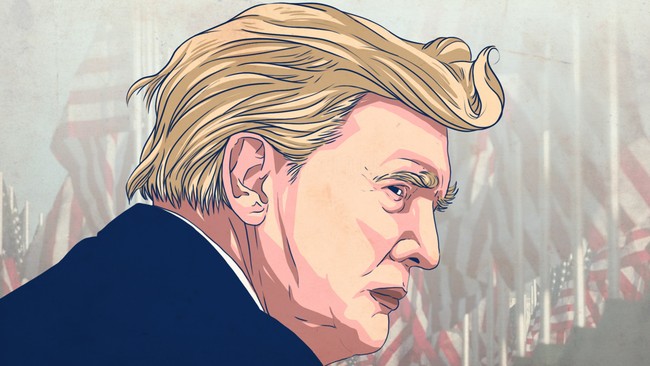
Wars always give birth to two fronts simultaneously: the battlefield and the public sphere. On the front lines, there are missiles, aircraft carriers, and soldiers. Behind them, there are speeches, narratives, and the way a country explains why the conflict must be waged. In Western history, this second front was once managed with great seriousness. By 2026, that standard appears to have fallen far short. Citing The Economist, as World War II reached its decisive phase in June 1944, US President Franklin D. Roosevelt addressed the public with a measured message. America, he said, was fighting to stop conquest. Winston Churchill adopted a similar approach. He framed the war as a matter of morality, national resilience, and the survival of civilisation. The tone of their speeches was harsh, but still orderly and disciplined. Nations spoke like nations. Compare this with the latest tensions in the Strait of Hormuz in April 2026. That narrow waterway supports the global flow of oil and is highly sensitive to energy markets. Yet, political communication from Washington was filled with crude threats, provocative sentences, and a style of language closer to social media than to state forums. Defence Secretary Pete Hegseth even used aggressive diction to describe the opponent. Strategic substance was drowned out by rhetorical style. This change is important because war rhetoric influences public perception. When governments choose certain words, the public will read the conflict as a defensive mission, retaliatory action, or a demonstration of strength. Investors read energy risks. Allies read policy direction. Opponents read intent. In a context like Hormuz, one reckless sentence can move oil prices, ship insurance premiums, and market volatility. In the past, Western nations tended to use historical references and political values to build legitimacy for war. Roosevelt called America the ‘arsenal of democracy’. Churchill repeatedly referenced British history to instil national resilience. The aim was to ask the people to bear the costs of war because there were values deemed worth defending. Now, the pattern has shifted to visual communication and short slogans. Political videos containing film clips, dramatic music, and images of victory go viral more easily than complex policy explanations. In the short term, this model is effective at grabbing attention. In the long term, it reduces war to a communication product. The problem is that modern warfare is far more complex than heroic narratives. Tensions in Hormuz touch on crude oil supplies, global inflation, logistics costs, Asian trade routes, and central bank interest rate policies. If official communication consists only of emotional threats, the public loses the economic context that is most relevant to daily life. This decline in rhetorical quality also reflects changes in the American political ecosystem. Leaders now speak amid a very fast news cycle. Messages are designed to be cut into 15-second clips, not read as historic speeches. As a result, depth often loses out to sensation. For global markets, what is needed from major powers is not drama, but clarity. Investors want to know if tankers can pass safely. Importers want to know if energy prices are stable. Allies want to know if there is a consistent strategy. The world reads every word from Washington because the impact is real. That is why changes in war rhetoric are worth noting. When a nation’s communication descends to mere content, geopolitical risks become harder to calculate.