
US Trade Representative Highlights Indonesia's Non-Tariff Barriers in Annual Report
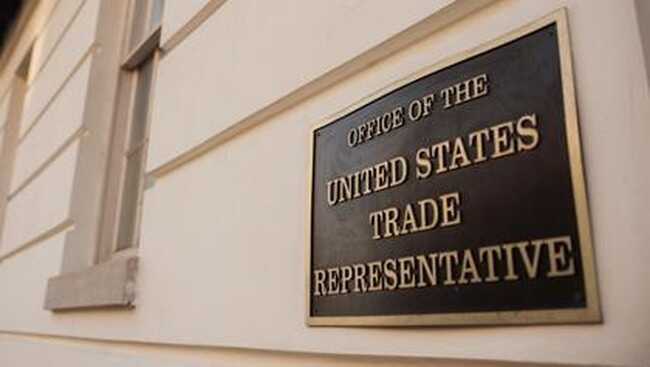
Jakarta, CNBC Indonesia - The United States Trade Representative (USTR) has highlighted a number of issues it characterises as non-tariff barriers imposed by Indonesia.
In its annual 2025 National Trade Estimate Report on Foreign Trade Barriers, the USTR stated that Indonesia’s import licensing system continues to be a significant non-tariff barrier for US businesses, owing to numerous overlapping licensing requirements that complicate market access.
The Indonesian Ministry of Trade requires all importers to hold an import licence, either as a General Importer (API-U) for goods distribution or as a Producer Importer (API-P) for own production needs.
“Importers are not permitted to hold both types of licence simultaneously,” the USTR wrote in its official report, as quoted on Friday (25/4/2025).
Companies holding an API-P may only import finished products for market testing, after-sales service, or to complement their product lines, subject to strict conditions requiring that goods be new, consistent with their business licence, and compliant with various technical import requirements.
The USTR also drew attention to Government Regulation No. 29 of 2021 on the Administration of Trade, which requires businesses to register through an online system called Online Single Submission (OSS) to obtain a Business Identification Number (NIB), which also functions as an import licence.
However, the OSS system has faced frequent criticism. Companies have reported that it adds complexity and causes delays due to recurring technical issues and a lack of system integration, with national and local-level requirements not fully synchronised within the platform.
The situation is further complicated by the commodity balance policy introduced through Presidential Regulation No. 61 of 2024. Under this policy, import licences are granted only when the government determines that domestic supply and demand have not been adequately met. Initially, the policy applied to five key commodities: sugar, rice, fish, meat and salt. However, since 2023, its scope has been expanded to cover 19 additional products, including non-agricultural goods. In 2025, garlic was added to the list, with plans to include apples, grapes and oranges in 2026.
The USTR noted that Presidential Regulation No. 61 of 2024 was developed without business community involvement. Stakeholders expressed concerns over the lack of government consultation with businesses, the expansion of product coverage without adequate notice, and inconsistent implementation.
“This frequently results in delays in obtaining import licences, particularly at the beginning of the year, when companies must quickly adapt to new or suddenly revised regulations,” the USTR wrote.
Meanwhile, Ministry of Trade Regulation No. 36 of 2023 on Import Policy and Management has added to the US government’s list of grievances. The regulation requires import licences for nearly 4,000 HS codes. In addition to technical data disclosure requirements, certain products must also obtain Technical Approval from the relevant ministry.
This policy caused significant disruption at ports. In early May 2024, thousands of containers reportedly piled up due to incomplete licensing documentation. In response, the Indonesian government issued Ministry of Trade Regulation No. 8 of 2024 on 17 May 2024, which revoked the Technical Approval requirement and relaxed import licensing for most products. However, the previous rules remain in force for certain categories, including iron and steel, tyres, industrial chemicals, and specific textile products such as medical masks.
In its official report, the US government assessed that Indonesia lacks transparency and frequently issues policies that do not reflect market demand.
“The United States government continues to raise concerns regarding a lack of transparency, import quantity restrictions that do not reflect market demand, and recurring delays in licence issuance, particularly at the beginning of the year,” it concluded.