
US Threatens Iran Blockade, Oil Prices Could Surge to This Level
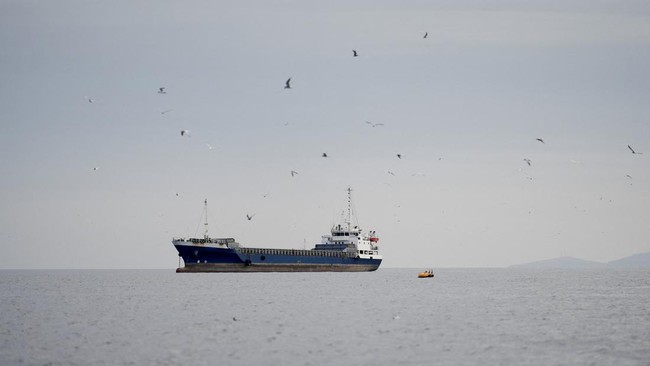
Jakarta, CNBC Indonesia - The United States plans to block ships entering and exiting Iranian ports after talks between the two countries failed to reach a peace agreement. This move heightens tensions in the region and threatens the ceasefire that has only been in place for two weeks.
President Donald Trump stated that the US Navy will begin the blockade in the Strait of Hormuz. The US Central Command (CENTCOM) said the policy will take effect on Monday at 10:00 local time.
“The blockade will be enforced impartially against ships from all countries entering or exiting Iranian ports,” CENTCOM wrote in its statement, as quoted by Reuters on Monday (13/4/2026).
However, the US assures that freedom of navigation remains in place for ships transiting to non-Iranian ports. Technical information will also be provided to commercial sailors before the policy is implemented.
Trump emphasised that the US will act firmly against ships deemed to have paid duties to Iran.
“No one who pays illegal import duties will have a safe passage on the high seas,” he wrote. He also warned, “Any Iranian citizen who shoots at us or peaceful ships will be destroyed.”
The threat was met with a strong response from Iran. The Revolutionary Guard warned that any military ship approaching the Strait of Hormuz will be considered a violation of the ceasefire.
Iranian Parliament Speaker Mohammad Baqer Qalibaf asserted that his country will not be swayed by US pressure.
“If you go to war, we will go to war. If you present logical arguments, we will respond with logic,” he said.
Meanwhile, Iran’s Foreign Minister Abbas Araqchi assessed that the negotiations failed due to Washington’s hardline stance.
“We faced maximalism, rule changes, and blockades just as we were about to reach an agreement,” he said.
From the US side, Vice President JD Vance said the failure of the agreement hurts Iran more. “The bad news is we haven’t reached an agreement, and that’s far worse for Iran than for the US,” he stated.
This tension has an immediate impact on the global energy market. World oil prices have surged above US$100 per barrel, equivalent to around Rp1.7 million. The Strait of Hormuz itself is a vital route for about 20% of global energy supplies.
Trump also acknowledged that energy prices could remain high until the midterm elections in November, which could have political repercussions domestically in the US.
On the other hand, Iran mocked the policy’s impact on US citizens. Qalibaf even posted a map of petrol prices in Washington and said people would miss prices of US$4-US$5 per gallon (around Rp68,000-Rp85,000).
Although the situation is heating up, Trump still leaves room for further negotiations. He described previous talks with Iran as “very friendly” and is optimistic that Tehran will return to the negotiating table.
However, the two countries still disagree on Iran’s nuclear programme, the cessation of uranium enrichment, and Tehran’s support for groups in the region. This impasse also adds to global uncertainty, strengthening the US dollar and increasing market volatility in recent weeks.