
US Supreme Court Strikes Down Trump's Tariffs—What Next for Indonesia's Oil Import Plans?
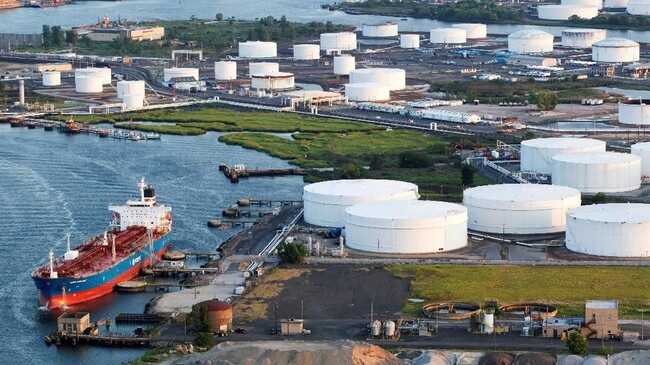
The decision by the United States Supreme Court striking down the reciprocal tariffs previously imposed by President Donald Trump has prompted widespread questions, particularly concerning American trade relations with various countries, including Indonesia.
This follows concerns regarding the implementation of the Agreement on Reciprocal Trade (ART), specifically Indonesia’s planned energy imports from the United States.
Deputy Minister of Energy and Mineral Resources Yuliot Tanjung explained that the ART agreement contains specific provisions separate from the tariff policies currently under review by the US Supreme Court. Both countries have committed to an energy import agreement valued at US$15 billion.
“Within the ART, the value is stated as US$15 billion. Meanwhile, what the US Supreme Court is reviewing concerns tariffs. So there is a distinction,” said Yuliot, speaking at the Energy Ministry in Jakarta on Friday, 27 February 2026.
However, Yuliot noted that Indonesia retains the option to review the agreement’s implementation. Significantly, there is a 90-day window available for review should adjustments be deemed necessary.
“If there are urgent matters, we will discuss them; there may be changes, and within 90 days we will hold discussions regarding implementation,” he said.
In recent developments, Trump announced a 15 per cent increase in tariffs on goods imported into the United States. Trump made the announcement via his social media platform, Truth Social, describing the court’s decision the previous day as “extremely un-American” and confirming that following a comprehensive review, his administration would raise import tariffs “to the maximum extent permitted and legally tested, which is 15 per cent.”
This step was taken only hours after the Supreme Court, in a 6-3 decision, ruled that the President lacked authority to impose tariffs under the 1977 Emergency Economic Powers Act. The decision represented a major political blow to Trump’s flagship economic policy, which has served as the primary instrument in his trade war.
Shortly after the ruling, Trump announced a new global tariff of 10 per cent using an alternative legal pathway. However, on Saturday, he increased this figure to 15 per cent.
Indonesia’s US$15 Billion Energy Import Agreement
Indonesia has agreed to import energy commodities valued at US$15 billion annually from the United States. This forms part of a broader trade tariff agreement negotiated with the United States. The trade tariff agreement was formally signed by US President Donald Trump and Indonesian President Prabowo Subianto in the document titled “Implementation of the Agreement toward New Golden Age US-Indonesia Alliance.”
“There is also an agreement to import gas (LPG) and crude oil, valued at US$15 billion annually,” stated Investment Minister and BKPM Chief Rosan Perkasa Roeslani during an online press conference announcing the trade tariff agreement on Friday, 20 February 2026.
According to documentation from the US Trade Representative (USTR), of the US$15 billion energy import agreement, the largest portion comes from petrol, totalling US$7 billion. Crude oil imports account for US$4.5 billion, while LPG imports amount to US$3.5 billion.
The agreement concerning the purchase or importation of energy commodities from the United States is contained in Annex IV, specifically the industrial goods section. Point 2 of the industrial goods provision establishes that Indonesia must support and facilitate commercial arrangements for importing energy commodities from the United States valued at US$15 billion, comprising:
Increase imports of US metallurgical coal to support steel production, local industrialisation, and energy reliability and security, and reduce dependence on imports from market-manipulating actors;
Increase imports of advanced US coal technology and partner in accelerating the development, deployment, and commercialisation of such technology, including by utilising all available funding mechanisms to support coal technology advancement, including using coal and coal by-products to produce building materials, battery materials, carbon fibre, synthetic graphite, and printing materials, as well as fuel for power generation and other industrial processes;
Support and facilitate the purchase of LPG valued at US$3.5 billion;
Support and facilitate the purchase of crude oil valued at US$4.5 billion;
Support and facilitate the purchase of petrol products valued at US$7 billion.