
US Supreme Court Strikes Down Trump's Tariff Policy — What Does It Mean for Indonesia?
The United States Supreme Court struck down President Donald Trump’s global reciprocal tariff policy on Friday (20 February) local time. The ruling was issued just as the Indonesian and US governments had agreed to reduce tariffs on goods between the two countries.
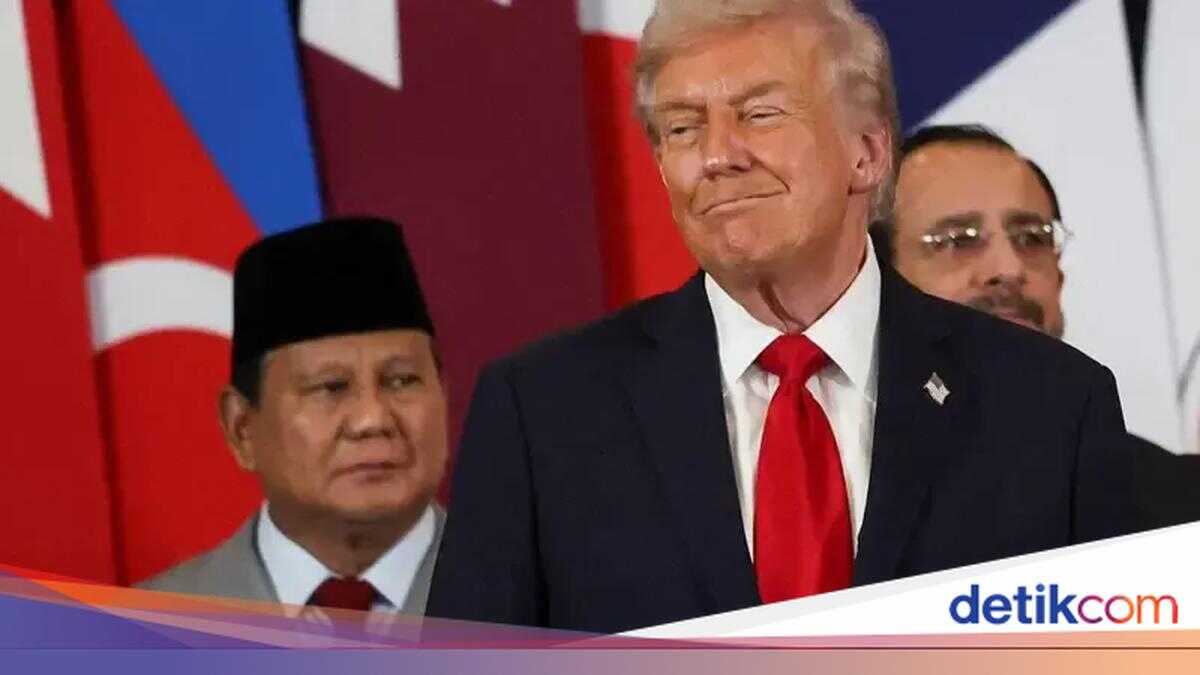
President Prabowo Subianto and Donald Trump had agreed that exports from Indonesia to the US would be subject to a 19% reciprocal tariff, except for certain products which would receive a 0% reciprocal rate. Indonesia, for its part, would eliminate 99% of tariff barriers on American products.
Trump launched a fierce attack on the Supreme Court ruling, calling it “appalling” and branding the justices who rejected his trade policy as “fools”.
Trump also immediately imposed a new 10% global tariff using a rarely invoked regulation known as “Section 122”.
Meanwhile, business operators and several US states that had challenged the policy hailed the Supreme Court ruling as a major victory.
Observers noted that the tariff annulment also opens the possibility of billions of dollars in tariff refunds and represents positive news for other countries, including Indonesia.
What did the Supreme Court rule?
The United States Supreme Court ruled that Donald Trump’s tariff policy, applied to numerous countries, violated the constitution. The president was found to lack the inherent authority to impose sweeping tariffs on any country.
Trump had used the International Emergency Economic Powers Act (IEEPA) of 1977 as his legal basis, which grants the president power to “regulate” trade in response to emergencies.
However, Trump’s tariff policy provoked fierce protests both domestically and internationally. Companies complained about the sudden tax increases on goods entering the US and feared that consumer prices would rise.
Lawyers representing several US states and small business operators subsequently challenged Trump’s policy before the Supreme Court.
They argued that the legislation Trump used to levy these charges made no mention whatsoever of the word “tariff”.
The plaintiffs also emphasised that Congress had not granted the president taxing authority, let alone given the president “unlimited power” to override existing trade agreements and tariff regulations.
In his ruling, Chief Justice John Roberts agreed with this view. In his opinion, he wrote:
“When Congress grants tariff authority, it must do so in very clear terms with strict limitations. If Congress had intended to grant extraordinary power to impose tariffs, they would have said so explicitly, as they have always done in other tariff regulations.”
The ruling was supported by three liberal justices and two Trump-appointed justices, namely Amy Coney Barrett and Neil Gorsuch.
Meanwhile, three conservative justices — Clarence Thomas, Brett Kavanaugh, and Samuel Alito — filed dissenting opinions.
Kavanaugh stated that the annulment would force the US government to refund billions of dollars in tariff revenue and create administrative chaos.
The legal dispute centred on the import taxes Trump launched last year on goods from nearly every country in the world. Initially, the tariffs targeted Mexico, Canada, and China before being dramatically expanded to dozens of trading partners last April.
What was Trump’s reaction to the ruling?
Trump launched a fierce and personally-toned attack against the six Supreme Court justices who struck down his administration’s global tariff policy.
At a press conference held at the White House several hours after the ruling was read, Trump called the decision “deeply disappointing”.
He declared that the justices who supported the annulment should feel “truly ashamed” for allegedly lacking the courage to “do the right thing”.
The condemnation was considered extraordinary even for a president known for regularly breaking political norms and openly berating anyone who challenges his authority.
“I am ashamed of some of the court’s justices. Truly ashamed at their lack of courage to do what is right for our country,” Trump said at the start of the White House press conference.
Trump was unequivocal in his assessment of the Supreme Court decision. For 45 minutes, he criticised the ruling and insisted he would find alternative methods to continue imposing import tariffs.
Throughout his address, he repeatedly claimed to be personally offended by the decision. Trump’s criticism targeted the six justices, a mix of liberal and conservative appointees.
Three justices — Elena Kagan, Sonia Sotomayor, and Ketanji Brown Jackson — were Democratic appointees.
The other three were Republican appointees, including Chief Justice John Roberts (a George W. Bush selection), as well as Neil Gorsuch and Amy Coney Barrett, both appointed by Trump himself during his first term.
“They are simply acting foolish and serving as lackeys for RINOs and the radical left Democrats,” Trump declared.
RINO (Republicans in Name Only) is a derisive term for Republican politicians deemed disloyal to the party.
Beyond the personal attacks, Trump claimed that the Supreme Court had been influenced by “foreign interests” in reaching its decision. When pressed by journalists for details, Trump offered no further elaboration.
Trump also called the decisions of Justices Gorsuch and Coney Barrett — his own appointees — “disgraceful” and even invoked their families’ names in his criticism, a move widely regarded as highly unusual by US political norms.
On the other hand, Trump praised the three justices who upheld his authority: Clarence Thomas, Samuel Alito, and Brett Kavanaugh.