
US Strikes Nuclear Site, Iran Retaliates by Attacking Oil Tanker
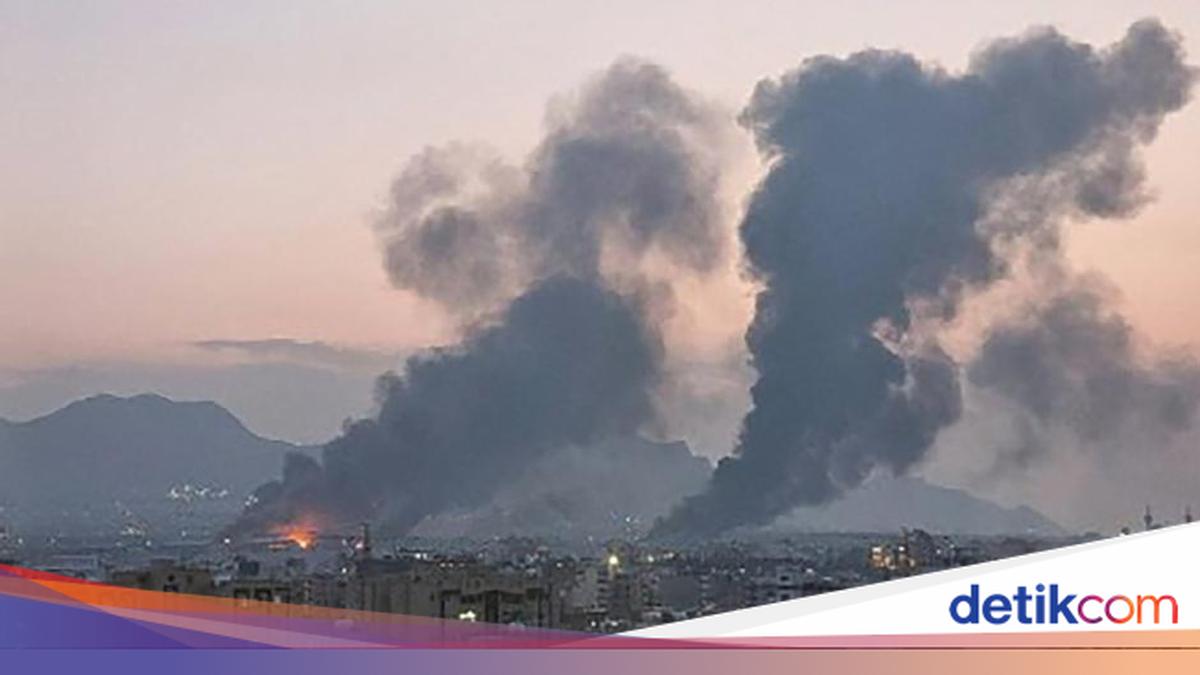
Airstrikes suspected to have been carried out by the United States (US) reportedly struck the central Iranian city of Isfahan in the early hours of Tuesday (31/03). Footage shared by US President Donald Trump shows a massive explosion lighting up the night sky over the city.
Isfahan is one of Iran’s key nuclear facilities and is believed to store highly enriched uranium. According to reports from the AP news agency, some of Iran’s uranium is likely stored or buried at the Isfahan nuclear facility.
Trump shared the explosion video on social media, which depicts a large fireball appearing in the night sky.
Previously, the Isfahan nuclear facility was also targeted in a US military strike in June 2025.
Trump emphasised that Washington is prepared to expand military operations if Iran does not reopen the Strait of Hormuz and if no agreement is reached in the near future.
“Significant progress has been made, but if for any reason an agreement is not reached soon, and if the Strait of Hormuz is not immediately reopened for shipping, we will end our ‘presence’ in Iran by blowing up and completely destroying their power plants, oil wells, and Kharg Island.”
Kharg Island is Iran’s main oil export hub and has become one of the strategic targets in this conflict.
Trump also mentioned the possibility of strikes on Iran’s water desalination facilities if the war continues.
Meanwhile, Iran accuses Washington of using diplomatic channels to stall for time while reinforcing troop deployments in the region.
Kuwaiti oil tanker attacked in Dubai waters
Amid rising military tensions, Iran has also launched attacks on oil tankers in the Persian Gulf.
A Kuwaiti-flagged tanker named Al-Salmi was attacked by an unmanned aerial vehicle or drone in Dubai waters and caught fire. The vessel was carrying approximately two million barrels of crude oil, valued at over $200 million or around Rp3.3 trillion at current prices.
Kuwait Petroleum Corporation, the owner of the tanker, stated that the attack occurred in the early hours of Tuesday (31/03) and caused a fire as well as damage to the ship’s hull. There were no reports of injuries. Dubai authorities later said the fire had been extinguished.
The attack on Al-Salmi is one of a series of assaults on commercial vessels in the Persian Gulf and Strait of Hormuz since the conflict began on 28 February, when the United States and Israel launched strikes against Iran.
In addition to the tanker attacks, several Gulf countries have reported security incidents. Air raid sirens sounded in Bahrain, while Saudi Arabia said its air defence systems successfully intercepted three ballistic missiles aimed at Riyadh.
In Dubai itself, four people were reported injured after debris from an intercepted drone fell into a residential area.
Nevertheless, Iran’s Foreign Minister Abbas Araghchi stated that Iran’s attacks were actually targeting US forces. “Our operations are aimed at the enemy aggressor that does not respect either the Arab or Iranian nations and is unable to provide security. It is time to expel US forces.”
However, the attacks on tankers and energy infrastructure have raised concerns that global energy trade routes are now at serious risk.
Global energy crisis and military mobilisation
This increasingly widespread conflict is also having a major impact on world energy markets.
Iran continues to maintain pressure on the Strait of Hormuz, a strategic shipping route typically used by vessels carrying about one-fifth of the world’s oil supply.
Disruptions to the route have caused oil prices to spike sharply since the war began on 28 February. Brent crude prices stood at around $107 per barrel in early trading, up more than 45% since the war started.
Attacks on tankers and threats to energy shipping routes have exacerbated market concerns. The surge in energy prices is also beginning to be felt by consumers in the United States.
“The national average petrol price in the United States has exceeded $4 per gallon for the first time in more than three years,” according to data from the GasBuddy price monitoring service.
This rise in fuel prices is also creating political pressure for President Trump ahead of the congressional midterm elections in November.
The White House said Trump wants to reach a diplomatic agreement with Iran before a new deadline set for Tehran. “The President wants to reach an agreement with Iran’s leaders before the second deadline on 6 April to reopen the Strait of Hormuz,” said White House spokesperson Karoline Leavitt.
However, Iran has rejected peace proposals conveyed through regional intermediaries. “The proposal is unrealistic, illogical, and excessive,” said spokesperson for Iran’s Foreign Ministry Esmaeil Baghaei.
He emphasised that Iran is currently focused on defending itself from military attacks. “Our position is clear. We are under military aggression. Therefore, all our efforts and strength are focused on self-defence.”