
US Senator Lindsey Graham Threatens Saudi Arabia for Refusing Iran War
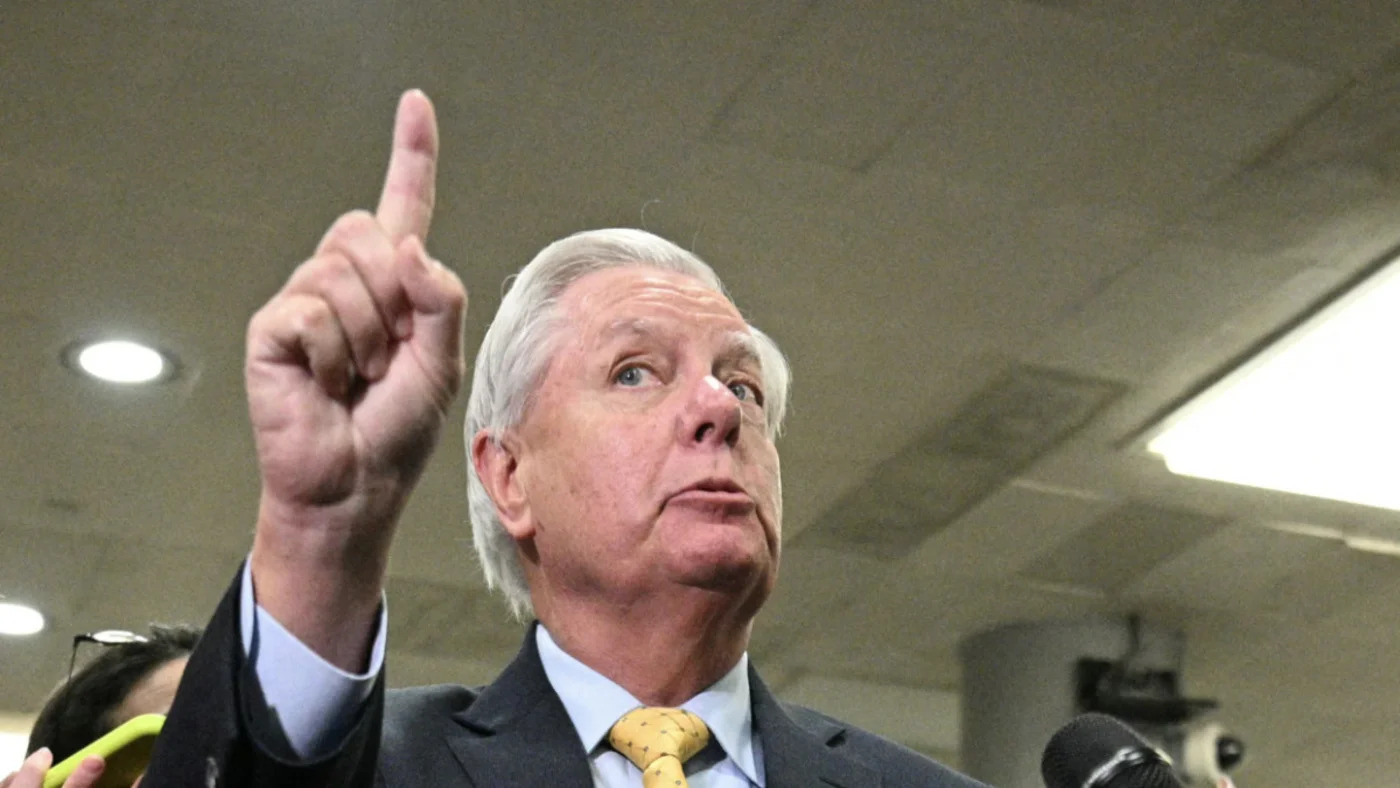
US Senator Lindsey Graham condemned Saudi Arabia on Monday (9 March) for refusing to attack Iran and threatened consequences for other Gulf nations if they do not join US-Israeli military operations against Iran. Riyadh and several Gulf states have opposed the conflict from the beginning.
“By my understanding, the Kingdom has refused to use its capable military as part of an effort to end the barbaric and terrorist Iranian regime which has terrorised the region and killed seven Americans,” Graham wrote on X (formerly Twitter).
“Should America make a defence agreement with a country like the Kingdom of Saudi Arabia that is unwilling to join in a mutually beneficial conflict?” he added.
Graham’s post effectively confirmed what a US official previously told Middle East Eye: that Riyadh has prevented the US from accessing its military bases for offensive operations.
US Central Command (Centcom) announced on Monday that a seventh US soldier had died from injuries sustained on 1 March during an Iranian attack on a US military base in Saudi Arabia.
Graham has aggressively lobbied for war against Iran, which began on 28 February. Middle East Eye revealed that his trip to Saudi Arabia last month was an attempt to persuade Crown Prince Mohammed bin Salman to support the strikes. Graham confirmed the purpose of his visit to The Wall Street Journal over the weekend.
Graham’s statement was widely viewed by analysts as an action that worsened the situation. Gulf nations have complained that they have not received interceptor missiles from the US, and officials in the region are angered by what they perceive as the Trump administration’s disregard for their security concerns.
The United Arab Emirates Ambassador to the UN told reporters on Monday that the Gulf nation will not participate in offensive operations against Iran despite being one of the most affected countries and a relatively close partner of Israel.
“We are a country that continuously calls for the need for negotiations, the need for diplomacy, the need for de-escalation,” said Jamal al-Musharakh in Geneva.
“And we continually inform that our region will not be used for any attack against Iran. But frankly, we are being targeted in a highly unreasonable way.”
Saudi Arabia and other Gulf states have sought from the outset to lobby US President Donald Trump not to launch a war against Iran because they fear the attacks that are now occurring against their energy-rich kingdoms.
The US State Department has required non-emergency diplomats to leave Saudi Arabia following the drone attack. Britain is also preparing evacuation flights from Dubai.
Iran has denied attacking the US Embassy in Riyadh. Saudi Prince Turki al-Faisal has described the Iran-Israel conflict as a distraction from Israeli criminal actions in Palestine.
Gulf states have also reaffirmed their commitment to preventing Iraqi territory from being used as a launching point for attacks against neighbouring countries.
Iranian officials claim that Mossad orchestrated the drone attack on Saudi Arabia’s Ras Tanura oil refinery to trigger regional war.
The German Chancellor Friedrich Merz has stated agreement with the US on Iran’s nuclear programme but warned of the risk of escalation in the Middle East conflict.
Jordan’s King Abdullah II drove President Prabowo from Basman Palace to Marka Airbase, accompanied by F-16 flypast, following a bilateral meeting that discussed Palestinian issues in Amman, Jordan.