
US Restricts Intelligence Sharing with South Korea Following "Offside" North Korean Nuclear Statement
The United States has reportedly restricted part of its intelligence exchange with South Korea. This step follows a statement by a Seoul official revealing the location of a suspected sensitive North Korean nuclear facility.
South Korean media reported that these restrictions primarily target satellite data related to North Korean technology. The measure was taken after South Korea’s Unification Minister, Chung Dong-young, publicly mentioned the existence of a uranium enrichment facility in Kusong, a northwestern region of North Korea that had not previously been officially confirmed.
In his statement to parliament last March, Chung identified Kusong as one of the nuclear sites, in addition to the previously known Yongbyon and Kangson.
A senior military official told Yonhap news agency that Washington has imposed partial restrictions since the beginning of this month. Nevertheless, monitoring of North Korean missile activities continues normally, and military readiness remains unaffected.
“Surveillance of missile activities continues as usual, and military readiness remains unaffected,” the official said, as quoted by The Guardian on Wednesday (22/4/2026).
This US action is said to be triggered by concerns that sensitive information was revealed without permission. However, there has been no official confirmation from the US side regarding the policy.
Chung denied leaking secret information. He asserted that his statement was based on publicly available data.
“This is open information,” Chung told reporters. He also referred to a 2016 US think tank report and South Korean media coverage.
Chung even expressed confusion as to why his statement is now being questioned, noting that he had previously mentioned the Kusong location during last year’s confirmation hearing without controversy.
South Korean President Lee Jae Myung also defended his minister. He emphasised that information about Kusong has long been circulating in public.
“All claims that Minister Chung leaked secret information from the United States are wrong,” Lee wrote in his statement during a visit to India. “I need to understand why such an absurd situation could occur.”
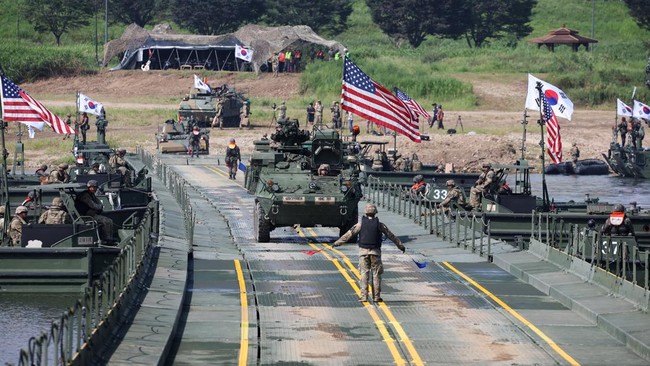
This tension adds to the list of dynamics in the US-South Korea alliance relationship. Local media reported that Washington also has several other objections, including Seoul’s planned legislation regarding access to the demilitarised zone (DMZ).
Domestically, the conservative opposition is demanding Chung’s dismissal. The People Power Party even called his statement a “clear security disaster”.
Meanwhile, South Korea’s Ministry of Unification emphasised that no secret information was leaked and that communication with the US side has been conducted. The Ministry of Defence also stated that military cooperation between the two countries remains close.
Amid this controversy, concerns over North Korea’s nuclear programme continue to rise. The head of the International Atomic Energy Agency (IAEA), Rafael Grossi, recently revealed a surge in activity at the Yongbyon nuclear facility.
“All this indicates a very serious increase in North Korea’s capabilities in the field of nuclear weapons production,” Grossi said. “It is estimated that their number of warheads now reaches several dozen.”