
US Reactivates WWII Air Bases Amid Pressure from China
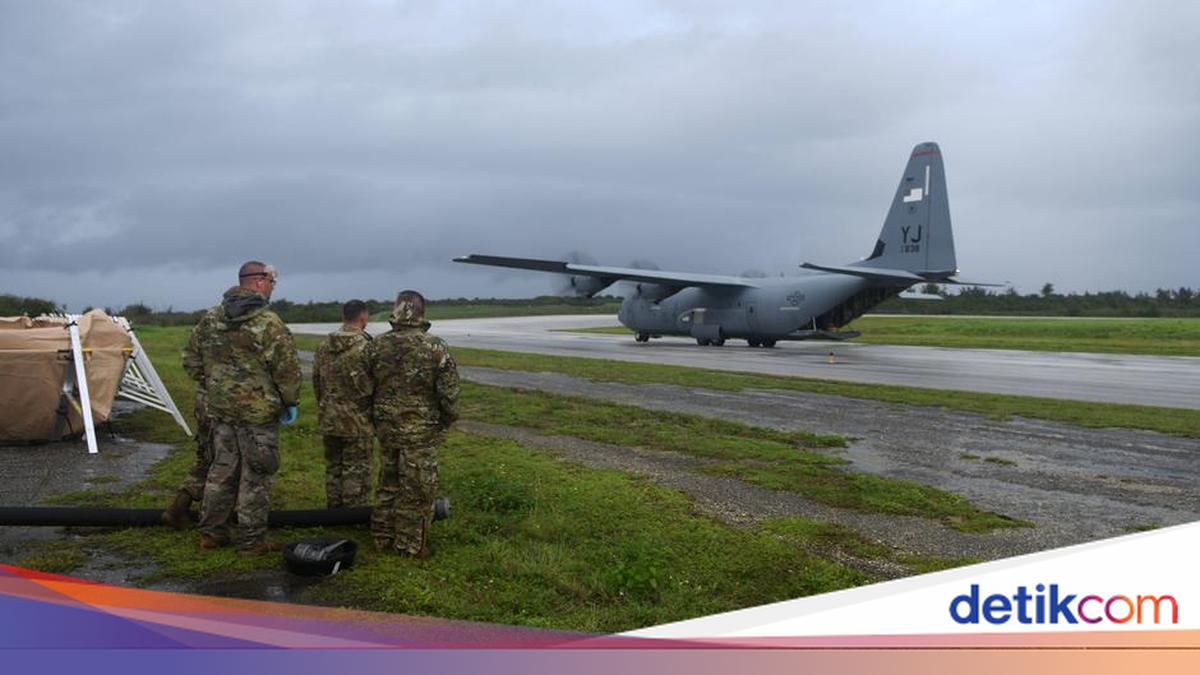
Airfields originally constructed on remote Pacific islands to attack Japan during the final phase of World War II are now being gradually refurbished. This step is being taken as the United States strengthens its defences in the face of mounting pressure from China in the region.
Chinese vessels frequently test South Korea’s and Japan’s maritime claims in the northern Pacific. Meanwhile, in the south, Beijing routinely conducts large-scale military exercises around Taiwan, which it considers a territory that will one day return to its control.
Beijing also claims most of the South China Sea as its territory, although this claim was rejected by an international tribunal in 2016.
“China is clearly the main concern in this region, and this step appears to be a response to China’s efforts to expand its own military capacity,” Dan Pinkston, a professor of international relations at Troy University’s Seoul campus and former US Air Force officer, told DW.
“They are trying to break out of the first and second island chains to gain free access to the Pacific, and reactivating these airfields can be read as preparation if tensions escalate to the next stage,” Pinkston said.
Historic airfields
Details of the work on the wartime bases in Tinian and Peleliu remain minimally publicised.
However, analysts assess that the project aims to provide additional options for the US Air Force, so as not to rely solely on main bases like Andersen in Guam or Kadena in Okinawa, Japan.
Since 2023, US engineers have been updating four 2,400-metre runways at North Field on Tinian Island, which was first built about 80 years ago. It was from this location that the B-29 Superfortress Enola Gay took off to drop the first atomic bomb on Hiroshima on 6 August 1945.
Three days later, another B-29 took off from the runway, now part of the Northern Mariana Islands, to drop the second bomb on Nagasaki, forcing Japan to surrender.
The base was once known as the busiest in the world but was abandoned in 1947 and largely reclaimed by jungle until 2003, when one runway was cleared for exercises. Larger-scale clearing only resumed in 2023.
Engineers are also working on Peleliu, one of the southernmost islands in the Palau archipelago and the site of fierce fighting during the war. The 1,800-metre runway was completed before the island was recaptured from Japan and was used to support US operations in the Pacific region until the war ended.
The airfield briefly served as a local airport for residents but could only accommodate small aircraft until US military units arrived in 2024 to refurbish it. In June 2024, a KC-130 tanker aircraft became the first to land on the upgraded runway.
The US begins rearranging its base strategy
“Ten years ago, the US was very focused on reviewing its military bases in the Middle East,” said Garren Mulloy, a professor of international relations at Daito Bunka University and military expert.
“They now realise how vulnerable air bases and related infrastructure are to potential attacks,” he told DW.
“We are also seeing China increase its military activities in the Indo-Pacific during the same period. This is changing Washington’s strategic calculations, which previously considered the region relatively safe from direct challenges,” he added.
Basic facilities needed to upgrade these bases include new runway surfaces, taxiway areas, and dedicated parking zones so that aircraft do not sink into the muddy ground on humid islands often hit by tropical storms.
Access to electricity and water sources is also a primary need, along with underground fuel tanks and reinforced bunkers for aircraft, weapons, and other logistics.
In the next phase, these bases could also be equipped with radar and defence systems. The US military previously told DW in 2024 that surveys are being conducted for the placement and operation of Patriot anti-missile systems.
Radar and weapon systems are unlikely to be deployed yet, but the basic infrastructure is being prepared, Mulloy said.
“The main threat to the US in this region is clearly China, although we cannot rule out moves by North Korea, so it makes sense to have contingency plans,” he said. He recalled that Pyongyang announced a “mature plan” in 2017 to use the Hwasong-12 medium-range ballistic missile, capable of carrying a nuclear warhead, to strike areas around Guam.
The missile is estimated to have a range of about 4,500 kilometres, placing Andersen Air Base within its reach.
“If a major conflict breaks out in this region, whether on the Korean Peninsula or in the Taiwan Strait, Andersen would be a clear target. Therefore, deploying alternative facilities like these is part of the strategy to mitigate that risk,” Mulloy said.
“Additionally, if an emergency situation requires the US to deploy large numbers of troops and logistics, these locations strategically enable rapid and effective deployment,” he added.