
US Mistakenly Shoots Down Iranian Passenger Aircraft, Hundreds Killed Instantly
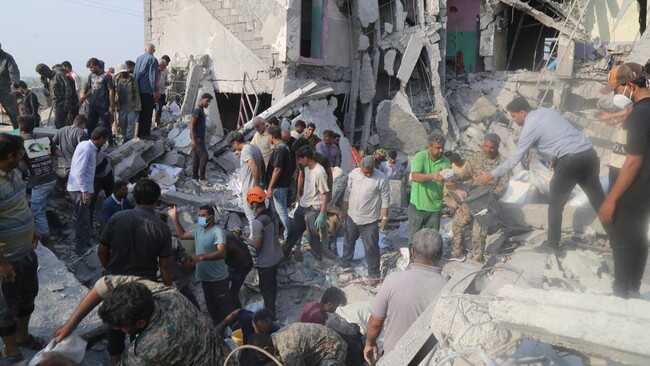
The United States and Israel have launched sustained military strikes against Iran, resulting in the death of Supreme Leader Ayatollah Ali Khamenei on Saturday, 28 February, local time, with several senior Iranian officials also reported killed. In response, Iran has attacked US military bases throughout the Middle East and launched ballistic missiles and drones towards Israel.
History records that military tensions between the US and Iran have previously culminated in major tragedy. On that occasion, a US naval vessel shot down an Iranian passenger aircraft, killing all passengers and crew aboard—one of the deadliest civil aviation disasters in history.
The incident occurred on 3 July 1988, when the US Navy destroyer USS Vincennes detected an object on radar moving rapidly in the Strait of Hormuz region. The ship’s commander, Captain William C. Rogers III, believed the object to be an Iranian F-14 fighter jet that posed a threat to the vessel. Without further verification, two missiles were launched at the target.
It was later discovered that the target was not a military aircraft, but rather Iran Air 655, a commercial Airbus A300 conducting a routine flight from Bandar Abbas to Dubai. The aircraft was in an official civilian flight corridor outside the conflict zone and carried 290 people, including women and children. All passengers perished instantly.
On the ground, Iranian civil aviation authorities fell into panic after losing contact with the aircraft. The subsequent search found aircraft wreckage scattered across the Strait of Hormuz, confirming that the civilian airliner had been shot down by US military forces.
The tragedy immediately provoked Iranian anger and widespread international condemnation. The Iranian government accused the US of a serious violation of international law for downing the civilian aircraft. However, the US Department of Defence initially insisted that the target had been a fighter aircraft.
The Pentagon later acknowledged the misidentification but refused to issue a formal apology. The then-Chairman of the Joint Chiefs of Staff, Admiral William J. Crowe Jr., only expressed regret.
“The Government of the United States deeply regrets this incident,” Crowe stated during a Pentagon press conference at the time.
US President Ronald Reagan, however, defended the actions of the ship’s crew. He characterised the shooting as a defensive measure, citing the aircraft pilot’s failure to respond to radio calls from USS Vincennes. Washington also stated that the regional conflict situation contributed to the incident.
The case was eventually brought before the International Court of Justice. In 1992, the US agreed to pay compensation of US$61.8 million to the families of the victims, equivalent to approximately IDR 976 billion at the time. Nevertheless, the settlement was reached without a legal admission of fault by the US.
To this day, the Iran Air 655 tragedy remains remembered as a cautionary example of fatal military misidentification that claimed hundreds of civilian lives and left deep scars in US-Iran relations.